
BC Winter Tire Law: Dates, Routes and the $121 Fine, Explained
Every October 1, winter tire requirements kick in on most BC highways — and every October, drivers get caught out at the Coquihalla checkpoints. Here’s exactly when and where the law applies, what counts as a legal winter tire, what the fine costs, and what actually works for Lower Mainland drivers.
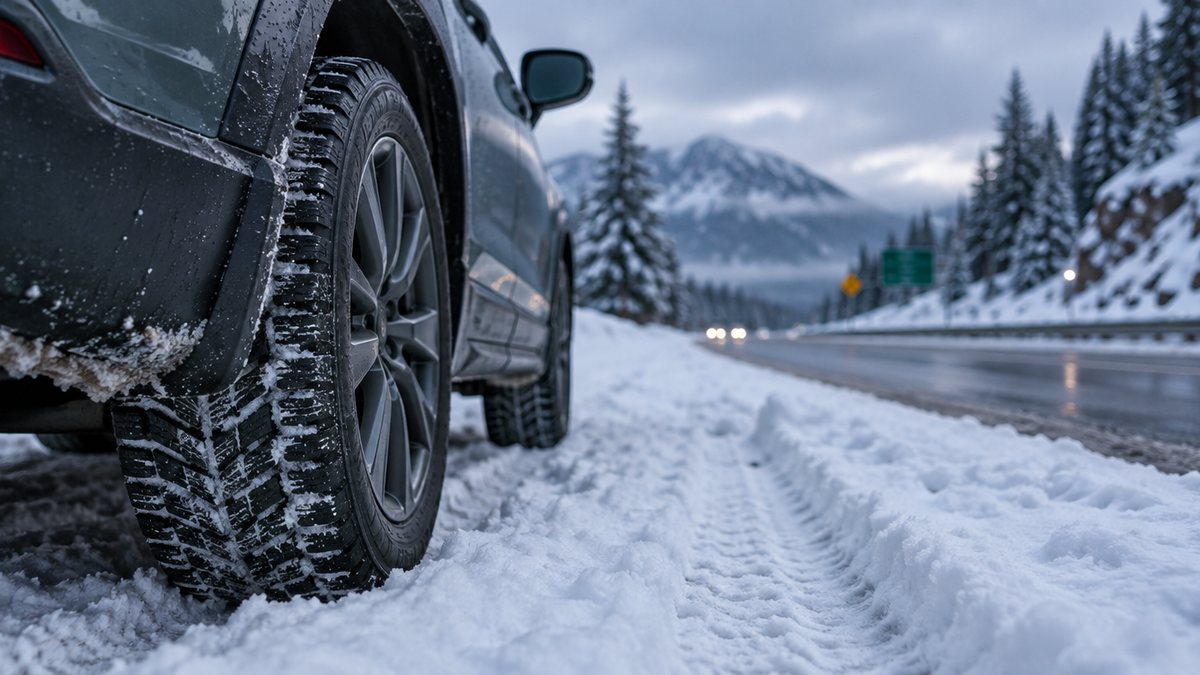
1. The dates and where they apply
From October 1 to April 30, BC requires passenger vehicles to run winter tires (or carry chains where posted) on most highways outside the Lower Mainland and southern Vancouver Island — on some lower-elevation routes the requirement ends March 31. The designated network covers the Sea-to-Sky to Whistler, the Coquihalla, Highway 3, and essentially every Interior and northern route, marked with regulatory signs at the start of each corridor.
The full route list lives on the Province of BC’s winter tire and chain-up routes page. The practical translation: if your winter includes Whistler, Manning Park, the Okanagan, or any mountain pass, the law applies to you — even if you live in Burnaby.
2. What counts as a winter tire
BC accepts two markings: the M+S (mud and snow) symbol found on most all-season tires, or the three-peak mountain/snowflake (3PMSF) symbol found on true winter and all-weather tires. Either way the tire needs at least 3.5 mm of tread to count.
| Tire type | Legal on designated routes? | Actual snow/ice grip |
|---|---|---|
| All-season (M+S) | Yes, with 3.5 mm tread | Weakest — compound hardens below ~7°C |
| All-weather (3PMSF) | Yes | Good — the year-round compromise for coastal BC |
| Dedicated winter (3PMSF) | Yes | Best — ideal if you make regular mountain trips |
Note the gap between legal and good: BC’s M+S standard is looser than Quebec’s winter-tire law, and an aging all-season at 4 mm is legal on the Coquihalla in December while being genuinely poor on it.
3. Fines and enforcement
Driving a designated route without compliant tires is a $121 fine under the Motor Vehicle Act, and commercial chain-up violations range up to $598. The more expensive consequence is being turned around at a checkpoint — RCMP and CVSE run active checks on the Coquihalla and Sea-to-Sky, especially through November and December — or being found without them after a crash, which can complicate an insurance claim.
4. What Lower Mainland drivers actually need
City streets in Metro Vancouver aren’t designated routes, so plenty of drivers run all-seasons year-round and stay legal — until the one January weekend they drive to Whistler or the one cold snap that turns the Port Mann approaches into a rink. Our climate reality: rain grip matters 300 days a year, snow grip matters 10, and the law matters the moment you leave the valley floor.
That’s why our standing recommendation for most Lower Mainland drivers is a quality all-weather tire with the 3PMSF symbol: legal on every route, genuinely competent in the rare lowland snow, no seasonal swap to store and schedule. If you make regular ski trips, dedicated winters on a second set of wheels are still the gold standard — pair them with an AWD vehicle and see our best AWD vehicles for BC guide for what actually helps in the wet and white.
5. Winter readiness when buying a used car
Tire condition is quietly one of the best-value negotiating points on a used car. A car wearing four worn all-seasons in October needs $800–$1,500 of tires before its first mountain trip — price that in. Conversely, a listing that includes a second set of mounted winters is worth real money. Check the date codes too: tires older than ~6 years are due regardless of tread.
Every Spinny Assured car passes a 150-point inspection that includes tread depth, and we’ll tell you plainly whether the tires on the car will pass October 1. Browse the inventory, or if winter capability is the priority, start with our used SUVs and AWD stock.
Frequently Asked Questions
When are winter tires required in BC?
From October 1 to April 30 on most designated BC highways — outside the Lower Mainland and southern Vancouver Island — with some lower routes ending March 31. Signs mark each designated corridor.
What counts as a legal winter tire in BC?
A tire with either the M+S symbol or the three-peak mountain/snowflake (3PMSF) symbol, in good condition with at least 3.5 mm of tread.
What is the fine for no winter tires in BC?
$121 for passenger vehicles on a designated route, with chain-related violations ranging up to $598 — and you can be turned around at checkpoints on routes like the Coquihalla.
Do I need winter tires in Vancouver?
Not on city streets — Metro Vancouver roads aren't designated routes. But the Sea-to-Sky, Coquihalla, Highway 3, and virtually all mountain and Interior routes are, so any winter trip out of the region requires them.
Are all-weather tires good enough for BC winters?
For most coastal drivers, yes — 3PMSF-rated all-weathers are legal on every designated route and competent in occasional lowland snow. For frequent mountain travel, dedicated winter tires remain the best choice.
What we actually see at our New Westminster showroom
Every November we hear the same story at the showroom: someone bought a car in the summer, all-seasons looked “fine,” and the first Whistler weekend ended at the Function Junction checkpoint — turned around, trip ruined. The checkpoints are real, they’re busiest exactly when the powder is best, and “I live in Vancouver” is not an exemption once you’re on the Sea-to-Sky.
From the appraisal side: we measure tread on every trade-in, and tires are the most common four-figure surprise in used car ownership. When two similar cars are on your shortlist, look down before you look under the hood — the one wearing newer 3PMSF rubber is quietly $1,000 better value, and it’s the kind of detail our inspection sheet puts in writing.
Sources & official BC references
This guide reflects our day-to-day experience at our New Westminster showroom and is cross-checked against official sources. Always confirm current rules and rates with:
Winter-ready cars, inspected tread and all
Tread depth is on every Spinny inspection sheet — ask us which cars on the lot are mountain-ready today.