
Buying a Car in BC and Registering It in Alberta, Ontario or Saskatchewan: Taxes, Inspections and Deadlines
A BC dealer can sell to a non-resident without PST, but each home province collects its own tax and requires its own inspection before it will issue plates. Here is what Alberta, Ontario and Saskatchewan each charge, inspect and expect, with the deadlines and the permits for getting the car home.
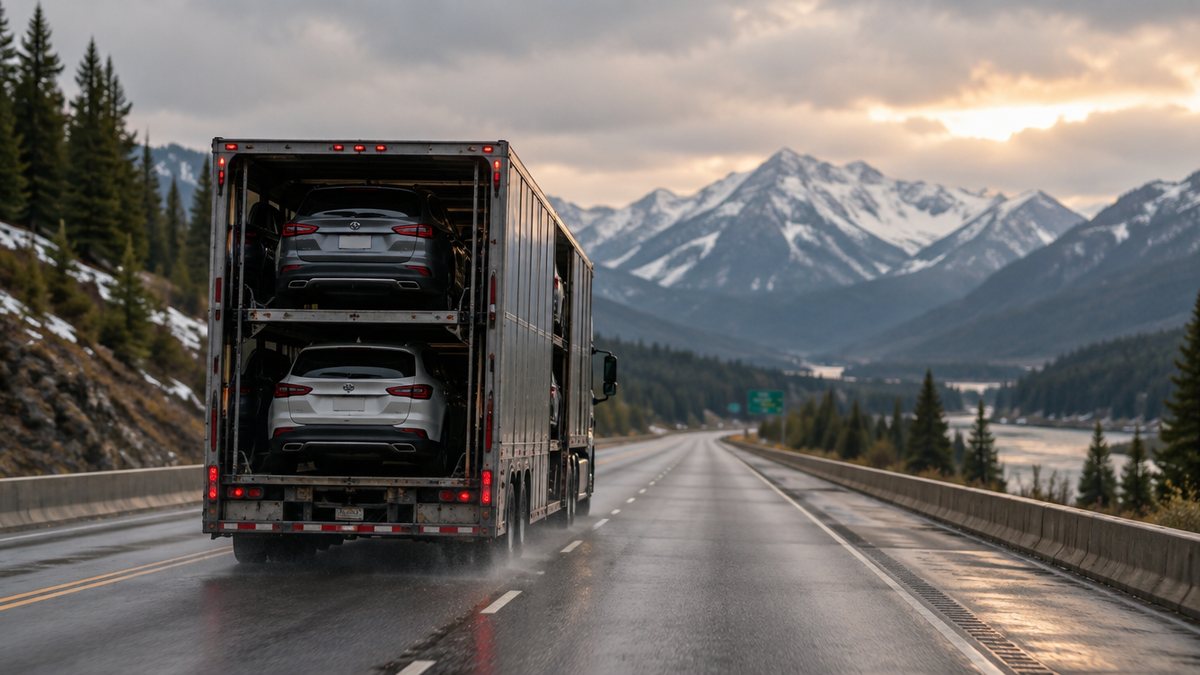
1. Why out-of-province buyers shop BC dealers
Buyers in Alberta, Ontario and Saskatchewan shop BC lots for condition: on the coast, winter is rain rather than road salt, so underbodies, brake lines and subframes on Lower Mainland cars tend to show far less corrosion than same-age cars from the Prairies or the 401 corridor. That is a market observation, not a statistic. The trade-off is paperwork: two tax systems, two registration systems, and a long drive or a carrier bill. This guide takes the rules in the order you meet them, from official pages, as of September 2026. For the reverse trip, read Buying a Car in Alberta and Bringing It to BC.
2. What a BC dealer charges a non-resident: PST, GST and the $10 levy
A licensed BC dealer does not charge PST on a vehicle sold to a non-resident who will register it in another province, but does charge 5% GST. Bulletin PST 116 (revised April 2026) gives dealers two separate exemptions:
- Vehicles purchased for use outside BC. Exempt if the vehicle is bought for use primarily outside BC, will not be used in BC for business, will not be registered in BC, and you are not a BC resident. You sign Certificate of Exemption FIN 440, which the dealer keeps, and you may drive the car home; Bulletin PST 309 lists the same conditions.
- Vehicles shipped out of BC. No PST if the dealer ships or delivers the vehicle outside BC and you make no use of it in BC other than storage with the dealer; the dealer keeps the bill of lading as evidence.
The exemption is lost if you register the car in BC: Bulletin PST 308 charges a non-resident PST on the depreciated purchase price in that case. GST is separate and follows the delivery point. The CRA's Info Sheet GI-119 shows a dealer charging 5% GST on a vehicle delivered in a non-participating province, with the buyer paying the provincial part of HST at their own registration office later. If the dealer ships the car to an Ontario address, the CRA's place-of-supply rule makes it a 13% HST sale. Alberta and Saskatchewan have no HST, so a car shipped there carries 5% GST either way.
Since April 1, 2026, every consumer purchase from a licensed BC dealer also carries the VSA Transaction Levy of $10, itemized on the bill of sale with tax on top. Our prices are all-in except tax and a $495 documentation fee disclosed on every listing, so your invoice is the price, the doc fee, the $10 levy and 5% GST (or 13% HST on a car we ship into Ontario). For what BC residents pay, see PST on a Used Car in BC.
3. Alberta: no sales tax, but a mandatory Out of Province inspection
Alberta has no provincial sales tax, so your only tax is the 5% GST paid in BC, but alberta.ca is explicit that "a vehicle purchased outside of Alberta, but within Canada, must pass an Alberta Out of Province Vehicle Inspection before it can be registered." The sequence that works:
- Insure it first. A registry agent needs "proof of valid insurance for the vehicle that includes the name(s) of the person(s) requesting the registration," the bill of sale and ID.
- Move it on a permit or a carrier. Alberta eServices issues an In-Transit Permit online to move an unregistered vehicle "between two points in Canada" when one point is in Alberta: up to 7 days, $30 including service charges, insurance required.
- Book the inspection at a licensed facility with a technician licensed by the Vehicle Inspection Program; per alberta.ca, facilities set and post their own price.
- Register within 14 days. "Inspection certificates must be presented to any Alberta registry agent within 14 days from the date of issue," or the inspection is repeated.
- Plates. Alberta plates belong to the owner; alberta.ca says an existing plate and registration can be transferred to the new vehicle.
Do not count on the New West Partnership exemption. Alberta's out-of-province registration sheet (September 3, 2026) exempts a BC vehicle newer than four model years or inspected by BC within 90 days, but "only private passenger vehicles registered to the same person in BC, SK or MB qualify." A dealer's car was registered to the dealer, so plan on the full inspection. New residents get 90 days; a purchase has no grace period, since a vehicle on an Alberta road must already be insured and registered.
4. Ontario: 13% either way, plus a Safety Standards Certificate
Ontario buyers pay 13% in total whether the dealer ships the car or they drive it home; what changes is who collects it. Ontario's Retail Sales Tax rules apply the 13% RST to private purchases only; RST "does not apply to a specified vehicle that is purchased from a GST/HST registrant in Ontario or elsewhere in Canada." A licensed BC dealer is a GST registrant, so RST and its Red Book valuation do not apply. Instead:
| How you take delivery | Charged by the BC dealer | Charged at ServiceOntario | Example on a $30,000 car |
|---|---|---|---|
| You collect it in BC (drive or ship it yourself) | 5% GST | 8% provincial part of HST | $1,500 to the dealer + $2,400 at registration = $3,900 |
| The dealer ships it to your Ontario address | 13% HST | Nothing further | $3,900 to the dealer |
Example only. Sources: Ontario's out-of-province vehicle page and the CRA's motor vehicles page.
The inspection is the Safety Standards Certificate. Ontario.ca says you need one to register a vehicle from another province, any licensed Motor Vehicle Inspection Station can issue it, the price is not regulated, and it is valid for 36 calendar days. Then go to ServiceOntario with the signed BC registration, bill of sale, certificate, proof of insurance, ID and the Application for Vehicle Registration (SR-LV-006).
Per ontario.ca, you must have insurance before you register (minimum $200,000 liability); plates "move with you, the owner, not with the vehicle," so you can reuse yours; and a temporary vehicle permit lets you drive to a garage for the inspection before the car is plated. The 30-day rule is for new residents, per the MTO Driver's Handbook; for a purchase, the practical clock is the 36-day certificate.
5. Saskatchewan: 6% PST at SGI and a mechanical safety inspection
Saskatchewan collects its 6% PST when you register, because a BC dealer does not collect Saskatchewan tax, and SGI will not plate a used car last registered in BC until it passes a mechanical safety inspection.
Bulletin PST-78 (revised August 2026) says issuers collect PST at registration when "the vehicle was purchased from an unlicensed motor dealer or other business located outside Saskatchewan," on "the total purchase price." The $5,000 exemption is for private sales between individuals only; on a $30,000 car that is $1,800 at SGI.
On inspection, SGI's inspection page lists "a used vehicle most recently titled, licensed or registered outside of Saskatchewan" as needing a mechanical safety inspection but not a body integrity inspection. SGI's importing a vehicle page confirms the rule; its New West Partnership exemption requires that the owner moved from BC or Alberta and the vehicle "was last registered in a NWP jurisdiction to the customer applying for the inspection exemption," so a dealer-bought car does not qualify.
SGI says a used vehicle previously registered outside Saskatchewan needs the inspection and a bill of sale with the date, buyer, VIN, price and the seller's details. Basic plate insurance is bought with the plates, per the Saskatchewan Driver's Handbook, which gives new residents 90 days. For the trip home, SGI says "a Temporary Insurance Card (TIC) or registration permit may be purchased from your motor licence issuer so you can have insurance in place prior to the vehicle being registered."
6. Getting the car home: carrier or drive it
Two real options, a truck or temporary paper, and neither involves BC plates: ICBC's selling a used vehicle page requires the seller to remove them, and the ICBC Autoplan brochure says a buyer must plate and insure the car, transfer plates, or "obtain a Temporary Operation Permit."
Option A: carrier
An open carrier is cheaper and fine for almost any daily driver; an enclosed carrier costs more and shields the car from rock chips and weather. What moves the quote is distance and whether your city is on a regular route, the season, enclosed versus open, and how flexible your pickup window is. We arrange transport across Canada by carrier and quote the shipping cost before you place the refundable $500 reservation; a car delivered to your address fits the "shipped out of BC" PST treatment above.
Option B: drive it home
- BC leg: a Temporary Operation Permit from any Autoplan broker licenses and insures the vehicle for set dates.
- Alberta: the In-Transit Permit works from the showroom to your Alberta address, with Alberta insurance already in place.
- Ontario: bind Ontario insurance before you leave; once home, a temporary vehicle permit gets you to the safety inspection.
- Saskatchewan: buy the Temporary Insurance Card or permit from your motor licence issuer first.
7. Side by side: BC, Alberta, Ontario and Saskatchewan
| Register in BC (resident) | Alberta | Ontario | Saskatchewan | |
|---|---|---|---|---|
| Tax at the BC dealer | 7% PST + 5% GST (PST steps to 8, 9 and 10% from $55,000; 15% and 20% above $125,000) | 5% GST | 5% GST if collected in BC; 13% HST if the dealer ships to Ontario | 5% GST |
| Tax at registration | None further | None | 8% provincial part of HST, unless 13% HST was already charged | 6% PST at the motor licence issuer |
| Inspection before plates | None for a BC-registered car | Out of Province Vehicle Inspection, licensed facility | Safety Standards Certificate, licensed inspection station | SGI mechanical safety inspection |
| Deadline | Transfer within 10 days; new residents 30 days | Certificate within 14 days of issue; new residents 90 days | Certificate valid 36 days; new residents 30 days | No fixed purchase deadline; new residents 90 days |
| Plates | Seller removes plates; transfer yours or get new | Belong to the owner; transfer yours or get new | Move with the owner; use yours or buy new | Tied to the customer; transfer yours or get new |
As of September 2026, from PST 308 and PST 116, CRA GI-119, alberta.ca, ontario.ca, SGI and Saskatchewan PST-78. Inspection fees are set by each facility.
Every vehicle we sell is Spinny Assured (150-point inspection, free CARFAX, 6-month warranty on major mechanical components). Browse and reserve online from our inventory, and ask our New Westminster showroom for a carrier quote first.
Frequently Asked Questions
Do I pay BC PST if I buy a car in BC and register it in Alberta?
No, if you meet the Bulletin PST 116 conditions: you are not a BC resident, the car will be used and registered outside BC, and you sign form FIN 440. A car the dealer ships to Alberta is exempt on the shipping evidence alone. You still pay 5% GST.
Does a BC dealer charge Ontario HST?
Only if the dealer delivers the car into Ontario, which makes it a 13% HST sale under the CRA place-of-supply rule. If you take delivery in BC, you pay 5% GST to the dealer and the 8% provincial part of HST at ServiceOntario.
Do I need an out-of-province inspection for a BC car in Alberta?
Yes. Alberta requires an Out of Province Vehicle Inspection for any vehicle purchased outside Alberta but within Canada, and the certificate must reach a registry agent within 14 days. The New West Partnership exemption only covers a vehicle already registered in your own name.
How much PST does Saskatchewan charge on a car bought from a BC dealer?
6% of the total purchase price, collected by the SGI motor licence issuer when you register. The $5,000 private-sale exemption does not apply to a purchase from a business.
Can I drive the car home from BC without plates?
Yes. An ICBC Autoplan broker issues a Temporary Operation Permit that licenses and insures the vehicle for set dates, and Alberta sells a 7-day In-Transit Permit for an unregistered vehicle headed to an Alberta address. Arrange home-province insurance first.
How long is an Ontario Safety Standards Certificate valid?
36 calendar days from the inspection. Register within that window or you pay for another inspection.
What we actually see at our New Westminster showroom
The out-of-province deals that go smoothly share three habits: the buyer binds insurance on the VIN before reserving, gets the carrier quote in writing, and says up front whether the car is shipping or being driven, which decides whether the PST file needs a FIN 440 or a bill of lading. The ones that stall are almost always insurance: a buyer plans to drive home but has no home-province policy, and an Alberta in-transit permit cannot be issued without one.
On the car itself, read the 150-point inspection report and the free CARFAX before you reserve, and ask about anything an inspector is likely to flag, such as tires near the wear bar or a windshield chip; it is far cheaper to deal with here than to fail an inspection 1,000 kilometres away. And read the 7-day exchange privilege before the car leaves BC: it is an exchange for another Spinny Assured vehicle under the purchase agreement's terms, not a cash refund.
Sources & official references
This guide reflects our day-to-day experience at our New Westminster showroom and is cross-checked against official sources. Rules, rates and warranty terms change; always confirm current details with:
- Government of BC — Bulletin PST 116, Motor Vehicle Dealers (PDF)
- Government of BC — Bulletin PST 308, Vehicles (PDF)
- Government of BC — Bulletin PST 309, PST and Non-Residents (PDF)
- Canada Revenue Agency — GI-119, place of supply of specified motor vehicles
- Canada Revenue Agency — GST/HST place-of-supply rules
- Canada Revenue Agency — GST/HST and motor vehicles
- VSA — BC Transaction Levy (effective April 1, 2026)
- ICBC — selling a used vehicle
- ICBC — Autoplan insurance guide (PDF)
- Government of Alberta — Register a vehicle
- Government of Alberta — Out-of-province vehicle inspections
- Government of Alberta — Registering an Out-of-Province Vehicle in Alberta (PDF)
- Alberta eServices — In-Transit Permit, point A to point B
- Government of Alberta — Licence plates
- Government of Ontario — Register an out-of-province vehicle
- Government of Ontario — Retail Sales Tax on specified vehicles
- Government of Ontario — Safety Standards Certificate
- Government of Ontario — Register and insure a vehicle in Ontario
- Government of Ontario — MTO Driver's Handbook, vehicle insurance and registration
- SGI — Importing and exporting vehicles
- SGI — Vehicles unfit for registration (inspection requirements)
- SGI — Registering new and used vehicles
- SGI — Saskatchewan Driver's Handbook, vehicle registration
- Government of Saskatchewan — Information Bulletin PST-78, Private Vehicle Sales and Other Vehicle Transactions (PDF)
Shipping across Canada, quoted before you reserve
Pick the car online, get the carrier quote up front, and reserve with a fully refundable $500 deposit.