
$0 Down vs 10% vs 20% Down on a Used Car in BC: Real Payment Examples
A down payment lowers your payment, your total interest and how far underwater you start, but it does not touch BC's 12% tax or the doc fee. We ran three cars from our inventory at $0, 10% and 20% down over 60, 72 and 84 months so you can see exactly what each choice costs.

1. What a down payment changes, and what it does not
A down payment reduces the amount you borrow, so it lowers four things at once: the monthly payment, the total interest over the term, how far underwater you are in the first years of the loan, and, for many lenders, the risk they see in your file. It does not reduce the tax or the documentation fee, because both are calculated on the vehicle price before your down payment is subtracted.
In BC, a dealer sale carries 7% PST plus 5% GST on most used passenger vehicles under $55,000, as listed on ICBC's PST on vehicles page. The province's Bulletin PST 308 defines the purchase price as "the total price you pay to purchase a vehicle before a deduction for a trade-in or down payment." On a $23,995 car the tax is $2,879 whether you put down $0 or $4,799. A trade-in is different; see section 6.
- Lower payment and less interest. At 4.99% APR, every $1,000 down cuts the payment by about $19 a month on 60 months, $16 on 72 and $14 on 84, and saves roughly $132, $160 and $187 in interest respectively (derived from the tables below).
- Less negative equity. With tax and the doc fee financed, a $0-down loan starts at about 114% of the listed price. A 20% down payment brings that under 95% on day one.
- Better approval odds. Lenders weigh the down payment alongside your score; section 5 explains how.
2. Real payment examples: three cars, three down payments, three terms
The tables use three cars that were listed in our inventory in September 2026 and the same formula as our online payment calculator: amount financed equals the listed price plus 12% BC tax (5% GST plus 7% PST) plus the $495 documentation fee, minus the down payment, at 4.99% APR fixed with monthly compounding, payments rounded to the dollar. Bi-weekly figures are the annual total split over 26 payments. On approved credit; rates vary by credit and lender.
2025 Hyundai Elantra Preferred, listed $23,995 ($27,369 with tax and doc fee)
| Down payment | Amount financed | 60 months | 72 months | 84 months |
|---|---|---|---|---|
| $0 (0%) | $27,369 | $516/mo $238 bi-weekly Interest $3,613 | $441/mo $203 bi-weekly Interest $4,358 | $387/mo $178 bi-weekly Interest $5,114 |
| $2,400 (10%) | $24,969 | $471/mo $217 bi-weekly Interest $3,296 | $402/mo $185 bi-weekly Interest $3,976 | $353/mo $163 bi-weekly Interest $4,666 |
| $4,799 (20%) | $22,570 | $426/mo $196 bi-weekly Interest $2,979 | $363/mo $168 bi-weekly Interest $3,594 | $319/mo $147 bi-weekly Interest $4,217 |
Listed price plus 12% tax and $495 doc fee, minus down payment, 4.99% APR, monthly compounding, on approved credit. Down payments are 10% and 20% of the listed price. September 2026.
2025 Toyota Corolla LE Hybrid, listed $30,995 ($35,209 with tax and doc fee)
| Down payment | Amount financed | 60 months | 72 months | 84 months |
|---|---|---|---|---|
| $0 (0%) | $35,209 | $664/mo $306 bi-weekly Interest $4,648 | $567/mo $261 bi-weekly Interest $5,606 | $497/mo $229 bi-weekly Interest $6,579 |
| $3,100 (10%) | $32,109 | $606/mo $279 bi-weekly Interest $4,238 | $517/mo $238 bi-weekly Interest $5,112 | $454/mo $209 bi-weekly Interest $6,000 |
| $6,199 (20%) | $29,010 | $547/mo $252 bi-weekly Interest $3,829 | $467/mo $215 bi-weekly Interest $4,619 | $410/mo $189 bi-weekly Interest $5,421 |
Same method as above. September 2026.
2025 Toyota Camry SE Hybrid, listed $37,995 ($43,049 with tax and doc fee)
| Down payment | Amount financed | 60 months | 72 months | 84 months |
|---|---|---|---|---|
| $0 (0%) | $43,049 | $812/mo $374 bi-weekly Interest $5,682 | $693/mo $320 bi-weekly Interest $6,854 | $608/mo $280 bi-weekly Interest $8,044 |
| $3,800 (10%) | $39,249 | $741/mo $341 bi-weekly Interest $5,181 | $632/mo $291 bi-weekly Interest $6,249 | $555/mo $256 bi-weekly Interest $7,334 |
| $7,599 (20%) | $35,450 | $669/mo $308 bi-weekly Interest $4,679 | $571/mo $263 bi-weekly Interest $5,644 | $501/mo $231 bi-weekly Interest $6,624 |
Same method as above. September 2026.
3. What the tables tell you
Three patterns hold across all three cars: each 10% down saves a predictable amount, a longer term lowers the payment more but always costs more, and a big down payment on a long term can still pay more interest than no down payment on a short one.
- Each 10% down saves the same amount every time. On the Elantra, 0% to 10% cuts the 60-month payment by $45 and the interest by $317, and 10% to 20% does the same again. The Corolla steps are $58 and $410; the Camry steps are $71 to $72 and $501 to $502.
- Term moves the payment more, at a price. At $0 down, stretching the Elantra from 60 to 84 months drops the payment $129 but adds $1,501 in interest. The Corolla drops $167 and adds $1,931. The Camry drops $204 and adds $2,362.
- 84 months at 20% down still pays more interest than 60 months at $0 down. Elantra: $4,217 versus $3,613. Corolla: $5,421 versus $4,648. Camry: $6,624 versus $5,682. Cash down does not undo the cost of two extra years.
- 72 months at 20% down is the closest thing to a free lunch here. On the Elantra it pays $3,594 in interest, $19 less than 60 months at $0 down, at $363 a month instead of $516. The Corolla and Camry show the same near-tie.
4. Negative equity: why $0 down and 84 months is the riskiest mix
Negative equity means you owe more on the loan than the car is worth, and a $0-down, 84-month loan puts you there on day one and keeps you there for years, because the balance falls slowly while the car's value falls quickly. The Financial Consumer Agency of Canada defines long-term loans as 72 months or more and lists negative equity as their main risk.
On the Elantra, the $0-down loan is $27,369 against a car listed at $23,995: you owe about 114% of the price before you drive it home, because the financed tax and doc fee are the first slice of negative equity. At 10% down you owe about 104%; at 20% down about 94%, the only row with equity from day one. Then the car depreciates while, on a long term, the early payments are mostly interest and the balance barely moves. FCAC's own example borrower is still $8,520 underwater two years in.
FCAC's research report on extended-term loans found the share of Canadians trading in while in negative equity rose from 20% in 2010 to 30% in 2015, because many "continue to change their vehicles every four years or so, while still owing on their previous vehicle," and rolling the shortfall forward puts them on what it calls the "auto-debt treadmill." The Vehicle Sales Authority of BC lists no down payment and extended terms as the first two causes of negative equity, and its advice is "Shop for a vehicle, not a monthly payment!"
In practice: if the car is written off, insurance pays what it is worth, not what you owe. If you sell early, the shortfall is yours. If you trade, it rolls into the next loan; our article on trading in a car with a loan shows what that costs.
5. How lenders in BC look at your down payment
Lenders look at your down payment through loan-to-value: the loan divided by what the car is worth to them, usually a wholesale book value rather than the sticker. A lower ratio means a smaller loss if they ever have to repossess, so a down payment improves your odds of approval and can improve the rate or term offered. Caps are set lender by lender and are not published.
Equifax Canada puts it plainly: "lenders and creditors use many factors to help decide whether to extend you credit and on what terms, and credit scores may be only one of them. Those factors may include information such as your income, your down payment, or the amount of the loan" (Equifax Canada). Equifax's down payment guidance adds that cash up front "helps decrease the amount of risk to the lender."
- Prime borrowers are routinely approved at $0 down on a used car. The down payment is a choice about cost, not approval.
- Near-prime borrowers may get $0 down on a shorter term or higher rate; money down often buys the better term or rate.
- Subprime borrowers (thin file, past delinquencies, a recent consumer proposal or bankruptcy) are the group for whom money down most often decides the outcome. Lenders in this tier price for a higher chance of default, so they cap the loan closer to the car's value and often ask for a down payment to get there. See our guide to bad-credit car financing in BC.
A down payment cannot move you between credit tiers. The 4.99% in the tables is a prime rate; see car loan rates in BC by credit score for the others. Pre-qualifying through our online application does not affect your credit score and tells you which tier you are in before you decide how much to put down.
6. Where the money can come from
A down payment can be cash, trade-in equity, a gift, or a mix, and in BC the trade-in is the most tax-efficient because it reduces the taxable price of the car you are buying while cash does not.
- Cash from savings. The simplest option. Keep an emergency cushion; a down payment that empties your account is worse than a slightly higher payment.
- Trade-in equity. When a licensed dealer takes your car as part of the deal, Bulletin PST 308 says "the value of the trade-in may reduce the taxable purchase price of the motor vehicle," with the dealer rules in Bulletin PST 116. A $10,000 trade on the Corolla cuts the taxable price to $20,995 and saves about $1,200 in PST and GST on top of the $10,000 off the loan. If you still owe on the trade, the dealer pays your lender and only the equity counts. Start with an online trade-in offer.
- A gift from family. Lenders generally accept gifted funds, but expect to show where a recent deposit came from; they check for a loan hiding as a gift.
- Not a credit card or a second loan. The lender sees the new balance on your bureau, and you pay two interest rates instead of one.
If you must choose between more down and a longer term to hit a payment, the tables settle it: down payment first. Adding a year cuts the payment more, but adds hundreds in interest and a year of negative-equity exposure.
7. A quick rule of thumb: 20/4/10
The 20/4/10 rule says put 20% down, finance for no more than four years, and keep total transportation costs (payment, insurance, fuel and maintenance) under 10% of your gross monthly income. It is a widely circulated personal-finance guideline, not a regulation or a lender requirement, and it was written with new-car depreciation in mind. Few BC used-car buyers meet all three: a $547 Corolla payment alone is 10% of a $65,640 gross annual income, before insurance and fuel.
A more practical BC version for a used car in 2026:
- Put down at least enough to cover the financed tax and fee, roughly 13% to 14% of the listed price here, so you owe about what the car is worth on day one.
- Pick the shortest term you can carry after insurance and fuel, and treat 84 months as a ceiling for a car you will keep at least six years, not a default.
- If you must go long, go long with money down, because a down payment saves the most interest on the longest loans.
Available right now
Hybrids and sedans in stock right now
Live from our New Westminster showroom. Every one is Spinny Assured with a 150-point inspection and CARFAX.
 2021 Tesla Model 3 Standard Range Plus RWD | One Owner, Spinny Assured80,114 km • Electric$34,885
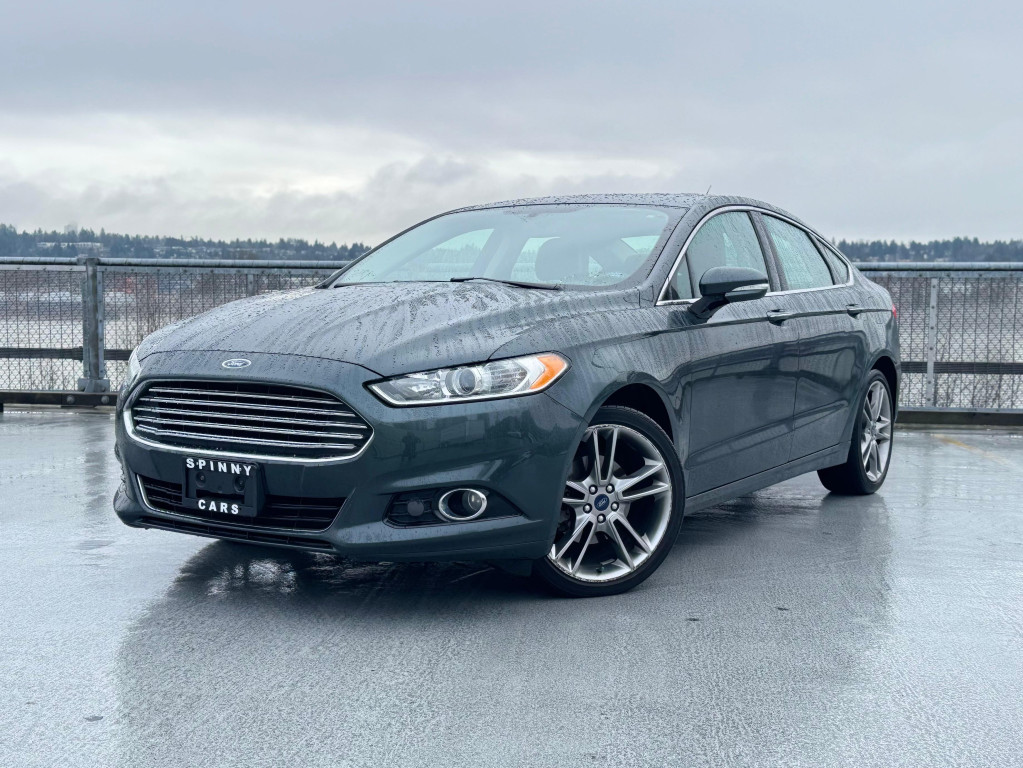 2015 Ford Fusion Titanium AWD | Sunroof, Leather Seats, Spinny Certified120,442 km • Gasoline$13,995
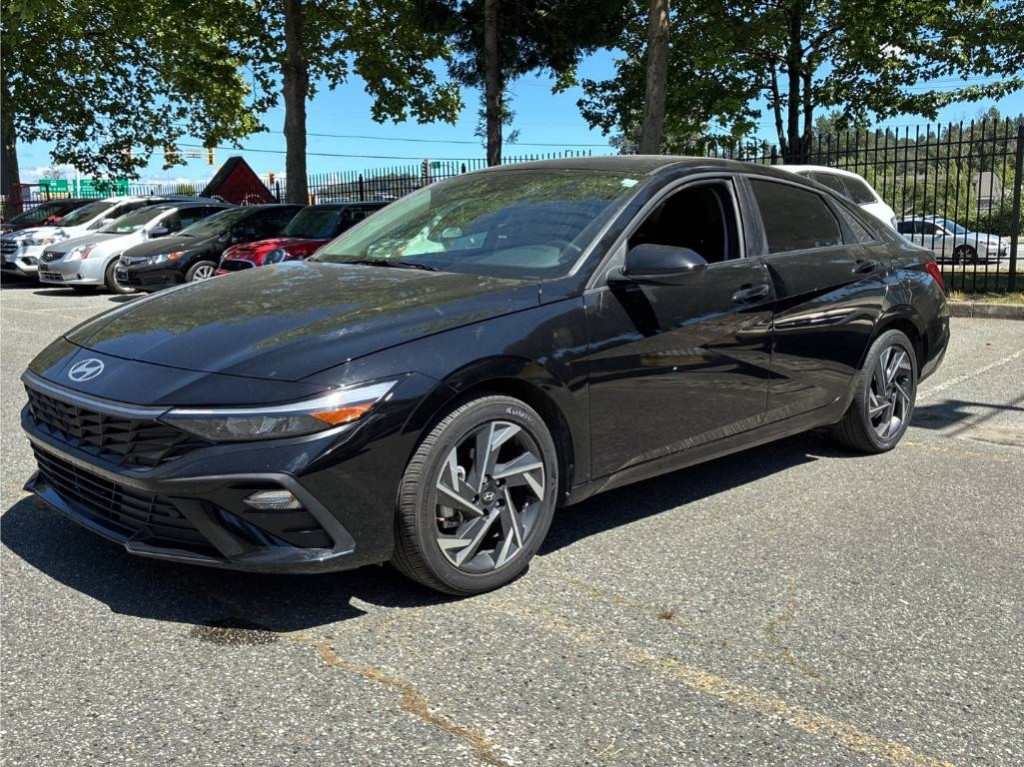 2024 Hyundai Elantra Preferred IVT41,652 km • Gasoline$24,995
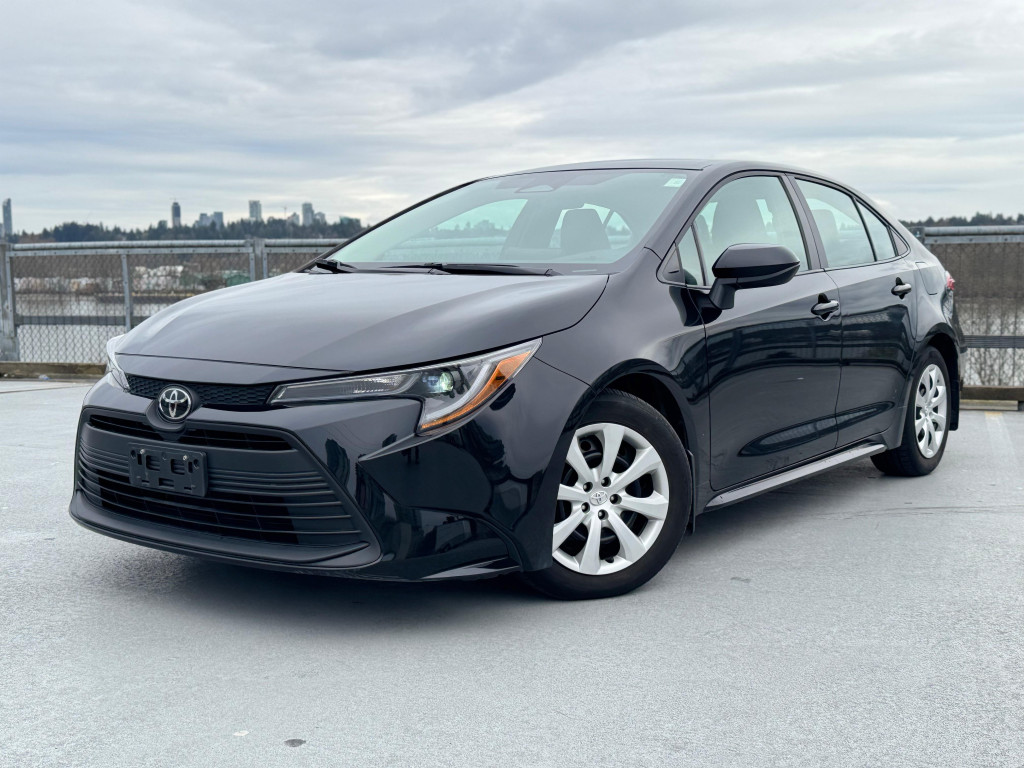 2024 Toyota Corolla LE | No Accidents, Local BC40,171 km • Gasoline$27,995
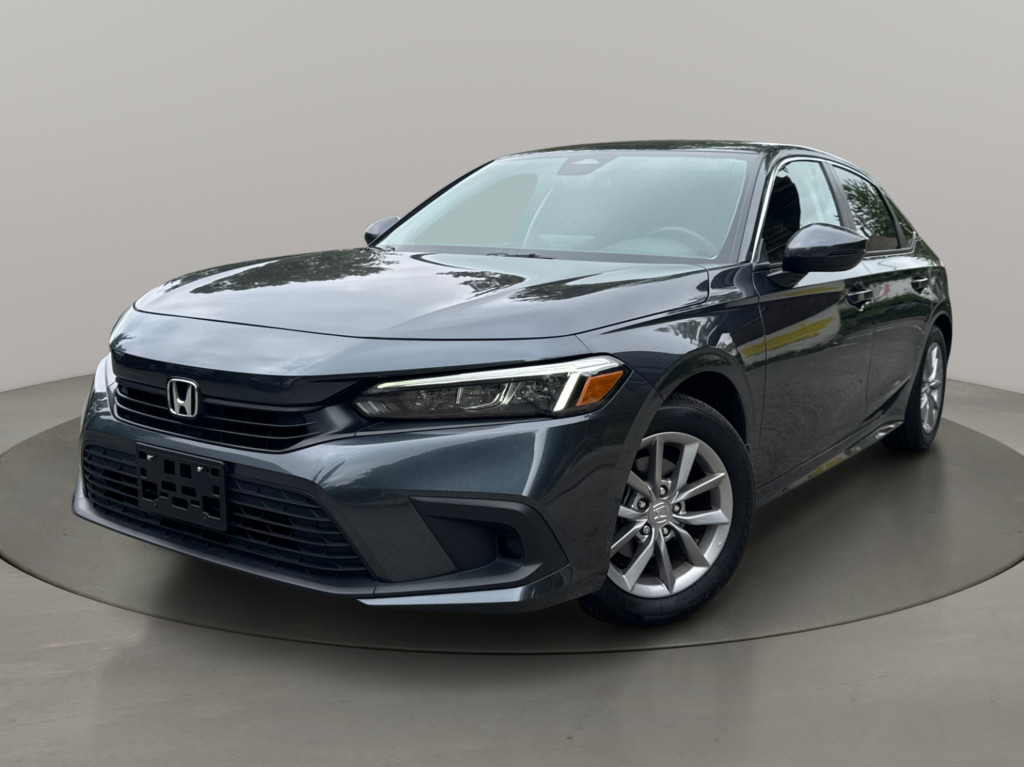 2024 Honda Civic Sedan EX CVT31,226 km • Gasoline$32,995
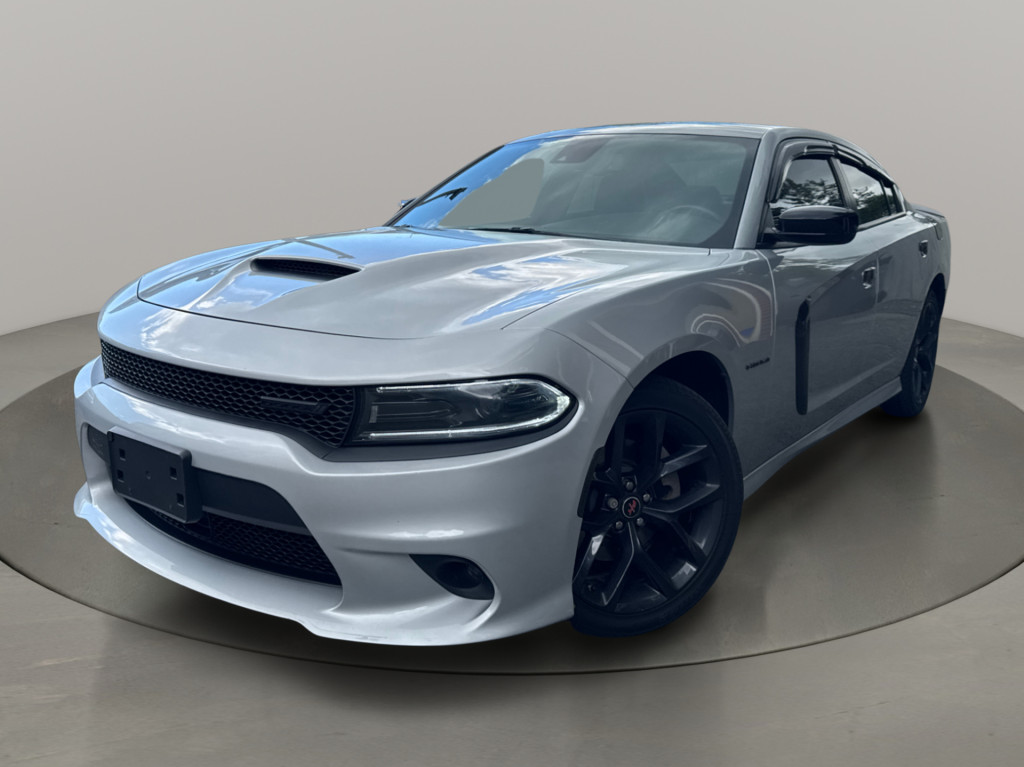 2022 Dodge Charger R/T Plus | Spinny Certified | Local BC | 150 Point inspected49,200 km • Gasoline$44,495
Frequently Asked Questions
Do I need a down payment to buy a used car in BC?
No. Borrowers with strong credit are routinely approved with $0 down on a used car in BC, and our own payment estimates assume $0 down. Lenders serving lower credit tiers often ask for money down to keep the loan within their loan-to-value limit.
Is 84 months too long for a used car loan?
It is the most expensive and most exposed option. On a 2025 Corolla LE Hybrid at 4.99% with $0 down, 84 months costs $6,579 in interest against $4,648 over 60 months, and you owe more than the car is worth for years. It can make sense if you keep the car for the whole term and put money down.
Does a down payment lower my interest rate?
Sometimes. A down payment lowers the loan-to-value, which reduces the lender's risk, and Equifax notes a bigger down payment will likely result in a lower rate. Your credit tier still sets the range. Either way, a down payment always lowers total interest because it shrinks the balance the rate applies to.
Does a down payment reduce the tax I pay in BC?
No. BC's Bulletin PST 308 defines the purchase price as the price before a deduction for a trade-in or down payment. A trade-in at a licensed dealer does reduce the taxable price, which is why trade-in equity is worth more than the same amount in cash.
How much does 10% down save per month?
On a 60-month loan at 4.99%, 10% down saves about $45 a month on a $24,000 car, $58 on a $31,000 car and $71 on a $38,000 car, and $300 to $500 in interest. On 84 months the monthly saving is $34 to $53 but the interest saving is larger.
What is the 20/4/10 rule for buying a car?
A budgeting guideline: 20% down, a loan of four years or less, and total car costs under 10% of gross monthly income. It is not a regulation or a lender requirement; its useful core is to put money down and keep the term short.
What we actually see at our New Westminster showroom
The buyers who leave happiest are not the ones with the lowest payment. They are the ones who saw all nine combinations for the car they wanted, on paper, before they picked one. The most common change of mind at our finance desk is someone who asked for 84 months, saw the interest line beside the 72-month figure, and chose 72 with a modest down payment. On the Elantra above that is $363 a month instead of $319, and about $620 less interest.
Where we push back is the $0-down, 84-month request on a car the customer plans to trade in three or four years. That is the profile that comes back with negative equity. If the payment only works at 84 months with nothing down, our honest advice is usually a less expensive car from the same lot, or a few months of saving toward a down payment. We would rather say that than write a loan that makes your next car harder to buy.
Sources & official references
This guide reflects our day-to-day experience at our New Westminster showroom and is cross-checked against official sources. Rules, rates and warranty terms change; always confirm current details with:
- ICBC — PST on vehicles
- Government of BC — Bulletin PST 308, Vehicles (PDF)
- Government of BC — Bulletin PST 116, Motor Vehicle Dealers (PDF)
- Financial Consumer Agency of Canada — financial risks when buying a car (long-term loans, depreciation, negative equity)
- Financial Consumer Agency of Canada — research report on extended-term car loans (2016)
- Vehicle Sales Authority of BC — negative equity
- Equifax Canada — five things to know about your credit scores
- Equifax — how much to pay for a down payment on a car
See your own numbers before you decide
Run any car in our inventory at any down payment and term, then get pre-approved online without affecting your credit score.