
How Many Kilometres Is Too Many for a Used Car?
Kilometres are the first number every used-car shopper looks at — and one of the most misunderstood. Here’s what actually counts as low, average, and high mileage in Canada, why how the kilometres were driven matters more than the count, and when a low-km car should make you more suspicious, not less.
1. The 20,000 km/year benchmark
The average Canadian driver covers roughly 15,000–20,000 kilometres a year. That gives you a simple sanity check: multiply the vehicle’s age by 20,000 and compare. A 5-year-old car with 100,000 km is exactly on schedule. The same car with 60,000 km ran light; with 150,000 km it worked hard — and the price should reflect which one you’re looking at.
Sellers price on this intuitively, which creates the opportunity: cars slightly above the benchmark get discounted more than their condition deserves, while “low km” commands a premium that isn’t always earned. Knowing the benchmark lets you spot both.
2. Low, average, and high — by age
| Vehicle age | Low | On schedule | High |
|---|---|---|---|
| 3 years | Under 40,000 km | 45,000–60,000 km | Over 75,000 km |
| 5 years | Under 65,000 km | 75,000–100,000 km | Over 125,000 km |
| 8 years | Under 100,000 km | 120,000–160,000 km | Over 190,000 km |
| 10 years | Under 130,000 km | 150,000–200,000 km | Over 230,000 km |
As rough market shorthand: under 100,000 km reads as “low” regardless of age, 100,000–160,000 is unremarkable, and past 160,000 the buyer pool shrinks — which is exactly why the well-documented high-km car is often the best value on the lot.
3. Highway vs city: how the kilometres were earned
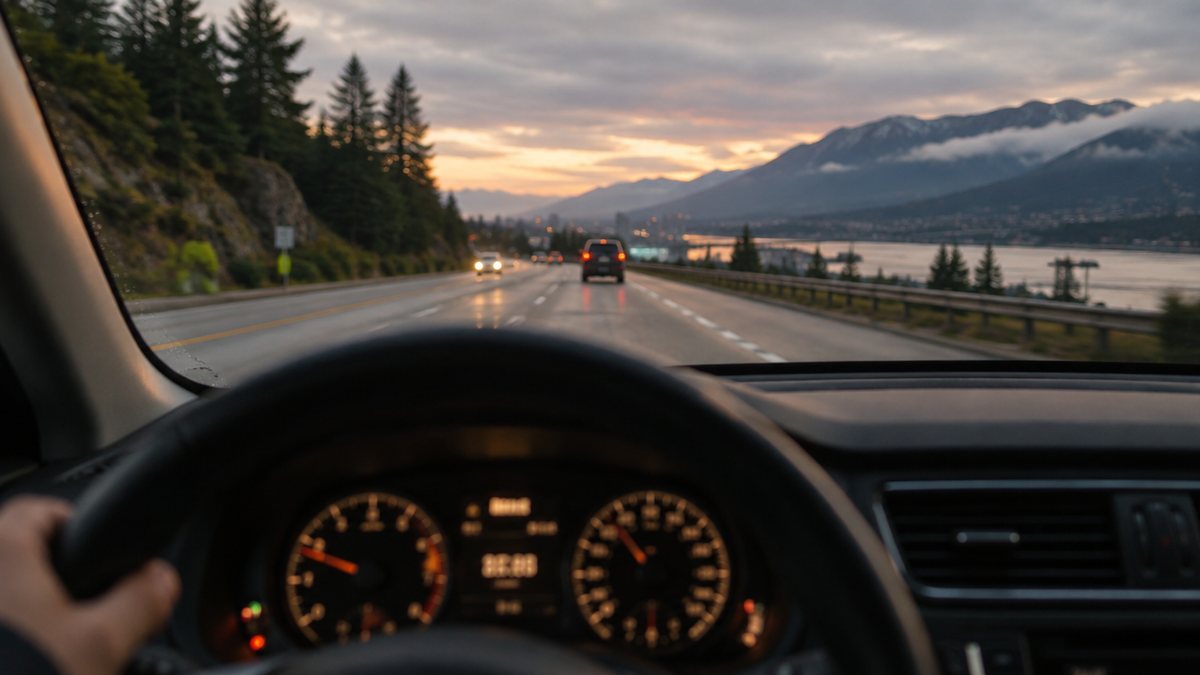
Two identical cars with 120,000 km can be in completely different condition. The Langley–Kamloops commuter earned its kilometres at steady highway speed and operating temperature: gentle on the engine, transmission, and brakes. The downtown Vancouver car did the same distance in stop-and-go on Kingsway and the Knight Street Bridge: thousands of cold starts, constant braking, clutch-and-torque-converter work — the hard kind of kilometre.
Ask every seller: what was this car’s life? A CARFAX report helps here too — registration history showing years in Surrey vs downtown, consistent annual mileage, and service records tell you how the number on the odometer was actually earned.
4. When high kilometres are fine
Modern drivetrains are built to last. Toyota, Honda, Lexus, and Mazda products with documented maintenance routinely pass 300,000 km; we’ve profiled the champions in our guide to cars that last past 250,000 km. A 160,000 km Highlander with a folder of service receipts is a safer bet than an 80,000 km mystery car with none.
High-km cars also carry the best price-per-remaining-kilometre in the market — the first owner absorbed the depreciation, you buy the remaining life at a discount. The two conditions: the maintenance history must exist, and big wear items (timing components, transmission service, brakes, tires) should be either done or priced into your offer.
5. When low kilometres lie
A 10-year-old car with 50,000 km sounds perfect — sometimes it is, and sometimes those were the worst 50,000 km available: 2 km grocery runs where the engine never warmed up, years of sitting with old fluids, dried seals and flat-spotted tires from storage. Rubber, gaskets, and brake components age on the calendar, not the odometer.
Low-km cars are worth a premium if the story checks out: consistent annual usage on the odometer history, fluids changed on the time schedule (not just the distance schedule), no long registration gaps. If the odometer history stalls flat for two years and then jumps, treat it as a question that needs a good answer — our inspection checklist covers what to look at in person.
6. The questions that matter more than the number
When our buyers evaluate a trade-in, kilometres are the fourth or fifth thing we weigh, after: maintenance documentation (the single best predictor of future reliability), accident and claims history, how it was driven (highway vs city, one owner vs five), and model reputation at that mileage — a 150,000 km Corolla and a 150,000 km of some European flagships are different bets entirely.
Every car in our inventory shows its kilometres up front alongside its CARFAX, and everything Spinny Assured passed a 150-point inspection regardless of the number on the dash. If you’re weighing two cars against each other, bring both stock numbers to our team — or ask the AI Search on our inventory page — and we’ll give you the honest comparison.
Frequently Asked Questions
What is good mileage for a used car in Canada?
Benchmark against 15,000–20,000 km per year of age. Under 100,000 km total is considered low, 100,000–160,000 km is average, and above 160,000 km is high mileage.
Is 100,000 km a lot for a used car?
No — for a 5-to-7-year-old vehicle it's right on schedule, and modern drivetrains from reliable brands routinely last 250,000–300,000+ km with maintenance.
Are highway kilometres better than city kilometres?
Yes, substantially. Highway driving keeps the engine at steady speed and temperature with little braking, while city stop-and-go means constant cold starts and wear. A highway-driven 140,000 km car can be in better shape than a city-driven 90,000 km one.
Should I avoid cars over 160,000 km?
Not automatically. With documented maintenance and a reliable model, a high-km car is often the best value on the lot — the first owner paid the depreciation. Without service records, be much more cautious.
Can low mileage be a bad sign?
Sometimes. Very low mileage from short city trips or long storage brings its own wear — aged fluids, dried seals, calendar-aged rubber — and can hide odometer irregularities. Verify the story with the odometer history on a CARFAX.
What we actually see at our New Westminster showroom
A pattern from our appraisal desk: the Lower Mainland produces two extreme kinds of trade-in. The Fraser Valley commuter — 160,000 km, nearly all of it at 100 km/h on Highway 1 — that drives like a much younger car. And the downtown tower car — 60,000 km in ten years, every one of them a cold start into stop-and-go — with brake, battery, and gasket wear that surprises its owner at appraisal time. We’d take the first car all week.
Our buying rule, which you’re welcome to steal: documentation beats odometer. When we bid at auction, a 150,000 km car with a complete service file wins over a 100,000 km car without one, every time. The number tells you how far it went; the folder tells you how it was treated — and treatment is what you’ll be living with.
Sources & official BC references
This guide reflects our day-to-day experience at our New Westminster showroom and is cross-checked against official sources. Always confirm current rules and rates with:
Every car, every kilometre, documented
Kilometres and CARFAX shown on every listing — and a 150-point inspection behind each Spinny Assured car.