
Used EV & Hybrid Buying Guide for Vancouver Drivers
Thinking about a used electric or hybrid car in Greater Vancouver? This guide covers the things that actually matter — battery health and warranty, real-world range, winter range loss, charging at home or in an apartment, current rebates, and which used models fit Lower Mainland life.
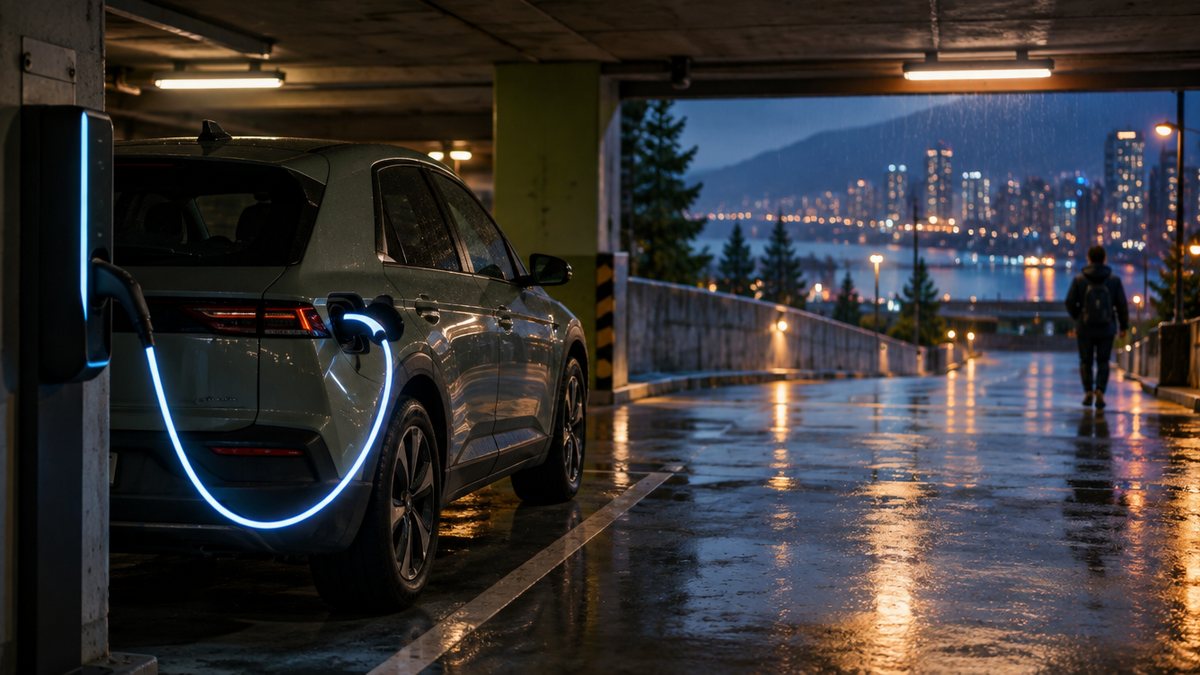
1. EV, hybrid, or plug-in hybrid?
Three powertrains dominate the used electrified market. A full EV (like a Tesla Model 3 or Hyundai Kona Electric) runs only on battery and is ideal if you can charge at home or work and most of your driving stays in the Lower Mainland. A hybrid (Toyota Prius, RAV4 Hybrid) never plugs in — it sips gas and is effortless for people who take frequent long trips. A plug-in hybrid (PHEV) drives short distances on battery and switches to gas for longer hauls, a smart bridge if convenient charging is uncertain.
If you commute from Surrey, Langley, or Coquitlam into Vancouver and can charge overnight, a full EV usually wins on cost. If you tow, road-trip to the Interior, or street-park with no plug, lean toward a hybrid or PHEV. Browse what's in stock now under Electric or Hybrid.
2. Battery health & warranty
On a used EV, the battery is the most valuable component, so battery health is the new odometer reading. Ask for the state of health (SOH) percentage and compare the current full-charge range to the original rating — a small drop after several years is normal. Most manufacturers back the high-voltage battery with an 8-year or roughly 160,000 km warranty, so confirm how much coverage remains and whether it transfers to you.
Always read the CARFAX Canada report for accident and service history, and on a hybrid, remember the battery is smaller and far cheaper to service than a full-EV pack. Every Spinny Cars listing includes the full history report, and our team can walk you through a vehicle's battery details before you commit.
3. Real-world & winter range
Advertised range is a best-case figure. Expect real-world numbers to land somewhat below the sticker, and plan for roughly 15–30% additional loss in the coldest months as the battery and cabin heater work harder. The good news for Lower Mainland drivers: our mild, wet winters are far gentler on range than Kelowna or Prince George.
The practical rule is headroom. If your daily round trip from Delta or New Westminster is, say, 60 km, a used EV with an approximate 350–450 km summer range will comfortably absorb winter loss without daily charging anxiety. Pre-conditioning the cabin while plugged in also helps preserve range on cold mornings.
4. Charging at home & in apartments
Home charging is the cheapest and most convenient option. A standard 120V outlet (Level 1) adds slowly overnight and suits low-mileage PHEVs; a 240V Level 2 charger fully replenishes most EVs by morning. Apartment and condo dwellers have more options than ever — many strata buildings across Vancouver, Burnaby, and Richmond are installing shared or stall-assigned chargers, and BC has one of Canada's strongest public DC fast-charging networks for top-ups on the go.
If your building has no charging yet, a plug-in hybrid lets you drive electric for short city trips and fall back on gas without range worries. Talk to your strata early — EV-charging upgrades are increasingly common requests.
5. Rebates & running costs in BC
Don't budget for a rebate on a used EV. The provincial CleanBC Go Electric vehicle rebate was paused on May 15, 2025 and covered new vehicles, and BC's PST exemption on used EVs ended April 30, 2025, so a used EV now pays PST (at a dealer, 7% under $75,000 until February 22, 2027, where a gas car pays 8% to 10% from $55,000). The federal Electric Vehicle Affordability Program, launched in 2026, pays up to $5,000 on a battery EV and $2,500 on a plug-in hybrid, but only on new and demo vehicles under 10,000 km. What is still open for used-EV buyers is the home charger rebate (up to $350 from CleanBC, plus BC Hydro top-ups). See our used EV rebates guide for the details and sources.
Even without an incentive, the day-to-day math favours electrification: lower fuel costs, fewer moving parts to service, and no oil changes on a full EV. Remember that 5% GST plus PST applies to your purchase. Use our payment calculator to see weekly or monthly costs on any listing.
6. Popular used models compared
These are some of the most common electrified vehicles we see Lower Mainland shoppers consider. Ranges are approximate and vary by model year, trim, battery size, and condition — always verify the specific vehicle.
| Model | Type | Approx. range | Good for |
|---|---|---|---|
| Tesla Model 3 | EV | ~400–500 km | Commuters wanting range & the Supercharger network |
| Tesla Model Y | EV | ~400–500 km | Small families needing space + EV range |
| Hyundai Kona Electric | EV | ~350–450 km | Efficient city & suburban driving |
| Hyundai Ioniq (EV/Hybrid) | EV or hybrid | EV ~300–400 km | Value-focused efficiency buyers |
| Kia Niro (EV/Hybrid) | EV or hybrid | EV ~350–450 km | Versatile small-crossover practicality |
| Toyota Prius | Hybrid | Gas-tank range, very high MPG | Long-trip drivers, no charging needed |
| Toyota RAV4 Hybrid | Hybrid | Gas-tank range, AWD available | Families wanting space + low fuel use |
Want help narrowing it down for your neighbourhood and commute? See electric inventory, compare against hybrids, or call our New Westminster team.
Frequently Asked Questions
Are there still EV rebates in BC in 2026?
Not on a used car. BC's CleanBC Go Electric vehicle rebate was paused on May 15, 2025 and only covered new vehicles, and BC's PST exemption on used EVs ended April 30, 2025, so a used EV now pays PST. At a dealer an EV keeps the 7% rate under $75,000 until February 22, 2027, where a gas car pays 8% to 10% from $55,000. The federal Electric Vehicle Affordability Program launched in 2026 pays up to $5,000, but only on new and demo vehicles under 10,000 km. Home charger rebates of up to $350 are still available through CleanBC, with BC Hydro top-ups. Full details in our used EV rebates guide.
How do I check battery health on a used EV?
Review the state of health (SOH) percentage, compare current full-charge range to the original rating, confirm remaining battery warranty (often 8 years / ~160,000 km), and read the CARFAX Canada report.
How much range do you lose in Vancouver winters?
Roughly 15–30% in the coldest months. The Lower Mainland's mild climate is gentler than the BC Interior, but choose a model with comfortable range headroom.
Can I own an EV if I live in an apartment?
Yes. Many strata buildings are adding chargers and public DC fast charging is widespread. A plug-in hybrid is a good bridge if home charging is limited.
Is a used EV or a hybrid better for me?
A full EV if you can charge conveniently and drive mostly local; a hybrid or PHEV if you take frequent long trips or can't rely on charging. Both beat a comparable gas car on fuel cost.
What we actually see at our New Westminster showroom
The single most common question we field comes from Burnaby and Vancouver condo owners: "Can I even charge this?" Honestly, it depends on your building. Some Metrotown and Brentwood towers already have stall-assigned Level 2; plenty of older walk-ups near the SkyTrain have nothing and a strata council that's still arguing about it. We tell apartment shoppers to confirm what their building allows in writing before committing to a full EV — and if the answer is murky, a plug-in hybrid almost always makes more sense.
On every used EV that comes through, we pull the state-of-health reading and compare the current full charge against the original rating, not just the dash estimate. Buyers are often surprised that a six-year-old Kona or Leaf can still show strong numbers, while some higher-mileage examples don't. On winter range, we set expectations honestly: a Coquitlam buyer climbing Burke Mountain or heading up the Sea-to-Sky in January should plan for noticeably less than the summer figure. For folks who only drive the kids around and otherwise take the SkyTrain, a smaller-battery EV or a hybrid is usually the smarter, cheaper buy than a long-range model they'll never fully use.
Sources & official BC references
This guide reflects our day-to-day experience at our New Westminster showroom and is cross-checked against official sources. Always confirm current rules and rates with:
Shop used EVs & hybrids
Battery details, CARFAX history, and clear pricing on every listing.