
Best Used Cars for High Resale Value in BC
In BC, the cars that hold value are the ones people trust to handle rain, mountains and long distances without drama: Toyota trucks and SUVs, Honda's core models, Lexus, Mazda's CX-5 and Subaru. This guide ranks them, explains why the BC market is different, and shows how to buy so the next owner pays you well.
1. Why resale value works differently in BC
Retained value is what a car sells for after a period of ownership, expressed as a share of what it cost. Nationally, the average vehicle keeps roughly 45 to 50 percent of its price after five years. In British Columbia the numbers skew in a few predictable ways, and understanding them is how you buy well here:
- No salt on the coast. Lower Mainland and Island cars do not rust the way Ontario and Quebec cars do. A ten-year-old BC-registered vehicle is worth more than the same car from the east, and buyers in Alberta and the Prairies actively seek "BC cars." That premium shows on the CARFAX as continuous BC registration.
- AWD and hybrids carry a premium. Mountains, rain and the Coquihalla make AWD desirable, and BC's fuel prices, the highest in the country, make hybrids worth more used than they are almost anywhere else.
- Distances are long. Kelowna, Kamloops and Prince George buyers cover huge kilometres and pay for cars with a reputation for lasting, which pulls Toyota and Honda values up across the province.
- Trucks are a way of life outside Metro Vancouver. Tacoma and F-150 demand in the Interior and the North holds used truck prices firm even when the Vancouver market softens.
The result is that the retained-value leaders from Canadian Black Book's national awards are, if anything, even stronger in BC.
2. Tier one: the vehicles that barely depreciate
| Vehicle | Typical 5-year retained value in BC | Why |
|---|---|---|
| Toyota Tacoma | about 70 to 75% | The benchmark. Legendary durability, huge demand in the Interior, supply never catches up. |
| Toyota 4Runner | about 65 to 72% | Body-on-frame SUV with a 20-year reputation; the go-to for Squamish and Whistler households. |
| Toyota Tundra | about 62 to 68% | Full-size truck durability, fewer sold than the domestics, strong resale in the North. |
| Toyota RAV4 / RAV4 Hybrid | about 60 to 68% | Canada's best-selling SUV; the Hybrid is the single strongest-holding compact SUV in the country. |
| Jeep Wrangler | about 60 to 66% | The exception among domestics: cult following, no direct competitor until recently. |
| Honda Civic | about 58 to 65% | Canada's best-selling car for most of two decades; young buyers keep the used market liquid. |
| Toyota Corolla / Corolla Hybrid | about 58 to 64% | Low purchase price, minimal maintenance, hybrid premium in BC. |
Retained-value ranges are our estimates from Lower Mainland market data and national award results in 2025 and 2026; individual vehicles vary with trim, kilometres, condition and history.
3. Tier two: strong holders across every segment
| Vehicle | Typical 5-year retained value in BC | Why |
|---|---|---|
| Honda CR-V / CR-V Hybrid | about 57 to 63% | Family default, excellent reliability, wide buyer pool. |
| Lexus RX and NX (especially hybrids) | about 55 to 62% | The only luxury brand in this tier. Toyota reliability with a premium badge; Vancouver's favourite luxury SUV. |
| Subaru Crosstrek / Forester / Outback | about 55 to 62% | Standard AWD sells itself in BC; huge following on the Island and Sea-to-Sky. |
| Mazda CX-5 | about 54 to 60% | Reliable, good-looking, and Mazda's rust warranty history reassures buyers. |
| Toyota Highlander / Sienna (Hybrid) | about 55 to 62% | Three-row family vehicles with Toyota durability; the Sienna Hybrid has no direct rival. |
| Ford F-150 | about 52 to 60% | Sheer demand outside Metro Vancouver; higher trims and 4x4 hold best. |
| Toyota Camry Hybrid | about 52 to 58% | The sedan market is shrinking, but the Camry Hybrid's rideshare and family demand keep prices firm. |
| Tesla Model Y / Model 3 | about 45 to 55%, volatile | Depends heavily on new-car pricing changes; buy used, not new, if resale matters. |
4. The vehicles that lose the most (and are therefore great to buy used)
Every one of these is a fine vehicle. They simply cost so much new and appeal to a buyer who wants the newest thing that they shed value quickly. That is bad news for the first owner and good news for you, provided you buy them used and budget for maintenance:
- German luxury sedans (Mercedes-Benz S-Class and E-Class, BMW 5 and 7 Series, Audi A6 and A8): often 35 to 45 percent retained after five years. A $130,000 S-Class becomes a $50,000 car. See our S-Class buying guide.
- Land Rover and Jaguar: 35 to 45 percent. Superb to drive, expensive to keep, and the market knows it.
- Full-size domestic SUVs and minivans (Durango, Explorer, Grand Caravan): 40 to 48 percent.
- Nissan and Chrysler sedans: 38 to 45 percent, driven by rental-fleet volume.
- Most EVs bought new in 2022 and 2023, after manufacturer price cuts reset the used market. Buying a two-year-old EV today is one of the best value plays in the market for exactly this reason.
5. How to buy so you get the most back
Two identical model-year Tacomas can be $6,000 apart at resale. The differences are all things you control on the day you buy:
- Colour. White, black, grey and silver resell fastest and highest. A bold colour can cost 3 to 5 percent at trade-in on a mainstream car (the reverse is sometimes true on a Wrangler or a sports car).
- Trim. Mid-level trims (a RAV4 XLE, a Civic EX, an F-150 XLT or Lariat) retain the highest percentage. Base trims lose the least in dollars; top trims lose the most.
- Kilometres. Buyers in BC still anchor on 100,000 km and 150,000 km. A car sold at 95,000 km is worth noticeably more than the same car at 105,000.
- History. A clean CARFAX with continuous BC registration and no claims adds several percent. Even a small disclosed claim costs some. Our guide on reading claims on a CARFAX explains what matters.
- Service records. A folder of dealer or reputable-shop invoices is worth real money to the next buyer and to the appraiser. Keep every receipt.
- Factory options over dealer add-ons. A factory tow package or sunroof adds value; aftermarket wheels, tints and lift kits usually subtract it.
- Buy hybrid where it exists. In BC, the hybrid version of a RAV4, Corolla, Camry, Highlander or Sienna retains several points more than the gas version because fuel prices make it worth more to the next owner.
Available right now
Spinny Assured cars in stock right now
Live from our New Westminster showroom. 150-point inspection, 6-month warranty, 7-day exchange and CARFAX on every one.
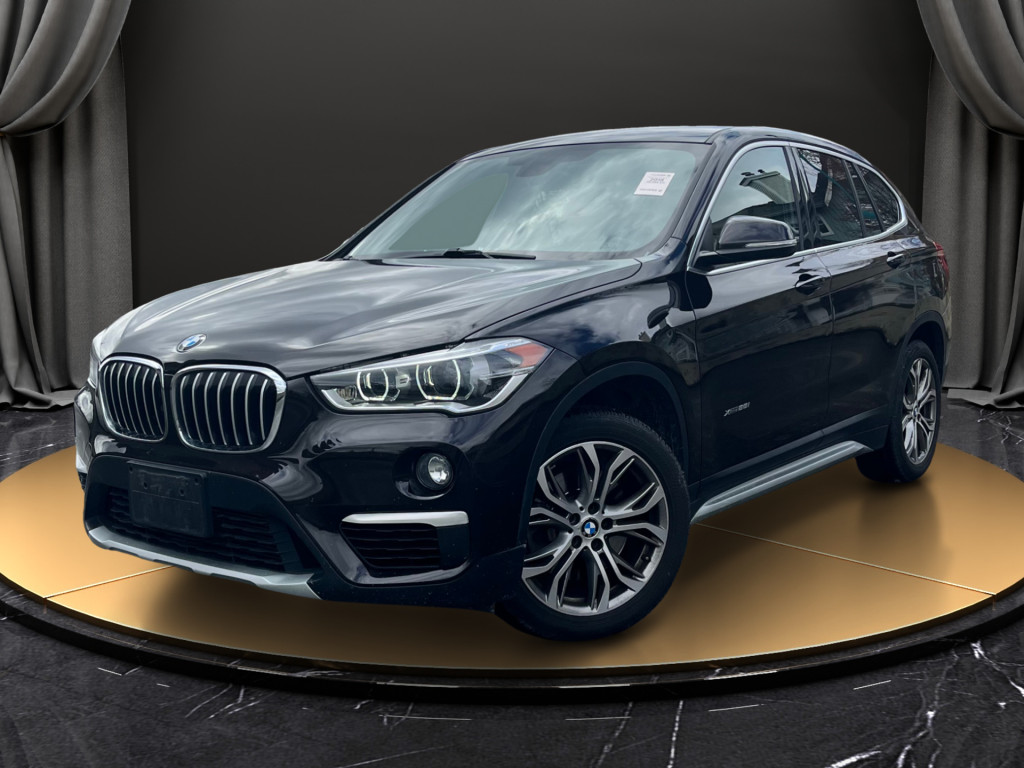 2018 BMW X1 AWD | Low kms, Spinny Certified79,055 km • Gasoline$21,995
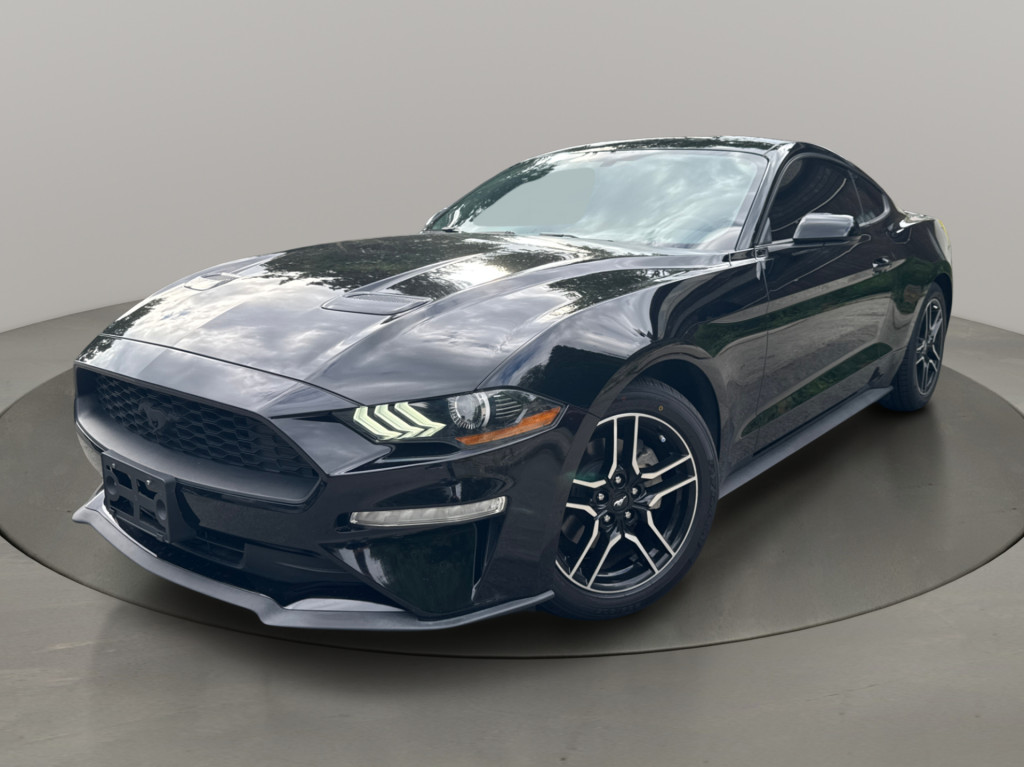 2019 Ford Mustang EcoBoost | Spinny Assured, 6 month free warranty49,300 km • Gasoline$30,995
 2021 Tesla Model 3 Standard Range Plus RWD | One Owner, Spinny Assured80,114 km • Electric$34,885
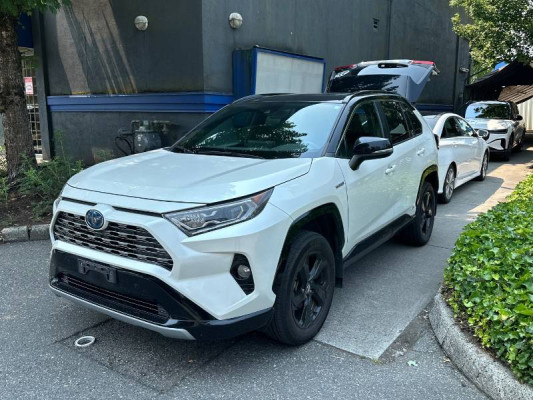 2020 Toyota RAV4 XSE Hybrid AWD | No accidents, Local BC113,543 km • Gasoline$35,995
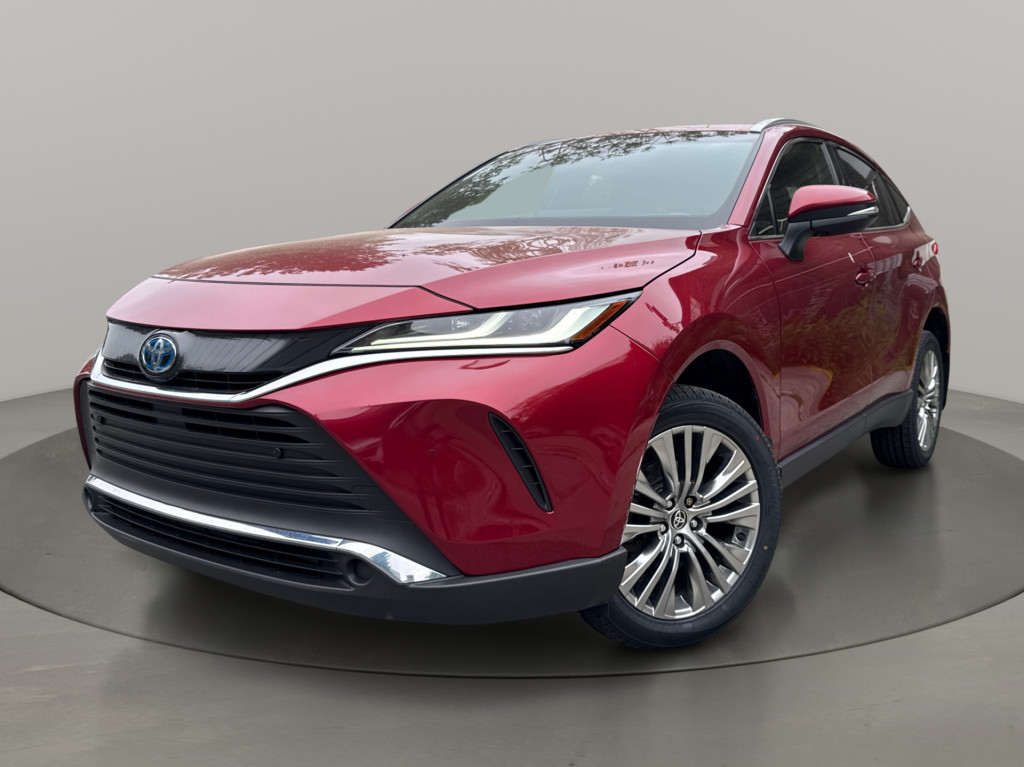 2022 Toyota Venza Hybrid AWD | No Accidents66,145 km • Gasoline$38,995
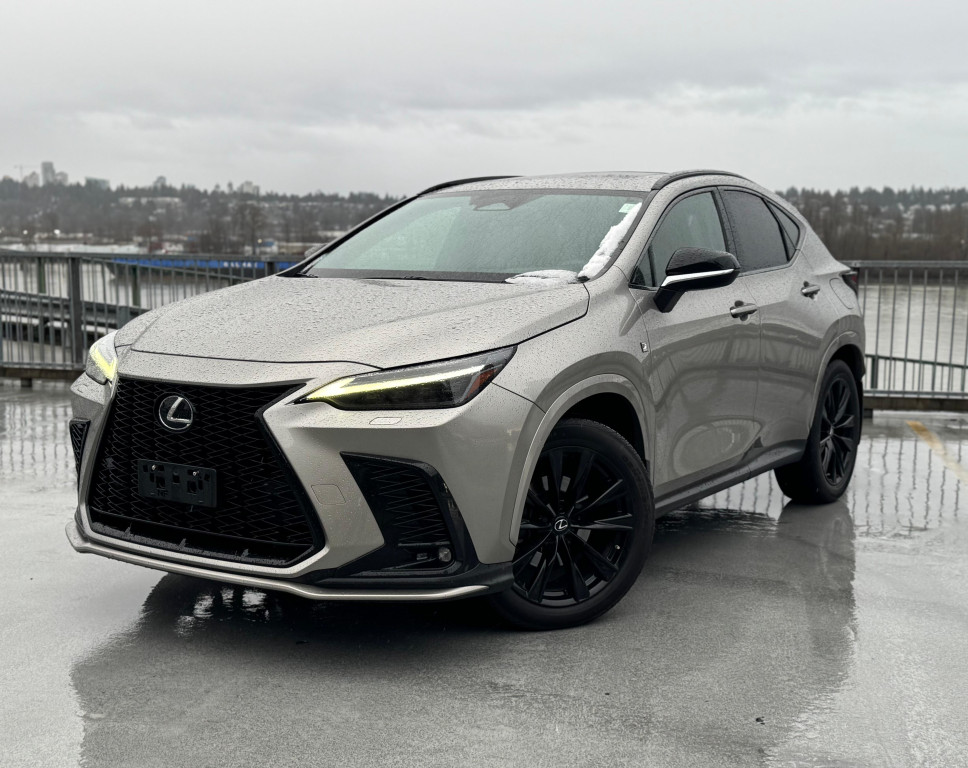 2022 Lexus NX300 F Sport | Red interior74,815 km • Gasoline$45,995
6. The real cost of depreciation, in dollars
Depreciation is the biggest single cost of owning a car, bigger than fuel or insurance for most people, and it is invisible until you sell. Here is what a 60 percent retained value against a 42 percent one means on two $45,000 purchases over five years:
| Strong holder (e.g. RAV4 Hybrid) | Weak holder (e.g. full-size domestic SUV) | |
|---|---|---|
| Purchase price | $45,000 | $45,000 |
| Value after 5 years | about $27,000 (60%) | about $19,000 (42%) |
| Depreciation cost | about $18,000 | about $26,000 |
| Per month | about $300 | about $433 |
That $133 a month gap is larger than the fuel savings from a hybrid and larger than the insurance difference between almost any two vehicles in the class. It is also why the strong holder often costs a little more used: the market has already priced in what you get back. Buy the used strong holder anyway; you are paying for a lower total cost of ownership, and you get most of your money back at trade-in. Our trade-in equity guide shows how that plays out when you still have a loan.
Frequently Asked Questions
Which used cars hold their value best in BC?
Toyota trucks and SUVs lead: Tacoma, 4Runner, Tundra and RAV4 (particularly the Hybrid) typically retain 60 to 75 percent of their value after five years. Honda Civic and CR-V, Lexus RX and NX, Subaru's AWD models, Mazda CX-5 and Toyota's hybrid sedans and minivans follow closely.
Why do cars hold value better in BC than in other provinces?
Coastal BC has no road salt, so vehicles do not rust, and buyers in other provinces pay a premium for BC-registered cars. High fuel prices and mountain driving also add a premium for hybrids and AWD vehicles.
Which cars depreciate the fastest?
German luxury sedans, Land Rover and Jaguar, full-size domestic SUVs and minivans, fleet-heavy sedans, and EVs bought new before manufacturer price cuts. These often retain only 35 to 48 percent after five years, which makes them strong value as used purchases.
Do hybrids hold their value better than gas cars?
In BC, yes. The hybrid versions of the RAV4, Corolla, Camry, Highlander and Sienna retain several percentage points more than the equivalent gas models because high fuel prices make them worth more to the next buyer.
Does colour affect resale value?
Yes. White, black, grey and silver resell fastest and for the most on mainstream vehicles. Unusual colours can cost 3 to 5 percent at trade-in, though the effect is smaller or reversed on enthusiast vehicles.
How much does mileage affect resale?
Significantly, with buyers anchoring on 100,000 km and 150,000 km thresholds. Selling just before a threshold rather than just after can be worth a noticeable amount on the same vehicle.
What we actually see at our New Westminster showroom
The cars that leave our lot fastest are the same ones that come back with the highest trade-in values three or four years later: RAV4 Hybrids, Corollas, Civics, and the occasional Tacoma when we can get one. We have watched customers trade in a RAV4 Hybrid after three years for within a few thousand dollars of what they paid, which on a $40,000 vehicle is a monthly depreciation cost lower than a transit pass.
On the other end, we love buying the S-Classes, Range Rover Sports and Durangos at auction after their first owners took the hit, because that is where the value is for a used buyer who budgets for maintenance. The advice we give is simple: if you are buying to keep for a decade, buy whatever you love and can afford to maintain. If you are buying to trade in three to five years, buy from tier one or two on this page, in a plain colour, with a folder of receipts, and let the next buyer pay you back.
Sources & official references
This guide reflects our day-to-day experience at our New Westminster showroom and is cross-checked against official sources. Rules, rates and warranty terms change; always confirm current details with:
Shop the cars that hold their value
Toyota, Honda, Lexus and more, Spinny Assured and in stock in New Westminster.