
Should You Buy a Used Car With a Rebuilt Title in BC?
A rebuilt vehicle in BC was written off, repaired and passed a provincial inspection. It can be insured and driven legally, but it is harder to finance, worth 20 to 40 percent less, and harder to sell. For most buyers the discount is not worth it. Here is how to decide, and what to check if you go ahead.
1. What "rebuilt" means in British Columbia
Every vehicle registered in BC carries a status in ICBC's registry: Normal, Rebuilt, Salvage, Altered or Non-repairable. A car becomes Salvage when an insurer declares it a total loss, usually because the repair estimate exceeded a threshold relative to the car's value, and the vehicle is sold off at a salvage auction. If someone buys it, repairs it and wants to register it again, it must pass a structural integrity assessment by a trade-qualified auto body technician and a provincial safety inspection at a designated inspection facility. Only then does ICBC change the status to Rebuilt. It can never go back to Normal.
That process is real and the inspections are not trivial. A Rebuilt car has, in principle, been checked more carefully than the average car on the road. The catch is that the inspection confirms the car is safe and structurally sound at that moment; it does not tell you how good the repair was, whether the parts were new or used, or what the car will be like in five years. That uncertainty is what the discount is paying for.
A note on out-of-province cars: a vehicle written off in Alberta or Ontario and brought to BC gets its status carried over when it is registered here, and ICBC's vehicle history report or a CARFAX Canada report will show it. "Title washing," where a salvage brand disappears by moving a car between provinces, is much harder in Canada than in the United States, but a CARFAX is still the way to be sure.
2. Why rebuilt cars are cheaper, and why the discount is permanent
The market prices a Rebuilt vehicle at roughly 20 to 40 percent below an equivalent Normal-status car, with luxury and late-model vehicles at the deeper end because their buyers can afford to be picky. Three things drive that:
- Unknown repair quality. A total-loss repair is done by whoever bought the salvage car, on their budget, often with used or aftermarket parts. Some are excellent. You cannot tell from outside.
- Financing and insurance friction. Fewer buyers can finance it and some cannot insure it the way they want, which shrinks the pool of people who will bid on it.
- Resale. Whoever buys it from you faces the same two problems, so the discount is baked in forever. Canadian Black Book values do not even apply to rebuilt vehicles in the normal way; dealers appraise them case by case, and many, including us, simply do not take them in trade.
3. Insurance: what ICBC and private insurers do
ICBC will register a Rebuilt vehicle and sell you basic Autoplan on it once it has passed inspection. Where it gets complicated is optional coverage. Collision and comprehensive are available, but the vehicle's insured value will reflect its Rebuilt status, so a total loss pays out at rebuilt-market value, not normal-market value. Some private optional insurers in BC decline collision coverage on Rebuilt vehicles or require their own inspection first. Call your broker with the VIN before you buy, not after.
There is a practical wrinkle too. If the car is in another collision, the adjuster will see the prior total loss on file and will look hard at whether the new damage overlaps the old repair. That can slow a claim and, in disputes, reduce it.
4. Financing a rebuilt vehicle
This is where most rebuilt-car plans fall apart. Lenders lend against the collateral, and collateral that is worth 30 percent less and harder to resell is collateral they do not want. In our experience placing files in BC:
| Lender type | Rebuilt status |
|---|---|
| Big banks and captive lenders (Toyota Financial, Honda Financial, etc.) | Generally decline outright |
| Credit unions | Case by case; usually a personal loan rather than an auto loan, at a higher rate and shorter term |
| Near-prime and subprime auto lenders | Some will finance with 20 to 30 percent down, a shorter term, and a rate a tier or two above the buyer's credit would normally get |
| Private financing / cash | The way most rebuilt cars actually change hands |
If you were counting on the discount to make the payments work, remember the higher rate and larger down payment eat a good part of it. Our guide to car loan rates by credit score shows what a two-tier rate difference costs over a term.
5. Disclosure rules in BC
A licensed BC dealer must tell you, in writing and before the sale, that a vehicle has Rebuilt or Salvage status, along with any damage over $2,000, out-of-province registration and prior commercial use. This comes from the Motor Dealer Act Regulation and is enforced by the Vehicle Sales Authority. A dealer that hides it is committing an offence, and you have real recourse.
A private seller has no such duty. They cannot lie if you ask directly, but they do not have to bring it up, and many rebuilt cars on Facebook Marketplace and Craigslist are listed with no mention of it at all. The defence is simple: get the VIN from the ad or the seller and run it before you drive anywhere. A CARFAX Canada report shows the status and the total-loss claim; ICBC's own vehicle claims history report shows BC claims. Our CARFAX guide explains what to look for.
6. When a rebuilt car can make sense
We are not going to pretend there is never a case. A rebuilt car can be a reasonable buy when all of the following are true:
- You are paying cash and do not need to finance it.
- The total-loss cause was something other than a collision: hail, theft recovery with cosmetic damage, or a low-value older car written off for a repair that would be trivial today. A 2012 Corolla written off for a $4,000 bumper-and-headlight job on a $6,000 valuation is a very different animal from a 2021 RAV4 written off for a $30,000 front-end crash.
- You have the complete repair file: the insurer's total-loss estimate, the body shop's invoice with parts listed, the structural integrity assessment report and the provincial inspection report.
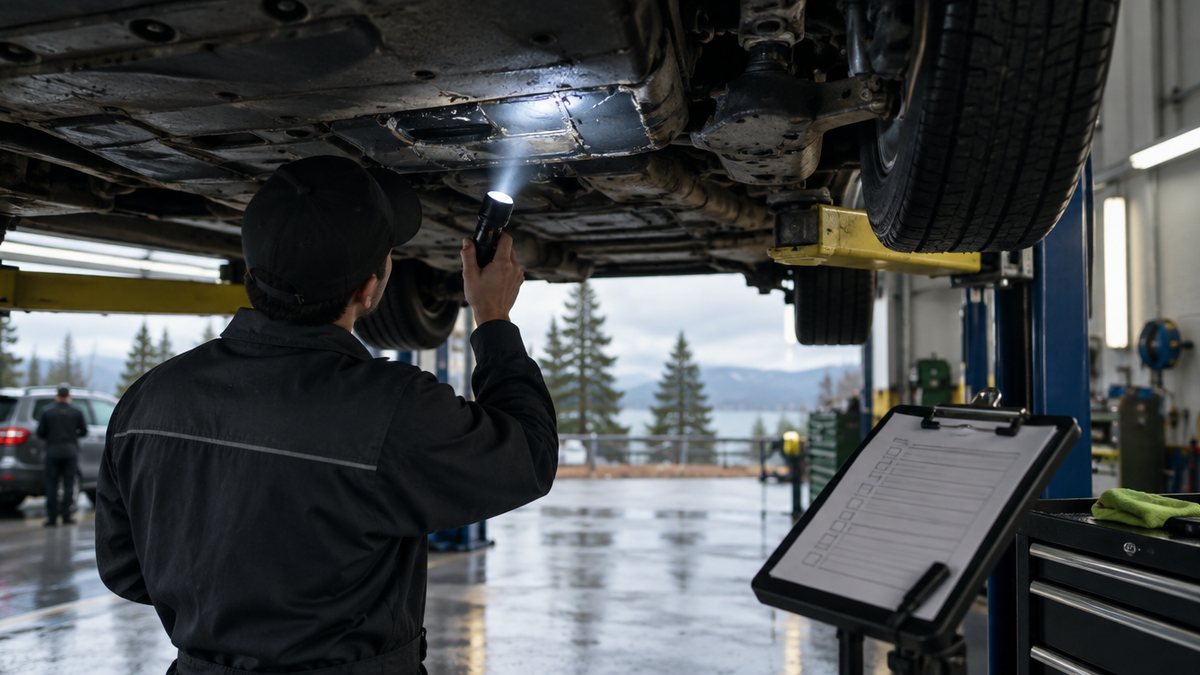
- An independent body shop has inspected it on a lift and measured the frame.
- You plan to keep it a long time and are comfortable that it will be hard to sell.
- The discount is real: at least 25 to 30 percent below a comparable Normal-status car, not 10 percent.
If any of those is missing, the honest answer is to keep looking. A Normal-status car with a $3,000 disclosed bumper repair and a clean structure is a far better buy than a Rebuilt car at almost any price, and our guide to how much accident history is too much explains how to find those.
7. What to check if you go ahead
- Frame measurement printout from the repairing shop or an independent one. Modern unibody cars have dozens of reference points; the printout shows each within tolerance or not.
- Airbags. If they deployed, insist on invoices for new (not used) airbag modules and a scan showing no stored crash data in the airbag control module. This is where corners are most often cut on rebuilt cars.
- Paint depth on every panel and a look at the underside for fresh undercoating hiding welds.
- Alignment and a highway test drive. A car that pulls or whose steering wheel is off-centre after an "alignment" may have a bent structure.
- Electrical. Water-damage cars and hard-hit cars both develop electrical gremlins. Test every window, seat, light, sensor and the infotainment.
- Insurance quote in hand before you pay, with the VIN, from the broker you will actually use.
Frequently Asked Questions
What does a rebuilt title mean in BC?
In BC it is called Rebuilt status. It means ICBC or another insurer declared the vehicle a total loss, it was repaired, and it passed a structural integrity assessment and provincial inspection to be registered again. The status is permanent and appears on ICBC and CARFAX Canada reports.
Can you insure a rebuilt vehicle in BC?
Yes. ICBC will register and provide basic Autoplan on a Rebuilt vehicle that has passed inspection. Optional collision and comprehensive coverage is available but the insured value reflects its rebuilt status, and some private insurers restrict coverage. Get a quote with the VIN before buying.
Can you finance a rebuilt car in BC?
It is difficult. Most banks and manufacturer lenders decline Rebuilt status. Some credit unions and subprime lenders will finance it with a large down payment, a shorter term and a higher rate. Most rebuilt cars are bought with cash.
How much less is a rebuilt car worth?
Typically 20 to 40 percent less than the same vehicle with Normal status, and the discount is permanent because every future buyer faces the same financing, insurance and resale limits.
Does a BC dealer have to tell me a car is rebuilt?
Yes. Under the Motor Dealer Act Regulation a licensed dealer must disclose Rebuilt or Salvage status in writing before the sale. Private sellers have no equivalent duty, so check the VIN yourself.
Is a rebuilt car safe to drive?
A properly repaired rebuilt car that passed inspection is roadworthy at the time of inspection. Safety over the long term depends on the quality of the repair, which is why an independent frame measurement and airbag verification matter before buying.
What we actually see at our New Westminster showroom
We do not sell Rebuilt-status vehicles and we do not take them in trade, and the reason is not that they are all bad. It is that we cannot stand behind one with a 6-month warranty and a 7-day exchange when we cannot see inside the repair. The one exception we make is to look at them for customers who already own one and want to know what it is worth; the number is usually a hard conversation.
The pattern we see most is a buyer who found a two-year-old SUV on Marketplace for $12,000 under market, did not run the VIN, and only learned it was Rebuilt when their bank declined the loan. If a used-car price in Metro Vancouver looks too good, run the VIN through CARFAX before you drive to see it. It costs less than the gas.
Sources & official references
This guide reflects our day-to-day experience at our New Westminster showroom and is cross-checked against official sources. Rules, rates and warranty terms change; always confirm current details with:
We do not sell rebuilt-status vehicles
Every Spinny Assured car has normal status, a clean structural inspection and its CARFAX on the listing.