
Toyota Camry Hybrid vs Corolla Hybrid: Cost, Space and Fuel Economy
The Corolla Hybrid is the cheapest car to run that we sell. The Camry Hybrid costs more to buy and a little more to fuel, and in return you get a much bigger car with real highway power. Here is how to decide which one fits your commute, your family and your budget.
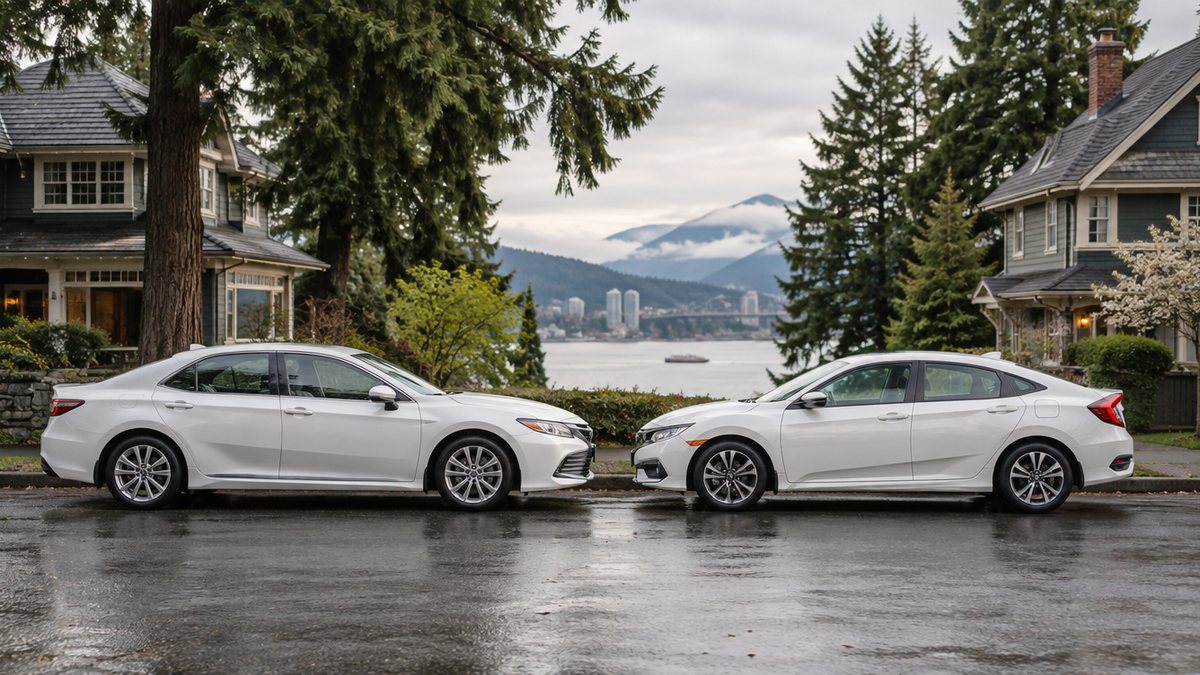
1. The short answer
Choose the Corolla Hybrid if the car is mostly for one or two people, your driving is urban and suburban, and the lowest possible cost of ownership is the goal. Nothing we sell is cheaper to run. Choose the Camry Hybrid if you regularly carry adults in the back, drive the highway to Chilliwack or Squamish every week, or simply want a car that feels substantial. It costs more to buy and about $150 a year more to fuel, and it is a much bigger, faster, quieter car for the money. Both share Toyota's hybrid system and its 10-year, 240,000 km battery warranty on 2020 and newer models, so reliability is not the tiebreaker.
2. Specifications side by side
| Toyota Corolla Hybrid (2023 to 2025) | Toyota Camry Hybrid (2021 to 2024) | Camry Hybrid (2025+) | |
|---|---|---|---|
| Engine and system output | 1.8 L, 138 hp combined | 2.5 L, 208 hp combined | 2.5 L, 225 hp FWD / 232 hp AWD |
| Fuel consumption, NRCan combined | about 4.7 L/100 km FWD, 4.9 AWD | LE about 4.5 to 4.7; SE/XLE/XSE about 5.2 | about 4.8 to 5.4 depending on trim and AWD |
| 0 to 100 km/h (approx.) | about 9.5 s | about 7.5 s | about 7 s |
| Rear legroom | about 880 mm | about 965 mm | about 965 mm |
| Trunk | 371 L | 428 L | 428 L |
| AWD available | Yes, 2023+ | No | Yes, standard on Canadian XLE/XSE |
| Hybrid battery warranty | 10 years / 240,000 km on 2020 and newer; transfers to used buyers | ||
| Typical BC used price, under 80,000 km | about $26,000 to $31,000 | about $32,000 to $40,000 | about $38,000 to $45,000 |
Fuel figures from the Natural Resources Canada Fuel Consumption Ratings tool; performance figures are manufacturer and press estimates. Prices are typical Lower Mainland dealer asking prices in mid-2026.
3. Total cost of ownership over five years
This is the comparison that actually decides it for most Lower Mainland buyers, so here it is with realistic BC numbers: 20,000 km a year, fuel at $1.75 a litre, and typical ICBC Autoplan and maintenance for a Metro Vancouver driver with a clean record.
| Five-year cost item | Corolla Hybrid (bought at $28,000) | Camry Hybrid (bought at $36,000) |
|---|---|---|
| Depreciation (resale after 5 yr) | about $10,000 (resale about $18,000) | about $13,000 (resale about $23,000) |
| Fuel, 100,000 km | about $8,200 (4.7 L/100 km) | about $9,000 (5.2 L/100 km) |
| Insurance (ICBC, indicative) | about $9,000 | about $10,000 |
| Maintenance and tires | about $4,000 | about $4,800 |
| Interest (if financed at 8%, 60 months, no down payment) | about $6,000 | about $7,800 |
| Five-year total | about $37,000 | about $44,600 |
| Per month | about $620 | about $745 |
The Camry costs roughly $125 a month more to own. Most of that is the purchase price and the interest on it; the fuel and maintenance gaps are small. So the real question is not "which is cheaper" (the Corolla, always) but "is a much bigger, faster car worth $125 a month to me." For a family of four or a long-distance commuter, it usually is. For a single commuter from Burnaby to downtown, it usually is not. Run your own numbers in our payment calculator.
4. How they drive in the Lower Mainland
Around New Westminster, Burnaby and Vancouver at 50 km/h, the two feel closer than the spec sheet suggests. Both run silently on battery from a stop, both are smooth, and the Corolla's smaller size is an advantage in a Metrotown parkade or on a Kitsilano side street. The difference appears at the on-ramp. The Corolla Hybrid's 138 hp is adequate; merging onto Highway 1 at Brunette with a full car needs planning, and the engine gets loud doing it. The Camry's 208 hp does the same job without drama, and on the long grades of the Coquihalla or Highway 99 to Whistler it holds speed where the Corolla is working hard.
Ride and noise follow the same pattern. The Camry has a longer wheelbase, more sound insulation and a softer suspension; the Corolla is firmer and transmits more road noise on the coarse pavement of the Trans-Canada through Langley. Neither is uncomfortable. The Camry is simply the car you would rather be in for two hours.
5. Space: the real difference
The Camry is a midsize sedan and the Corolla is a compact, and no amount of clever packaging closes that gap. In the Corolla, two adults in the back have adequate legroom behind average-height front passengers; a rear-facing infant seat behind a tall driver is tight. The Camry adds about 60 mm of rear legroom and noticeably more shoulder room, so three across is possible for short trips and a car seat fits without moving the front seat forward. The trunk gap, 371 L against 428 L, is the difference between two large suitcases and three.
If you are cross-shopping the Corolla Hybrid because you want efficiency but the back seat worries you, the answer may be neither of these: the Prius has a hatchback and a lower floor, and the Corolla Cross Hybrid offers SUV-style cargo space with nearly identical economy. Our guide to fuel-efficient used cars for the Lower Mainland covers those alternatives.
6. Reliability and what to check on each
Both use Toyota's fourth- and fifth-generation hybrid systems, which are among the most reliable powertrains ever built. Our hybrid battery guide covers the pack in detail; the short version is that both are warrantied to 240,000 km and usually last far longer. Model-specific things to check:
- Corolla Hybrid 2020 to 2022: the 121 hp system is noticeably slower than the 2023+ version; test drive on a hill before deciding. Some early cars had infotainment freezes fixed by software updates.
- Corolla Hybrid 2023+: the sweet spot. More power, available AWD, the newer infotainment. Very few complaints.
- Camry Hybrid 2018 to 2024: long-running, well sorted. Check that the infotainment supports wireless or wired CarPlay (added for 2020), and listen for a brake actuator hum on very early cars, which was addressed under warranty.
- Camry Hybrid 2025+: all-new generation, hybrid only, AWD standard on most Canadian trims. Too new for patterns; buy with remaining factory basic warranty.
7. Resale in BC
Both are near the top of their classes for retained value in Canadian Black Book data. The Corolla Hybrid's advantage is that it depreciates from a lower starting point, so the dollar loss is smaller. The Camry Hybrid's advantage is that demand from families and rideshare drivers in Metro Vancouver keeps its used prices firm; it is one of the few midsize sedans that has not been abandoned as buyers moved to SUVs. If you plan to trade in three years, the percentage retained is similar; if you plan to keep the car ten years, the Corolla's lower purchase price is money you never spent.
Available right now
Toyota hybrids in stock right now
Live from our New Westminster showroom. Spinny Assured, 150-point inspected, CARFAX included.
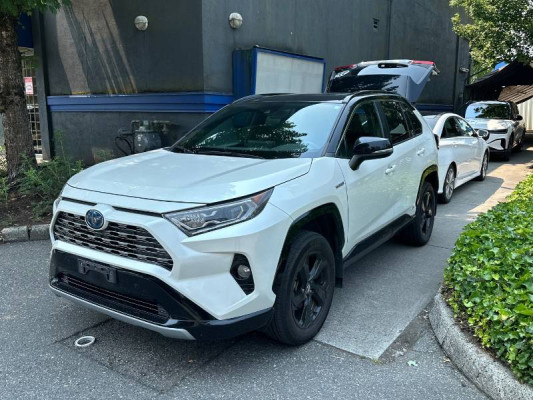 2020 Toyota RAV4 XSE Hybrid AWD | No accidents, Local BC113,543 km • Gasoline$35,995
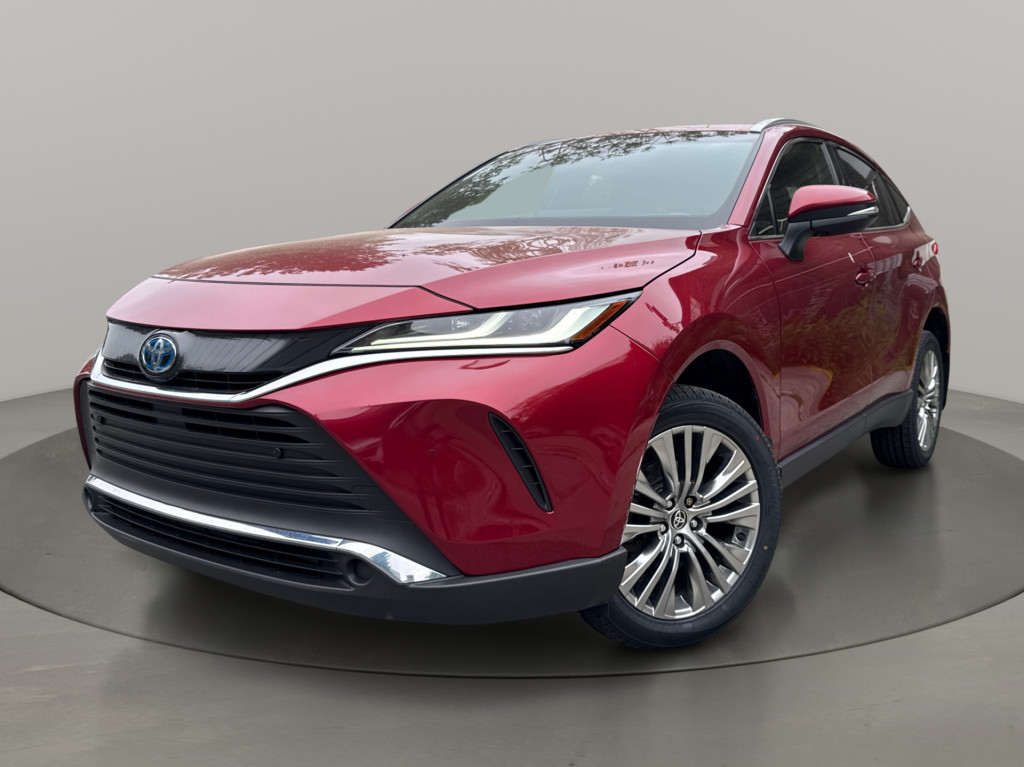 2022 Toyota Venza Hybrid AWD | No Accidents66,145 km • Gasoline$38,995
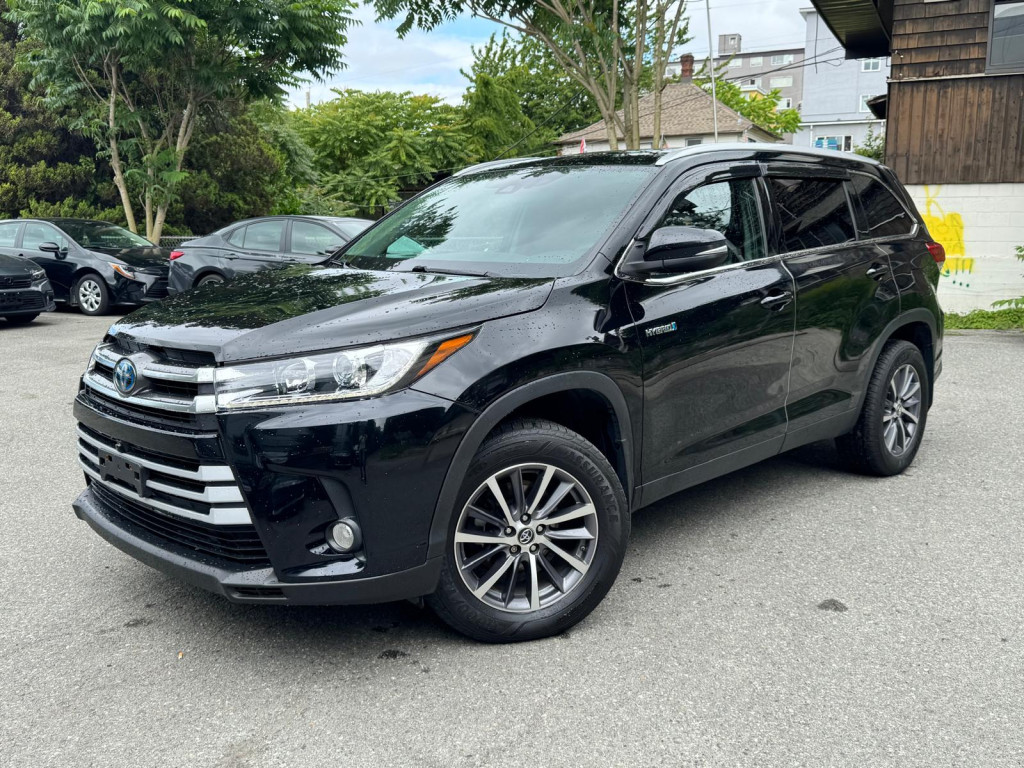 2019 Toyota Highlander XLE Premium Hybrid | Spinny Assured w/ Free Warranty, 150 Point Inspection188,792 km • Gasoline$28,995
Frequently Asked Questions
Is the Camry Hybrid or Corolla Hybrid better?
The Corolla Hybrid is cheaper to buy and run and is the better choice for one or two people driving mostly in the city. The Camry Hybrid is larger, much more powerful and quieter, and is the better choice for families and highway commuters. Reliability and battery warranty are the same.
Which gets better fuel economy, Camry Hybrid or Corolla Hybrid?
The Corolla Hybrid, at about 4.7 L/100 km combined. The Camry Hybrid LE is close at about 4.5 to 4.7, while the sportier SE, XLE and XSE trims are about 5.2. Over 20,000 km a year the difference is roughly $150 in fuel.
How much more does a used Camry Hybrid cost than a Corolla Hybrid in BC?
Typically $6,000 to $9,000 more for a similar year and mileage. A 2022 to 2023 Corolla Hybrid runs about $26,000 to $31,000 on the BC used market, and a comparable Camry Hybrid about $32,000 to $40,000.
Does the Camry Hybrid come with AWD?
Only from the 2025 model year, when it became standard on most Canadian trims. Camry Hybrids from 2018 to 2024 are front-wheel drive. The Corolla Hybrid has offered AWD since 2023.
Is the Corolla Hybrid too slow for highway driving?
The 2023 and newer Corolla Hybrid with 138 hp is adequate for BC highways, though it needs planning to merge with a full load. The 2020 to 2022 version with 121 hp is noticeably slower. The Camry Hybrid's 208 hp is effortless by comparison.
What is the hybrid battery warranty on these cars?
Ten years or 240,000 km on 2020 and newer Toyota hybrids, transferring to subsequent owners. Other hybrid components are covered for 8 years or 160,000 km.
What we actually see at our New Westminster showroom
Camry Hybrids are the car we get asked for most by name, and rideshare drivers are a big reason: the combination of back-seat room, a huge trunk and 5 L/100 km is unbeatable for that work, and the used prices reflect it. Corolla Hybrids sell to a different buyer, usually a couple or a first-time buyer replacing a ten-year-old gas Corolla, and they are shocked at how little fuel they use in Metro Vancouver traffic.
Our suggestion at the desk is to bring whoever rides in the back seat most often. Sit them in both cars for five minutes. If they are comfortable in the Corolla, buy the Corolla and pocket the difference. If they are not, the Camry is the one, and it will still cost less to own than almost any gas SUV you were also considering.
Sources & official references
This guide reflects our day-to-day experience at our New Westminster showroom and is cross-checked against official sources. Rules, rates and warranty terms change; always confirm current details with:
Sit in both, then decide
We usually have Toyota hybrids on the lot in New Westminster. Book a back-to-back drive.