
Hybrid Battery Lifespan and Replacement Cost in Canada
A modern hybrid battery routinely lasts 250,000 to 400,000 km, and Toyota warranties it for 10 years or 240,000 km on 2020 and newer models. Replacement, when it does happen, costs far less than most buyers fear. Here are the real numbers and how to check one before you buy.
1. How long hybrid batteries really last
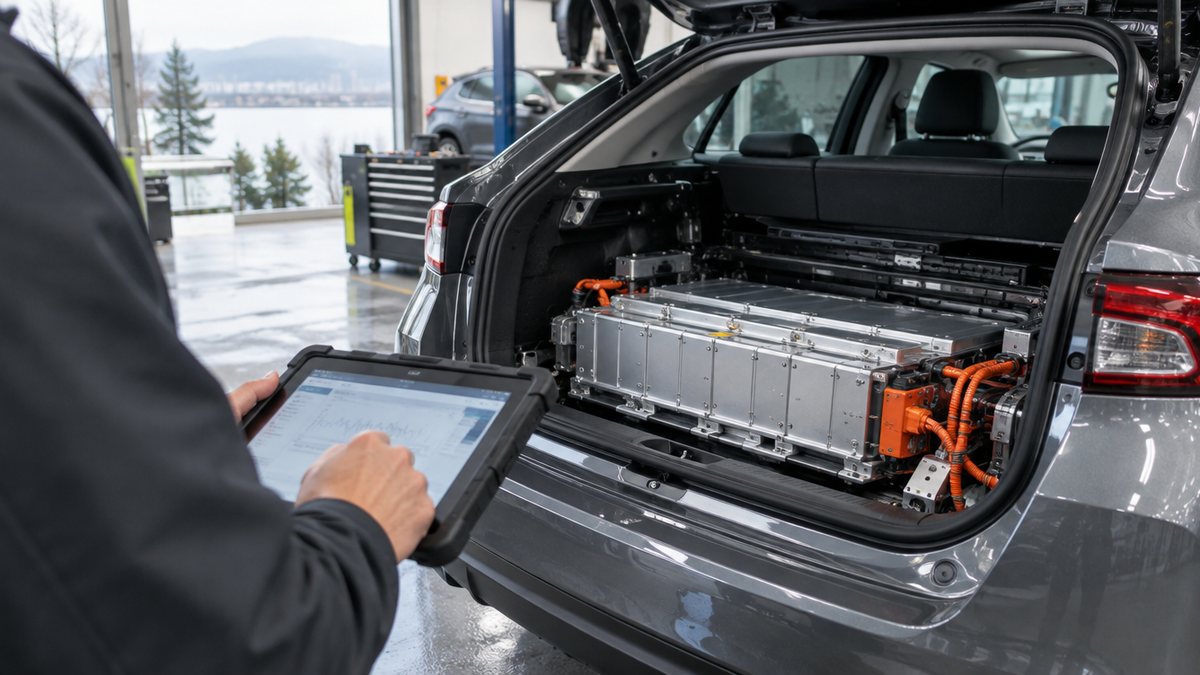
The hybrid battery question is the one we hear most often at our New Westminster showroom, and the fear behind it is about fifteen years out of date. Early 2000s Prius packs did sometimes fail around 200,000 km. Every generation since has been more durable, because the car's software keeps the battery in a narrow, gentle state of charge (roughly 40 to 80 percent) and never fully charges or drains it. That is the opposite of how a phone battery lives, and it is why hybrid packs age so slowly.
The evidence is on the road. Toyota's own position is that its hybrid batteries are designed to last the life of the vehicle. Vancouver and Victoria taxi fleets, which have run Prius, Camry Hybrid and now Sienna Hybrid vehicles for two decades, routinely pass 400,000 km on original packs. Among the used hybrids we inspect in Metro Vancouver, battery health on 150,000 to 200,000 km cars is almost always well above the threshold where the car would notice.
A useful mental model: the pack loses a little usable capacity each year, and the car quietly compensates by running the engine slightly more. A 12-year-old Prius with a tired battery still drives normally; it just uses 5.5 L/100 km instead of 4.5. Outright failure, where the car throws a hybrid system warning and goes into limp mode, typically shows up only after that gradual decline has gone on for years and usually on cars past 300,000 km or 15 years, or on packs that sat unused for long periods.
2. Battery warranty by brand in Canada
Every hybrid sold new in Canada carries a separate hybrid-component warranty that is longer than the powertrain warranty, and every one of them transfers to subsequent owners. This is the single most important fact for a used-hybrid buyer, because it means a 2021 RAV4 Hybrid you buy in 2026 is still covered on its most expensive part until 2031 or 240,000 km.
| Brand | Hybrid battery warranty (Canada) | Notes |
|---|---|---|
| Toyota / Lexus, 2020 and newer | 10 years / 240,000 km | Other hybrid components (inverter, control module) 8 years / 160,000 km. See Toyota Canada's warranty page. |
| Toyota / Lexus, 2019 and older | 8 years / 160,000 km | Most 2016 to 2019 hybrids in the used market are near or past this; check the in-service date. |
| Honda / Acura | 8 years / 160,000 km | Covers battery and hybrid components; see Honda Canada. |
| Hyundai / Kia | 8 years / 160,000 km | Applies to Ioniq, Sonata, Elantra, Tucson, Sorento, Niro hybrids. |
| Ford / Lincoln | 8 years / 160,000 km | Escape, Maverick, F-150 PowerBoost hybrids. |
| Plug-in hybrids and EVs (all brands) | 8 years / 160,000 km minimum | Most guarantee a minimum capacity (often 70 percent) rather than only against failure. |
One thing to know about how the warranty works: it covers defects and outright failure, not gradual capacity loss on a conventional hybrid. A Camry Hybrid at 220,000 km that still drives normally but gets slightly worse fuel economy is not a warranty claim. A Camry Hybrid at 220,000 km with a hybrid system warning light is, if it is within 10 years.
3. Replacement cost in Canada in 2026
When a pack does need replacing, the bill is much smaller than the internet suggests, and it has been falling. These are typical installed prices we have seen quoted in the Lower Mainland this year:
| Vehicle | New pack at dealer, installed | Refurbished or aftermarket, installed |
|---|---|---|
| Toyota Prius, Prius c, Corolla Hybrid | about $2,800 to $4,500 | about $1,500 to $2,800, typically with a 1 to 3 year warranty |
| Toyota Camry Hybrid, RAV4 Hybrid, Venza, C-HR (where sold as hybrid) | about $4,000 to $6,500 | about $2,500 to $4,000 |
| Toyota Highlander Hybrid, Sienna Hybrid, Lexus RX Hybrid | about $5,000 to $7,500 | about $3,000 to $4,500 |
| Honda Civic, Insight, Accord, CR-V Hybrid | about $3,500 to $6,000 | about $2,000 to $3,500 |
| Hyundai / Kia hybrids | about $4,000 to $7,000 | limited aftermarket supply; mostly dealer |
| Plug-in hybrids (larger packs) | about $8,000 to $15,000 | limited; usually under warranty when it matters |
Estimates from Lower Mainland dealer and independent hybrid-shop quotes in 2026. Prices vary with parts availability and labour rates; get a written quote for your specific vehicle.
Put that against the alternatives. A transmission on a 2019 Dodge Durango is $5,000 to $8,000. A turbocharger and cooling-system job on a 2018 BMW X1 is $4,000 to $6,000. A hybrid battery is a once-in-the-car's-life expense that most owners never pay, and even when they do, on a Corolla or Prius it costs less than a set of premium tires and brakes on a luxury SUV.
There is also a middle path many owners are unaware of. Nickel-metal-hydride packs (used in most Toyota hybrids until recently) are built from dozens of individual modules, and independent hybrid shops in Vancouver, Burnaby and Surrey can replace only the weak modules for a few hundred dollars each. It is not a permanent fix, but it often buys two to four years.
4. Warning signs a hybrid battery is aging
- Fuel economy creeping up over months, without a change in driving or tires. The most reliable early sign.
- The engine starting and stopping more often at idle and in stop-and-go traffic, because the pack cannot hold enough charge to run the car electrically for long.
- The battery gauge swinging quickly from nearly full to nearly empty during normal driving.
- Reduced power on hills or a delay when accelerating from a stop.
- A hybrid system warning or "check hybrid system" message. At this point the car needs diagnosis, though the fault is often a cooling fan, a sensor or a single module rather than the whole pack.
Extreme cold, which the Lower Mainland rarely sees, temporarily reduces capacity but does not damage a pack. Extreme heat and long periods of sitting unused (months, not weeks) are the real enemies. A hybrid that was a daily commuter is a better bet than one that sat in a garage in Kelowna for two summers.
5. How to check a used hybrid's battery before you buy
- Ask for a hybrid battery health test. Toyota and Lexus dealers run a dedicated hybrid system test that reports the pack's state of health; Honda dealers can read battery capacity through the diagnostic system. Independent hybrid shops do the same for about $100 to $200. A reputable seller will either have the result or let you get it.
- Read live data on the test drive. On most Toyotas the energy monitor screen shows the battery level; watch it during a 20-minute mixed drive. Rapid swings between two bars and six bars suggest a weak pack. Steady behaviour in the middle of the gauge is what you want.
- Check the in-service date on the CARFAX and compare it to the warranty table above. A car with years of hybrid coverage left changes the whole risk calculation. Our guide to reading a CARFAX shows where to find it.
- Look at the battery cooling intake. On most Toyota hybrids it is a small vent beside the rear seat. If it is clogged with pet hair and dust, the pack has been running hot, which is the most common cause of premature wear and the easiest to have prevented.
- Ask about prior use. A former taxi, rideshare or delivery car has more cycles on its pack. In BC, a licensed dealer must disclose prior use as a taxi or rental vehicle; a private seller does not have to.
Every hybrid we list at Spinny Cars has its hybrid system checked as part of the 150-point inspection, and we will show you the result on request.
Available right now
Hybrids in stock right now
Live from our New Westminster showroom. Every one is Spinny Assured with a hybrid system check in the 150-point inspection.
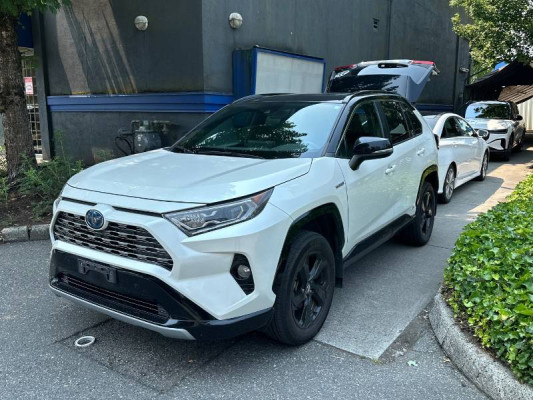 2020 Toyota RAV4 XSE Hybrid AWD | No accidents, Local BC113,543 km • Gasoline$35,995
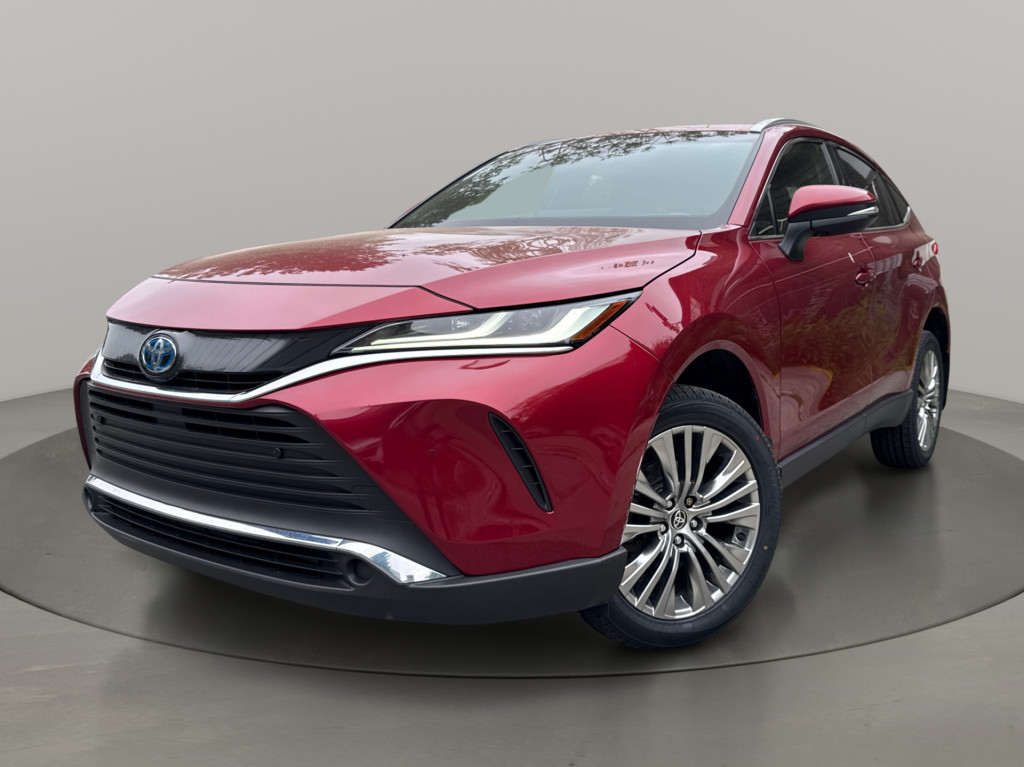 2022 Toyota Venza Hybrid AWD | No Accidents66,145 km • Gasoline$38,995
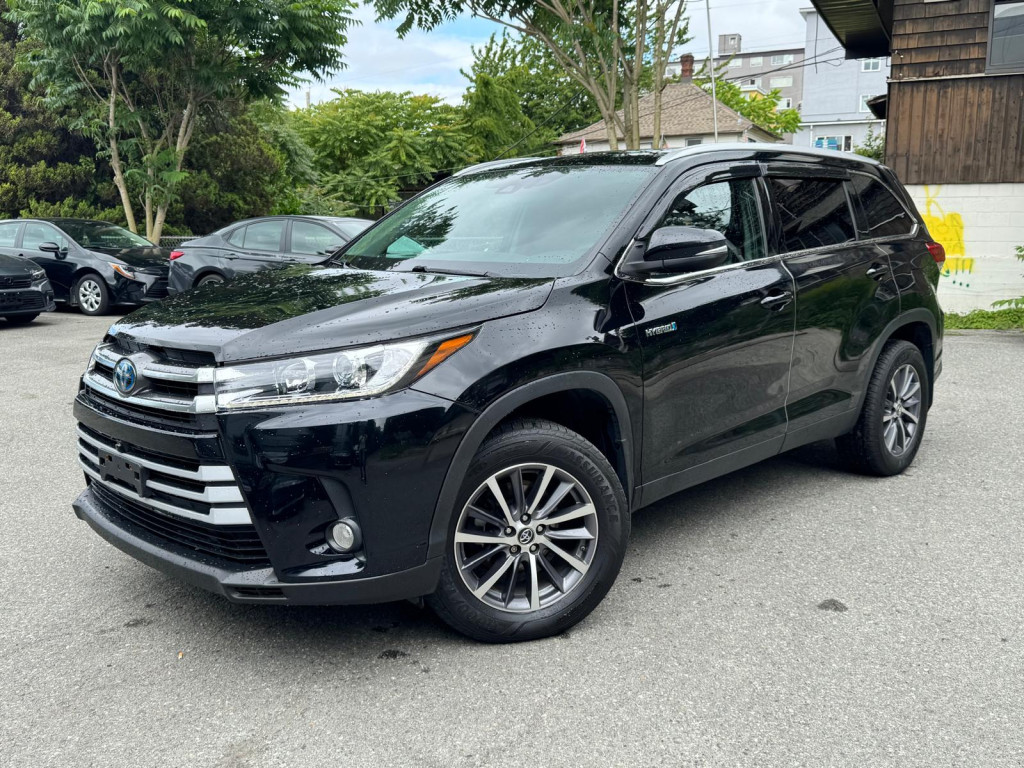 2019 Toyota Highlander XLE Premium Hybrid | Spinny Assured w/ Free Warranty, 150 Point Inspection188,792 km • Gasoline$28,995
6. How to make a hybrid battery last
- Clean the battery cooling filter and vent once a year. It takes ten minutes and most owners never do it.
- Drive it. A hybrid that is used daily keeps its pack cycling in its happy range. If you go away for months, have someone drive it every few weeks.
- Keep the 12-volt battery healthy. A failing 12-volt battery causes far more hybrid "faults" and tow-truck calls than the high-voltage pack ever does; it is a $200 part.
- Do not ignore a warning light. A fan or sensor fault left alone can cook a pack that was otherwise fine.
- Park in the shade in summer where you can. Heat is the main ager of any battery chemistry.
Frequently Asked Questions
How long does a hybrid battery last in Canada?
Typically 15 years or 250,000 to 400,000 km on Toyota and Honda hybrids, and many go further. Capacity declines gradually rather than failing suddenly, so the first sign is usually slightly worse fuel economy.
How much does it cost to replace a hybrid battery in Canada?
In 2026, about $2,800 to $4,500 installed for a Prius or Corolla Hybrid at a dealer, $4,000 to $7,500 for larger Toyota hybrids such as the RAV4, Camry, Highlander and Sienna, and $3,500 to $6,000 for Honda hybrids. Refurbished packs and module repairs cost considerably less.
What is the hybrid battery warranty in Canada?
Toyota covers hybrid batteries for 10 years or 240,000 km on 2020 and newer models, and 8 years or 160,000 km on earlier ones. Honda, Hyundai, Kia and Ford cover them for 8 years or 160,000 km. All of these transfer to subsequent owners.
Is it safe to buy a used hybrid with over 150,000 km?
Yes, provided a hybrid battery health test comes back normal. Many hybrids at that mileage still have years of factory battery coverage, and packs on well-maintained Toyotas and Hondas routinely last well past 250,000 km.
What are the signs of a failing hybrid battery?
Rising fuel consumption, the engine cycling on and off more frequently, the battery gauge swinging rapidly, reduced power on hills, and eventually a hybrid system warning. A diagnostic test confirms whether the pack or a cheaper component such as a cooling fan is the cause.
Can a hybrid battery be repaired instead of replaced?
Often. Nickel-metal-hydride packs are made of individual modules, and independent hybrid specialists can replace only the weak ones for a fraction of a full pack. It typically extends life by two to four years.
What we actually see at our New Westminster showroom
We sell a lot of Toyota hybrids, and in the time we have been doing it we have not had a single hybrid battery fail on a car we sold. The problems we do see on hybrids are the boring ones every car gets: a dead 12-volt battery after a customer left a dome light on, brake pads at 140,000 km, a cabin filter full of Fraser Valley pollen. The high-voltage pack is the part of the car we worry about least.
The advice we give buyers is to stop thinking of the battery as a ticking clock and start thinking of it as a warranty asset. A 2021 or 2022 Toyota hybrid bought today has its most expensive component covered into the 2030s, which is more than you can say about the transmission in almost any gas SUV on the lot. When the question comes up at the desk we pull up the hybrid system report from our inspection, show the in-service date on the CARFAX, and the conversation usually moves on to colours.
Sources & official references
This guide reflects our day-to-day experience at our New Westminster showroom and is cross-checked against official sources. Rules, rates and warranty terms change; always confirm current details with:
Every hybrid we sell has its battery health checked
The hybrid system test is part of our 150-point inspection. Ask to see the result on any car.