
Toyota RAV4 Hybrid vs Honda CR-V Hybrid: Which Is Better for BC?
Both are excellent. The RAV4 Hybrid wins on fuel economy, towing and resale. The CR-V Hybrid wins on ride comfort, rear-seat space and price per kilometre on the used market. Here is how they compare on the roads and in the weather you actually drive in.
1. The short answer
Buy the Toyota RAV4 Hybrid if you tow anything, drive a lot of highway kilometres, want the lowest fuel bill and care most about resale. Buy the Honda CR-V Hybrid if the back seat and cargo floor matter more than the tow rating, you prefer a quieter and softer ride, and you would rather put the RAV4's price premium toward a newer year or lower kilometres. Both are among the most reliable vehicles you can buy used in Canada, and both are a smart choice for the Lower Mainland's mix of stop-and-go, rain and weekend mountain trips.
2. Head-to-head specifications (2023 to 2025 model years)
The two generations you will actually cross-shop on the used market are the 2019+ fifth-generation RAV4 Hybrid and the sixth-generation CR-V Hybrid that launched for 2023. Earlier CR-V Hybrids (2020 to 2022) are rarer in Canada and use the same basic powertrain in the previous body.
| Toyota RAV4 Hybrid AWD | Honda CR-V Hybrid AWD | |
|---|---|---|
| Combined output | 219 hp, 2.5 L four-cylinder + electric motors | 204 hp, 2.0 L four-cylinder + electric motors |
| Fuel consumption (NRCan combined) | about 6.0 L/100 km | about 6.4 L/100 km |
| AWD type | Electronic on-demand; separate rear electric motor | Mechanical on-demand with rear driveshaft and clutch |
| Towing capacity | 1,750 lb (794 kg) | 1,000 lb (454 kg) |
| Cargo, rear seats up | about 1,059 L | about 1,028 L (lower floor, wider opening) |
| Ground clearance | about 210 mm | about 198 mm |
| Hybrid battery warranty (Canada) | 10 yr / 240,000 km (2020+) | 8 yr / 160,000 km |
| Typical used price in BC, 2022–2023, under 80,000 km | about $38,000 to $45,000 | about $36,000 to $42,000 |
Fuel consumption figures are from the Natural Resources Canada Fuel Consumption Ratings tool and vary by trim and model year; check the exact year you are considering. Used prices are typical Lower Mainland dealer asking prices in mid-2026 and move with the market.
3. Fuel economy in real BC driving
The RAV4 Hybrid's small edge on paper grows a little in real use. Its hybrid system is tuned to run the engine at its most efficient point and coast on battery more often, which suits the Lower Mainland's 50 and 60 km/h arterials perfectly. Owners in Metro Vancouver commonly report 5.5 to 6.5 L/100 km through the year. The CR-V Hybrid's system is different: the engine mostly acts as a generator and the electric motor drives the wheels, which makes it very smooth in the city and slightly less efficient on sustained highway climbs such as the Coquihalla or the Sea-to-Sky, where the engine has to run hard. Expect 6.0 to 7.0 L/100 km in mixed use.
In dollars: at 20,000 km a year and $1.75 a litre, the RAV4 uses about $2,100 of fuel and the CR-V about $2,240. Real, but not decisive. What is decisive is that both use roughly a third less fuel than the gas-only versions of the same SUVs, which in BC's fuel-price environment pays back the hybrid premium in three to four years.
4. AWD, winter tires and the Coquihalla
The two systems reach the same result by different means. The RAV4 Hybrid has no driveshaft; a separate electric motor drives the rear wheels when the front ones slip or when you accelerate hard, and it can send a meaningful share of torque rearward. Honda's CR-V Hybrid uses a conventional driveshaft and a clutch pack that engages the rear axle on demand. In practice, on a rainy Highway 1 merge or a slushy Burnaby side street, both feel planted and neither will surprise you.
Where the differences show up is on deep snow and steep gravel. The RAV4's slightly higher ground clearance and its Trail mode help on a snowed-in Whistler driveway; the CR-V's system is a touch quicker to engage from a stop on ice. Neither is the deciding factor. Tires are. From October 1 to April 30, BC's designated highways require winter tires (mountain-snowflake or M+S), and the difference between all-seasons and proper winters on either of these SUVs is far bigger than the difference between the two SUVs.
5. Space, seats and family life
This is where the CR-V earns its keep. Its rear doors open nearly 90 degrees, the rear bench sits higher off the floor, and there is more knee room than in the RAV4. Fitting a rear-facing infant seat behind a tall driver is easier in the CR-V. The cargo floor is lower and flatter, so a stroller or a hockey bag slides in without a lift. The RAV4 counters with a slightly taller load area, a more upright driving position, and the 1,750 lb tow rating that lets you pull a small utility trailer or a tent trailer, which matters if your summers involve the Sunshine Coast or the Okanagan.
Interior noise favours the CR-V. Honda put real effort into sound insulation for the 2023 redesign, and the RAV4's four-cylinder is audibly coarser under hard acceleration. On a two-hour drive to Kelowna, passengers notice.
6. Reliability, batteries and known issues
Both powertrains are mature. Toyota's hybrid system dates back to 1997 and the current RAV4 Hybrid unit has been in service since 2019 with very few complaints; the most common issues owners report are infotainment glitches on 2019 to 2021 cars and a fuel tank that would not fill completely on some early 2019 to 2020 models, which Toyota addressed. Honda's two-motor hybrid system has been in the Accord since 2014 and in the CR-V since 2020; the 2023 redesign brought a new battery and control software with no significant pattern of faults so far. On battery warranty, Toyota's coverage is stronger: 10 years or 240,000 km on 2020 and newer hybrids, against Honda's 8 years or 160,000 km. Both transfer to second owners. Our guide to hybrid battery lifespan and replacement cost goes deeper.
Maintenance costs are nearly identical: oil changes every 8,000 to 10,000 km, brake pads that last 100,000 km or more thanks to regenerative braking, and a hybrid battery cooling filter that should be cleaned yearly on both. Budget $500 to $800 a year for routine service on either.
7. Used prices and resale in BC
The RAV4 Hybrid commands a premium in BC that has surprised even us. A 2022 XLE Hybrid with 60,000 km typically asks $2,000 to $4,000 more than a 2023 CR-V Hybrid Sport with similar kilometres, and it sells faster. Part of that is Toyota's reputation, part is the tow rating, and part is that Toyota built fewer of them than demand wanted during 2021 and 2022. The upside for a RAV4 buyer is that the premium largely comes back at resale: Canadian Black Book retained-value data consistently places the RAV4 at or near the top of the compact SUV class.
The CR-V Hybrid's case is value now. For the same money you can buy a year newer or 20,000 km fewer, and its depreciation curve over the next four years is only slightly steeper. If you plan to keep the vehicle eight years, the difference at the end is small; if you plan to trade in three, the RAV4's stronger residual matters more.
8. Which one for which BC driver
| You are… | Pick | Because |
|---|---|---|
| Commuting Surrey to Vancouver daily, 25,000+ km a year | RAV4 Hybrid | Lowest fuel bill, strongest resale after high kilometres. |
| Two kids in car seats, city driving, weekend Whistler trips | CR-V Hybrid | Easier seats, lower floor, quieter cabin; AWD is more than enough. |
| Towing a small trailer, boat or utility trailer | RAV4 Hybrid | 1,750 lb vs 1,000 lb is the whole decision. |
| Keeping it 8 to 10 years | Either | Both will do 300,000 km; the CR-V costs less to get into. |
| Trading in again in 3 years | RAV4 Hybrid | Higher residual protects your equity on the next trade. |
Available right now
Toyota hybrids and SUVs in stock right now
Live from our New Westminster showroom. Every one is Spinny Assured with a 150-point inspection and CARFAX.
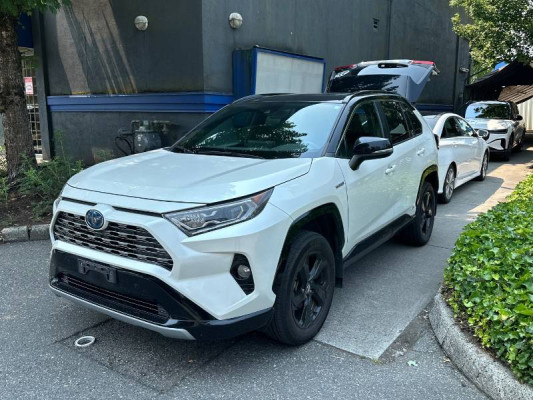 2020 Toyota RAV4 XSE Hybrid AWD | No accidents, Local BC113,543 km • Gasoline$35,995
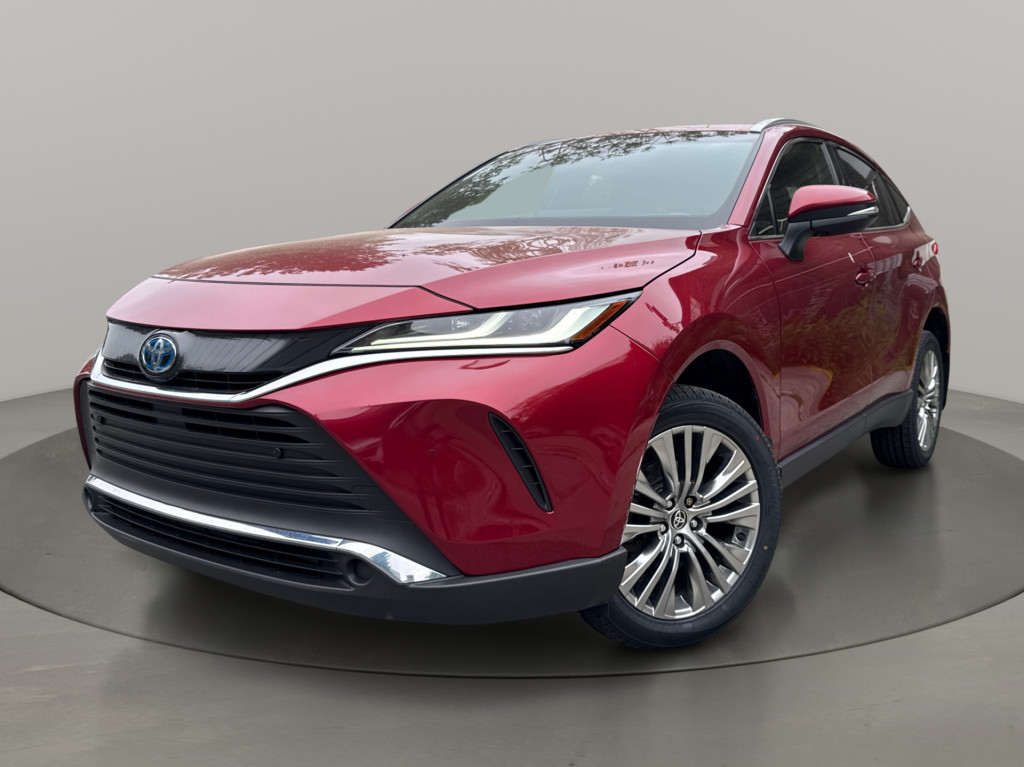 2022 Toyota Venza Hybrid AWD | No Accidents66,145 km • Gasoline$38,995
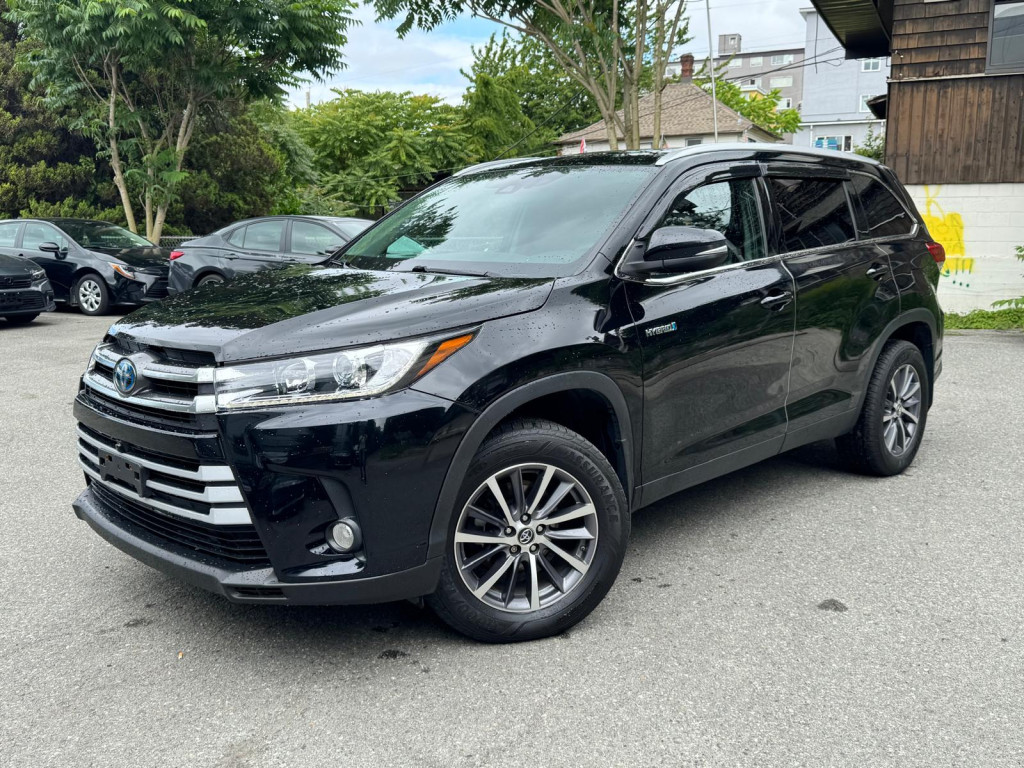 2019 Toyota Highlander XLE Premium Hybrid | Spinny Assured w/ Free Warranty, 150 Point Inspection188,792 km • Gasoline$28,995
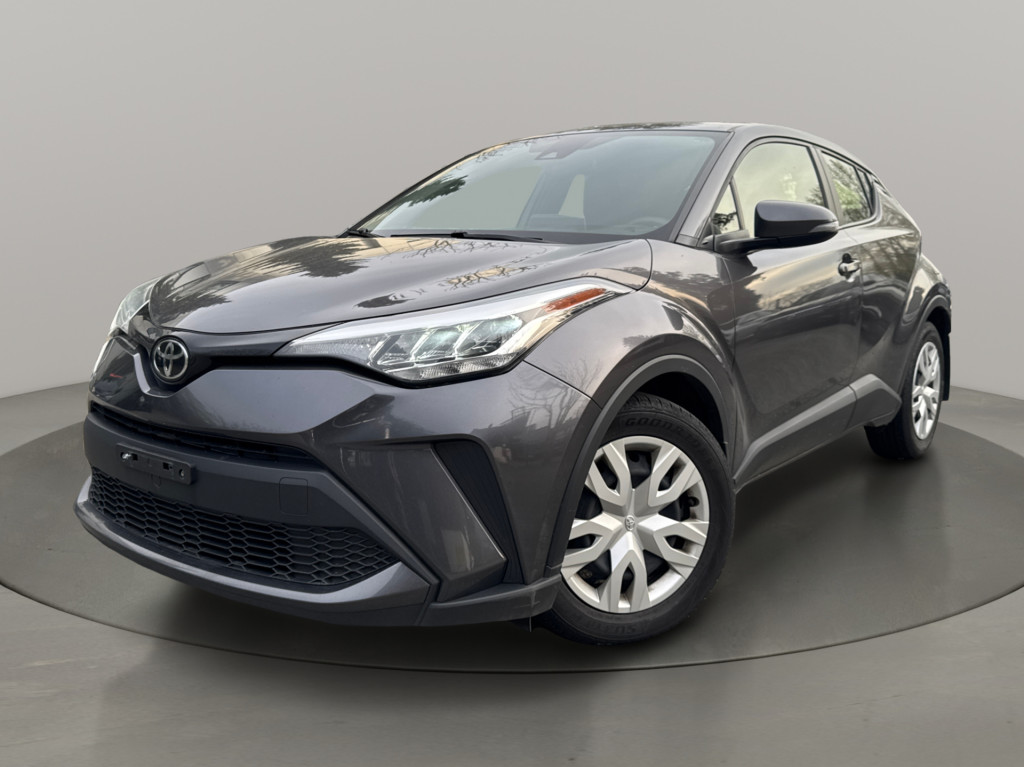 2021 Toyota CH-R XLE Premium | No Accidents90,000 km • Gasoline$29,999
Frequently Asked Questions
Is the RAV4 Hybrid or CR-V Hybrid better for BC?
The RAV4 Hybrid is better if you tow, drive high kilometres or prioritize resale value. The CR-V Hybrid is better if rear-seat space, ride comfort and a lower purchase price matter more. Both handle BC rain and packed snow well on winter tires.
Which gets better fuel economy, RAV4 Hybrid or CR-V Hybrid?
The RAV4 Hybrid AWD is rated about 6.0 L/100 km combined by Natural Resources Canada; the CR-V Hybrid AWD about 6.4. Over 20,000 km a year the difference is roughly $130 in fuel.
Can the CR-V Hybrid tow?
Yes, but only 1,000 lb (454 kg). The RAV4 Hybrid is rated for 1,750 lb (794 kg), enough for a small utility or tent trailer.
Which has the longer hybrid battery warranty in Canada?
Toyota covers the hybrid battery for 10 years or 240,000 km on 2020 and newer models. Honda covers it for 8 years or 160,000 km. Both warranties transfer to subsequent owners.
Which holds its value better, RAV4 Hybrid or CR-V Hybrid?
The RAV4 Hybrid. It costs more used and consistently ranks at the top of its class for retained value in Canada. The CR-V Hybrid depreciates only slightly faster and is the better value at purchase.
Do I need AWD in the Lower Mainland?
Most Metro Vancouver drivers can manage with front-wheel drive and winter tires, but both of these hybrids come standard with AWD in Canada, and it is worth having for the Coquihalla, Sea-to-Sky and the occasional snow day.
What we actually see at our New Westminster showroom
RAV4 Hybrids do not sit. When one lands on our lot in New Westminster it is usually gone inside two weeks, often to a buyer who came in for something else. CR-V Hybrids are rarer on the used market in BC simply because Honda sold fewer of them until 2023, so when we get one it tends to be newer and lower-kilometre, which is exactly its selling point.
The advice we give at the desk is to drive both on the same afternoon, with a car seat if you have one, and to bring your trailer hitch question with you. Nine times out of ten the decision makes itself in the first ten minutes: the towing people pick the Toyota, the back-seat people pick the Honda, and everyone leaves with a hybrid.
Sources & official references
This guide reflects our day-to-day experience at our New Westminster showroom and is cross-checked against official sources. Rules, rates and warranty terms change; always confirm current details with:
Drive them back to back
Book a test drive in New Westminster and compare the two on the same roads, same day.