
Best Used Cars for Uber, Lyft and DoorDash in Vancouver: Rules, Insurance and the Fuel Math
Driving for Uber or Lyft in BC means a Class 4 licence, a record check, a commercial inspection and a car under 10 years old; DoorDash needs none of that but does need the right ICBC rate class. At 40,000 km a year, a used Prius or Corolla Hybrid saves about $2,100 a year in fuel over a gas compact. Here are the rules, the insurance and the math.
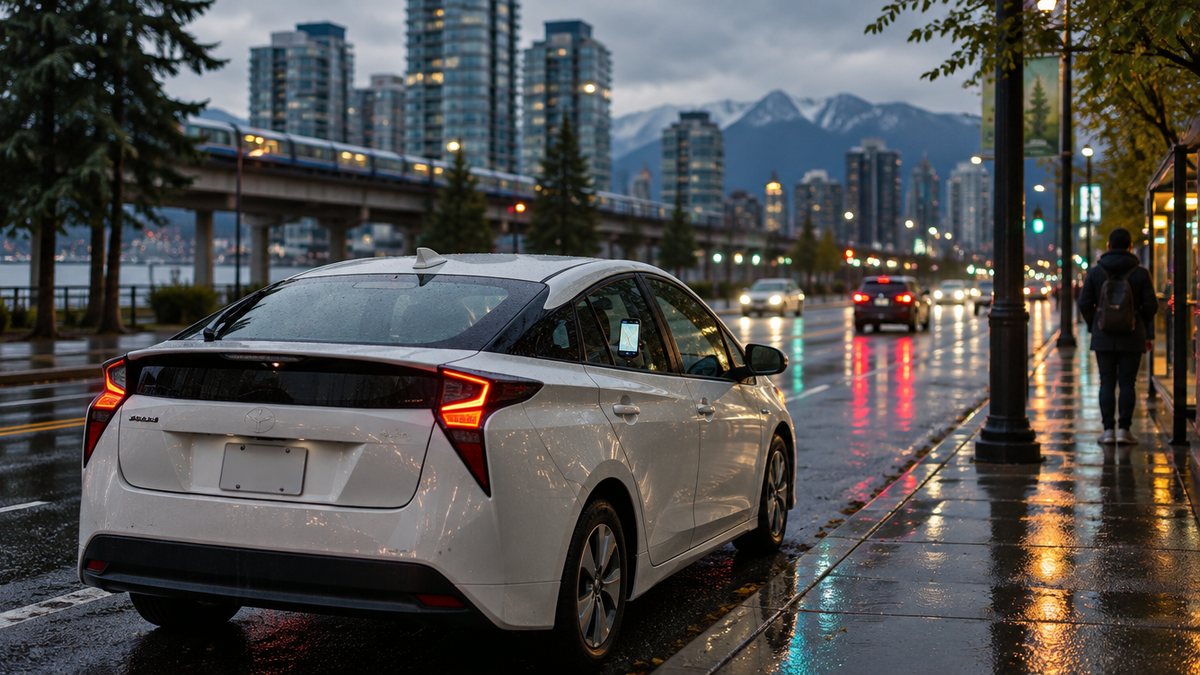
1. The short answer: a 2017 or newer four-door hybrid
For most Vancouver gig drivers, the best used car is a Toyota Prius, Corolla Hybrid or Camry Hybrid, followed by a Honda Accord Hybrid, Hyundai Ioniq or Kia Niro. They clear BC's 10-year rule and the Uber and Lyft door and seat rules, burn about a third less fuel than a comparable gas car, and hold value on the Lower Mainland used market.
The reason is arithmetic. A full-time ride-hail or delivery driver can put 40,000 km a year on a car, three times what most owners drive, and Vancouver has some of the highest pump prices in Canada. At today's price, every litre saved per 100 km is worth about $830 a year, so a hybrid that costs $3,000 more to buy pays for itself in fuel in well under two years.
A used Tesla Model 3 wins on fuel by an even wider margin if you can charge at home overnight, and loses if you depend on public fast charging during shifts. A plain gas Civic, Corolla or Elantra is still sensible for a part-timer doing DoorDash a few evenings a week. The rest of this guide covers the rules that decide which cars are allowed, the insurance you actually have when the app is on, and the fuel and maintenance math.
2. BC's rules for ride-hail (TNS) drivers and vehicles
In BC, Uber and Lyft operate under the Passenger Transportation Act as transportation network services (TNS), and their drivers are commercial drivers of passenger directed vehicles. The province's PDV driver requirements page (updated September 1, 2026) sets out four things you and your car need before the first trip.
- A Class 1, 2 or 4 driver's licence. A Class 5 is not enough. Per ICBC's Class 4 guide, you must be 19 or older, hold a full-privilege Class 5 or 6 (or out-of-province equivalent), have at least two years of non-learner driving experience, fewer than four penalty-point incidents in the past two years, no driving-related criminal convictions in the past three years, and no unpaid ICBC debts. You pass a knowledge test, a road test with a pre-trip inspection, and submit a driver's medical exam. Passing the road test in a vehicle seating up to 10 gives you a restricted Class 4, which is all ride-hailing requires.
- A Record Check Certificate. All PDV drivers must obtain a police record check with a vulnerable sector check, renewed every two years or as required. The ride-hail company, as licensee, issues the certificate. Four or more pointable convictions in the two-year review period makes you ineligible.
- A vehicle under 10 years old. Section 13.1 of the Passenger Transportation Regulation says a vehicle "must not be operated as a passenger directed vehicle under a transportation network services authorization if the motor vehicle is 10 or more years old," with age taken from the vehicle year on the ICBC registration and a 30-day grace period once it turns 10. The rule is specific to ride-hail.
- A commercial vehicle inspection. The provincial page states the vehicle "must be inspected annually if it was driven less than 40,000 km in the previous year or semi-annually if it was driven 40,000 km or more," at a designated inspection facility. A full-time driver should plan on two inspections a year and the tires and brakes they turn up.
You also need a commercial driving record (the N print, or National Safety Code abstract) from ICBC, which both platforms ask for at sign-up.
3. Uber and Lyft vehicle requirements in Vancouver
The platforms add their own rules on top of the province's, and in Vancouver they line up with the 10-year law almost exactly. Here is what each publishes as of September 2026.
| Requirement | Uber (Vancouver) | Lyft (British Columbia) |
|---|---|---|
| Model year | "Vehicle year must be 9 years or newer" (2017+ in 2026) | "2017 or newer" |
| Doors and seats | 4-door vehicle with 5 seats | 4 doors, 5 to 8 seats including the driver's |
| Condition | Good condition, no cosmetic damage, no commercial branding | Not a taxi or stretch limousine |
| Salvage / rebuilt | "No salvaged or rebuilt vehicles" | Valid ICBC registration matching the vehicle on file |
| Inspection | Commercial vehicle inspection by an authorized facility | BC Commercial Vehicle Inspection Report with decal and expiry date |
| Driver | Class 1, 2 or 4; record check; N print | Class 1, 2 or 4; 3 years driving history in Canada; NSC abstract; Record Check Certificate |
Sources: Uber Vancouver vehicle requirements and Lyft British Columbia driver information, fetched September 2026. Uber also requires its BC drivers to display Uber decals while online.
Two rows decide more purchases than the rest. The model-year floor moves forward every year: a 2017 Prius is eligible in 2026 and ages out during 2027, so if you plan to drive for three or four years, buy 2020 or newer and the rule will not force a sale mid-loan. And the rebuilt ban on Uber is absolute. A rebuilt car is cheaper for a reason, and a ride-hail buyer cannot use one at all; our guide to rebuilt-title cars in BC shows how to spot one on a CARFAX and an ICBC history report.
4. ICBC insurance: what covers you when the app is on
In BC, ride-hail insurance is not something you buy. ICBC sells a blanket insurance certificate to the ride-hailing company, and that certificate provides Basic coverage for you and your passengers from the moment you accept a trip until you drop the passenger off. Your own Autoplan policy covers everything else, and it has to be set up honestly for how you use the car.
According to ICBC's ride-hailing page, the mandatory blanket Basic policy includes Enhanced Accident Benefits, Basic Vehicle Damage Coverage and up to $1,000,000 in third-party liability, and it applies "when you have accepted a trip via the app, when you are en route to pick up the passenger(s), or transporting the passenger(s)."
What it does not automatically include is damage to your own car. ICBC's wording: "If the ride-hailing company has not purchased any blanket Optional coverage or their blanket Optional coverage is lower than your personal coverage, you may be able to add Optional coverages to cover you during ride-hailing use. Talk to your Autoplan broker for more information as exclusions may apply to your personal optional coverage during ride-hailing use."
- Tell your broker you drive for a platform and roughly how many days a month. ICBC's rate class page is blunt: "If you're in the wrong rate class, it could affect your coverage and leave you personally responsible for the cost of any claims." Pleasure rate class allows only up to six days a month of commuting, business or delivery use.
- Ask whether your platform buys blanket collision and comprehensive and at what deductible. If not, price adding your own for ride-hail use.
- Keep your own Basic policy in force. The blanket certificate sits on top of your Autoplan, not instead of it, and only starts when a trip is accepted.
Premiums vary by driver, territory and use, so we will not quote one here; our ICBC insurance cost guide explains what moves the price.
5. DoorDash, Uber Eats and Skip: different rules, different insurance
Food and parcel delivery is not ride-hailing. The Class 4 licence, record check certificate, 10-year vehicle cap and semi-annual inspection all come from the Passenger Transportation Act, which regulates vehicles carrying paying passengers. A delivery car carries food, not people, so none of those apply. What does apply is ICBC's delivery rate class, and that is the part delivery drivers most often get wrong.
DoorDash's Canadian Dasher requirements ask for a valid domestic driver's licence and your own insurance "in the amounts and types required by law." DoorDash carries commercial auto coverage of up to $1,000,000 for third-party injury and property damage during an active delivery, and states that if you fail to maintain your own insurance, that coverage may not apply. There is no vehicle age rule, seat count or commercial inspection.
On the ICBC side, the rate class page lists a specific delivery use: "Driving for delivery (e.g. Uber Eats). There are different rate classes depending on the type of vehicle, what it delivers and the distance travelled." If you deliver more than six days a month, pleasure or commuting class is the wrong class, and a wrong class can leave you personally responsible for a claim. Tell your broker. Because there is no age cap, delivery is where an older, paid-off gas compact makes sense: a 2014 Corolla cannot drive for Uber, but it can run DoorDash for years.
6. The fuel math at 40,000 km a year
At 40,000 km a year, a hybrid saves about $2,100 in fuel over a gas compact, and an EV charged at home saves roughly another $2,800 over the hybrid. The numbers come from Natural Resources Canada's combined ratings for specific 2022 models, Statistics Canada's average Vancouver pump price for August 2026, and BC Hydro's residential Tier 2 rate.
| 2022 model (NRCan combined rating) | Energy per 40,000 km | Annual fuel cost |
|---|---|---|
| Toyota Corolla 1.8L (7.1 L/100 km) | 2,840 L | $5,870 |
| Honda Civic Sedan 1.5L (6.9 L/100 km) | 2,760 L | $5,705 |
| Hyundai Elantra 2.0L (6.7 L/100 km) | 2,680 L | $5,540 |
| Honda Accord Hybrid (5.0 L/100 km) | 2,000 L | $4,134 |
| Toyota Camry Hybrid LE (4.9 L/100 km) | 1,960 L | $4,051 |
| Kia Niro Hybrid (4.6 L/100 km) | 1,840 L | $3,803 |
| Toyota Corolla Hybrid / Prius (4.5 L/100 km) | 1,800 L | $3,721 |
| Hyundai Elantra Hybrid Blue (4.4 L/100 km) | 1,760 L | $3,638 |
| Hyundai Ioniq Hybrid (4.2 L/100 km) | 1,680 L | $3,473 |
| Tesla Model 3 RWD (15.8 kWh/100 km), home charging | 6,320 kWh | $890 |
Method: litres = 40,000 ÷ 100 × L/100 km; cost = litres × $2.067. Ratings are 5-cycle combined figures from the NRCan Fuel Consumption Ratings tool and its open data files for model year 2022, base trims. Gas: 206.7 cents per litre, regular unleaded self-serve, Vancouver, August 2026, Statistics Canada Table 18-10-0001-01 (released September 14, 2026). Electricity: 14.08 cents per kWh, BC Hydro residential tiered rate Tier 2, rate schedule 1101, since a gig driver's charging will push a household past the 675 kWh monthly Tier 1 threshold. Real-world city consumption with heat or air conditioning running is higher than the rating for every car listed.
Vancouver gas prices swing hard: the same StatCan series shows 153.3 cents in January 2026 and 220.6 in May. At the January price the hybrid-versus-gas gap is about $1,600; at the May price, about $2,300. The hybrid wins at every price in that range.
The EV figure assumes every kilowatt-hour comes from a home charger. Drivers without one, or who top up at DC fast chargers between rides, pay considerably more per kWh and lose 20 to 40 minutes a session. As of September 2026, BC's provincial passenger-vehicle rebate remains paused (it stopped taking applications May 15, 2025, per BC Hydro's incentives page), so do not budget for one; BC Hydro's home charger rebate of up to 50 percent to a maximum of $350 is still listed.
The Prius Prime plug-in sits between. NRCan rates the 2022 Prius Prime at 40 km of electric range and 4.3 L/100 km on gas afterward. A driver covering 160 km a day would do the first 40 km on about 90 cents of electricity and the other 120 km on gas, roughly $2,890 a year in total. Good, but a full-time driver spends most of the day on gas, so the premium over a regular Prius is hard to earn back.
7. Maintenance and depreciation at gig mileage
A car doing 40,000 km a year wears three to four times faster than the average commuter car, so consumables matter more than the badge. Plan for these, in rough order of cost.
- Tires. Expect a full set every 18 months to two years, sooner if you run winter tires from October to March. Buy a car with common 15, 16 or 17-inch sizes; a Prius or Corolla Hybrid uses tires that cost far less than the 18 and 19-inch sizes on a Model 3 Performance.
- Brakes. Hybrids and EVs use regenerative braking, so pads and rotors commonly last two to three times longer than on a gas car in city traffic. This is one quiet reason Prius taxis were so cheap to run.
- Oil and filters. A gas or hybrid car at this mileage needs four to five oil changes a year at typical 8,000 to 10,000 km intervals. An EV needs none.
- Hybrid battery. The fear is bigger than the reality. Toyota Canada states its hybrid battery warranty at 10 years or 240,000 km, whichever comes first, and high-mileage packs routinely outlast that. Our guide to hybrid battery lifespan and replacement cost in Canada covers how to check a used pack before you buy and what a replacement actually costs.
Depreciation is the cost you see only when you sell. Buyers price on odometer, and a car showing 200,000 km at four years old sells for far less than the same car at 60,000 km, however well it was maintained. Two ways to soften that: buy a model whose value holds at high mileage (Toyota and Honda hybrids, in our experience), and buy one that already has 60,000 to 100,000 km on it so someone else absorbed the steep early depreciation. A 2020 Corolla Hybrid with 90,000 km is a better ride-hail purchase than a 2023 with 20,000 km, because the age rule gives it four more years of eligibility and the price gap covers a lot of fuel.
8. Does a used car qualify? The checklist
Before you put a deposit on any used car for gig work in Metro Vancouver, run it through this list. Every item comes from a rule in sections 2 to 5.
- Model year 2017 or newer for ride-hail, ideally 2020 or newer if you will drive more than two years. Check the vehicle year on the ICBC registration, not the listing.
- Four doors and at least five seats including the driver. Coupes, most pickups and two-seaters are out for UberX and Lyft.
- Normal vehicle status. No salvage, rebuilt or altered status on the ICBC vehicle history. Uber refuses rebuilt cars outright.
- Passes a BC commercial vehicle inspection. Tires, brakes, lights, glass, suspension and exhaust are what fail. A car that has just been through a 150-point inspection and reconditioning generally passes first time; a private-sale car on worn tires does not.
- A CARFAX with no open recalls and a plausible service history. Every Spinny Assured car has its CARFAX on the listing.
- Insurable in the right rate class. Call your Autoplan broker with the VIN and say exactly what you plan to do with it before you sign.
- Financing that fits gig income. Lenders look for income stability, so bring platform earnings statements and bank deposits. Our pre-approval takes about five minutes, does not affect your credit score, and goes to multiple lenders at once, which helps when income is variable.
- Fuel rating of 5.0 L/100 km or better, or an EV with home charging, if you drive full time. Look up the exact trim in the NRCan tool. The difference between a Civic and a Corolla Hybrid is about $2,000 a year.
If a car clears all eight, you have a working tool, not a gamble. Check any hybrid on our lot against the first five before you reserve; browse the hybrids currently in stock and filter by year.
Available right now
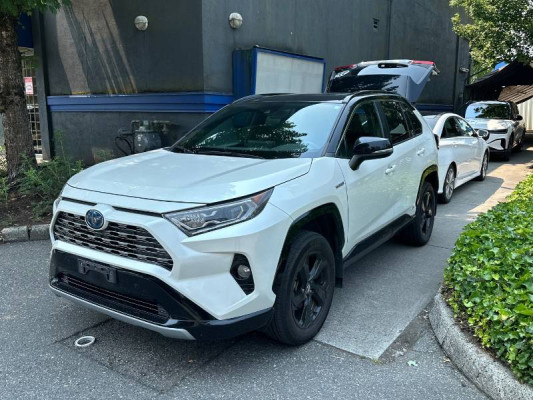
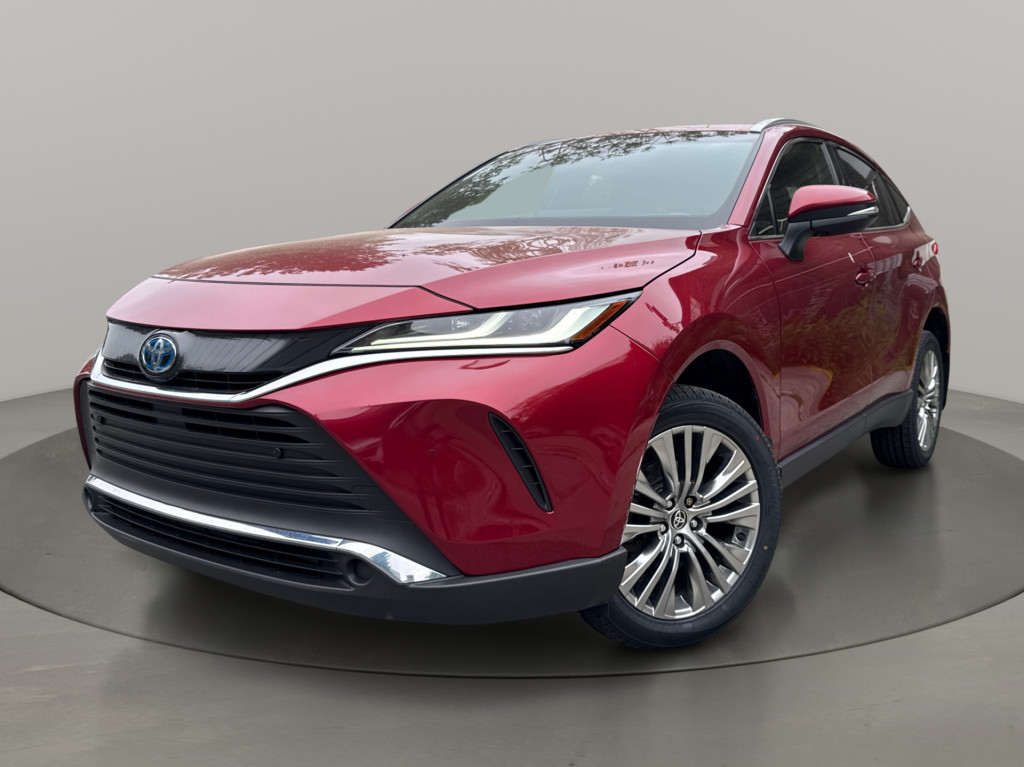
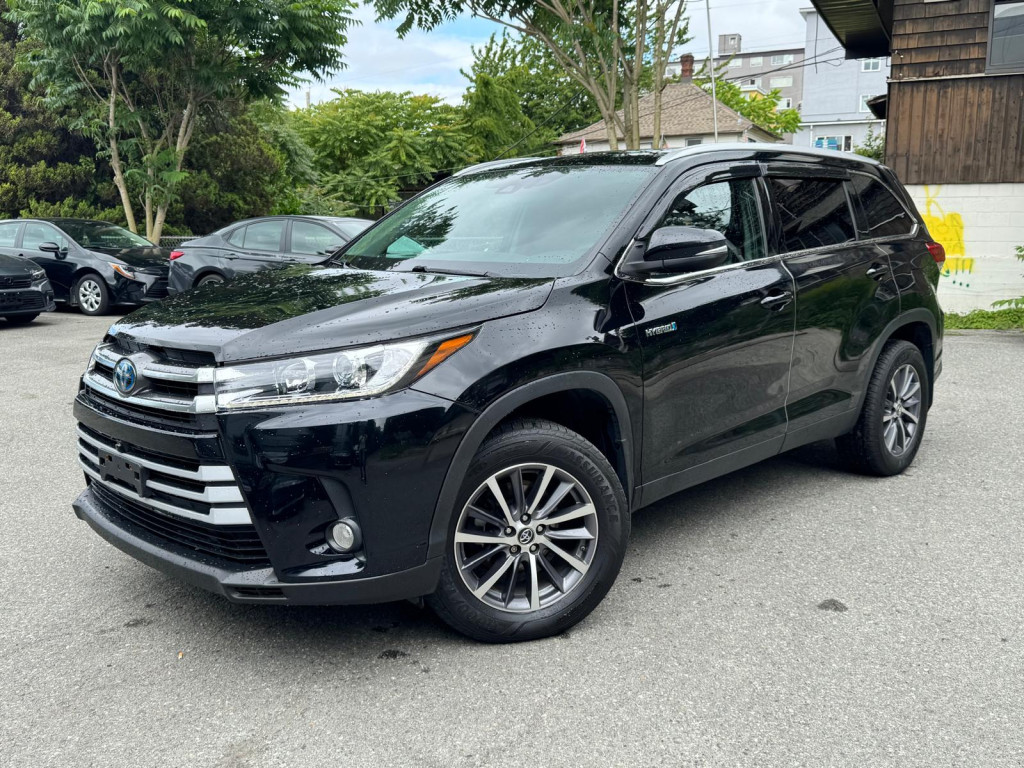
Hybrids and efficient sedans in stock right now
Live from our New Westminster showroom. Spinny Assured, 150-point inspected, CARFAX included.
Frequently Asked Questions
Do I need a Class 4 licence to drive Uber in BC?
Yes. BC requires ride-hail drivers to hold a Class 1, 2 or 4 licence, and a restricted Class 4 is the minimum. You must be 19 or older with two years of non-learner driving experience, pass a knowledge test and a road test with a pre-trip inspection, and submit a driver's medical exam. A Class 5 alone is not accepted.
Does ICBC cover me while driving for Uber?
Partly. ICBC sells the ride-hail company a blanket Basic policy with up to $1,000,000 third-party liability, accident benefits and basic vehicle damage coverage, and it applies from the moment you accept a trip until you drop off the passenger. Collision and comprehensive for your own car during ride-hailing depend on whether the company bought blanket optional coverage or you added your own, so confirm with your Autoplan broker.
How old can a car be for Uber in Vancouver?
Under BC's Passenger Transportation Regulation a ride-hail vehicle must be under 10 years old by the vehicle year on its ICBC registration. In 2026 that means a 2017 or newer model year, which matches Uber's Vancouver rule of 9 years or newer and Lyft's 2017 or newer. The floor moves forward every year, so a car near the limit ages out soon.
Do I need a Class 4 licence or inspection for DoorDash in BC?
No. Food and parcel delivery is not regulated under the Passenger Transportation Act, so there is no Class 4, record check certificate, vehicle age limit or commercial inspection. You do need a valid driver's licence and your own ICBC insurance in the correct delivery rate class, arranged through your Autoplan broker.
Is a used hybrid worth it for ride-hailing?
At full-time mileage, yes. Using NRCan ratings and the August 2026 Vancouver gas price, a Corolla Hybrid or Prius at 4.5 L/100 km costs about $3,700 a year to fuel over 40,000 km, against about $5,700 to $5,900 for a gas Civic or Corolla. Regenerative braking also stretches brake life, and Toyota warranties the hybrid battery for 10 years or 240,000 km.
How often does a ride-hail car need a commercial inspection in BC?
Annually if the vehicle was driven less than 40,000 km in the previous year, and every six months if it was driven 40,000 km or more. The inspection is done at a designated inspection facility and the decal must be displayed. Most full-time drivers fall into the semi-annual group.
What we actually see at our New Westminster showroom
Gig drivers are some of the most practical buyers who walk through our doors at 240 12th Street. They know their daily kilometres and their fuel bill to the dollar, and the first question is not "what colour" but "will this pass the commercial inspection, and how many years does it have left under the 10-year rule." The cars that answer both are almost always a 2019 to 2022 Prius, Corolla Hybrid or Camry Hybrid with 60,000 to 120,000 km, and the drivers who choose them tend to come back for a second one rather than a different brand.
The mistake we try to head off is buying at the edge of the age limit to save a few thousand dollars. A 2017 that is eligible today is a forced sale next year, and a forced sale on a car with an extra 40,000 km on it is an expensive way to save money. We would rather show a driver a 2020 with more kilometres, with the hybrid system check from our 150-point inspection and the CARFAX in hand, then get the financing done online so they are on the road, and earning, the same week.
Sources & official references
This guide reflects our day-to-day experience at our New Westminster showroom and is cross-checked against official sources. Rules, rates and warranty terms change; always confirm current details with:
- Government of BC — Passenger Directed Vehicle driver requirements (ride-hail)
- BC Laws — Passenger Transportation Regulation (s. 13.1 vehicle age)
- ICBC — insurance and licensing requirements for ride-hailing
- ICBC — How to get your Class 4 licence (PDF)
- ICBC — territory and rate class (pleasure, business, delivery use)
- Uber — Vancouver vehicle requirements
- Lyft — British Columbia driver information
- DoorDash — requirements for Dashing (Canada)
- Natural Resources Canada — Fuel Consumption Ratings search tool
- Natural Resources Canada — Fuel Consumption Ratings open data (Open Government)
- Statistics Canada — Table 18-10-0001-01, monthly average retail gasoline prices by city
- BC Hydro — residential tiered rate (rate schedule 1101)
- BC Hydro — electric vehicle incentives in B.C.
- Toyota Canada — hybrid electric batteries and warranty
Put a hybrid to work this week
Spinny Assured hybrids in New Westminster, inspected and CARFAX in hand. Pre-qualify online in about five minutes with no effect on your credit score.