
What's Your Car Worth in BC? How Dealers Set Trade-In Offers
A dealer's trade-in offer in BC starts with what your car would sell for locally, then subtracts reconditioning, inspection, warranty, time on the lot and margin. In BC, PST and GST are both charged only on the difference when an individual trades in a car, so a $15,000 trade saves $1,800 in tax on a vehicle under $55,000. As of October 2026, wholesale values are falling faster than usual.

1. How do dealers calculate trade-in value?
Most dealers work backward from the sale. They estimate what your car will sell for on their lot, subtract what it will cost to get it ready and hold it, and the remainder is the offer.
- Expected local retail price. What similar cars (same year, trim, kilometres and history) are listed and selling for in the Lower Mainland right now.
- Reconditioning. Tires, brakes, windshield chips, dents and detailing.
- Inspection and safety work. A multi-point inspection plus any repairs it turns up.
- Warranty. If the dealer will sell the car with a warranty, the expected cost of claims is priced in.
- Time on the lot. Every week a car waits for a buyer, it can lose value. Models that sell quickly carry less risk.
- Margin. The dealer's overhead and profit.
Separately from the offer itself, BC's tax rules add value by shrinking the taxable amount on your next car. That is covered in section 3.
Worked example (illustrative numbers only)
These figures are made up to show how the math works. They are not Spinny Cars' costs or any dealer's actual costs.
| Step | Amount |
|---|---|
| Expected local retail price | $24,000 |
| Reconditioning (tires, brakes, detailing) | −$1,500 |
| Inspection and safety work | −$400 |
| Warranty cost | −$500 |
| Time on the lot | −$600 |
| Margin | −$2,000 |
| Illustrative offer | $19,000 |
If that owner then buys a $40,000 vehicle, the $19,000 trade also cuts the tax bill by $2,280 at the combined 12% rate. Whether that beats selling on your own depends on your time and risk; our guide to trade-in vs private sale in BC compares both.
2. Are used car values going down right now?
Trade-in offers follow wholesale prices, which are the prices dealers pay each other at auction. When wholesale values fall, trade-in offers tend to follow.
As of October 2026, wholesale values are falling faster than normal. Canadian Black Book data reported on October 16 show wholesale values fell 0.35% in the week ending October 10, up from 0.12% the week before and above the 0.19% average for the same week in 2017–2019. CBB's 14-day moving average dealer listing price was $38,100.
| Segment (Canadian Black Book) | Wholesale change, week ending Oct 10, 2026 |
|---|---|
| Subcompact cars | +0.74% |
| Trucks and SUVs | −0.30% |
| Cars (overall) | −0.41% |
| Sporty cars | −0.61% |
| Prestige luxury | −0.79% |
| Minivans | −1.49% |
| Compact vans | −1.86% |
CarGurus data reported on October 21 point the same way. The average used listing was $33,232, down 0.79% over 30 days and 1.68% over a year. Model changes were uneven: in CarGurus' September data, year over year, the Ford F-150 rose 4.1%, the Toyota RAV4 rose 1.2% (to an average of $30,409) and the Ford Escape fell 9.3%. Over the past 30 days, by brand, Land Rover fell 4.04%, Lincoln 3.87% and Infiniti 3.54%.
What this means for your car
- Subcompact cars, the RAV4 and the F-150 were holding or gaining value in these reports.
- Prestige luxury, sporty cars, minivans and compact vans were softening fastest.
- These are national figures. Local prices can differ, so see our Greater Vancouver Q3 2026 price report and our list of used cars that hold resale value in BC.
- For the bigger picture on where prices are heading, see Are Used Car Prices Coming Down in 2026? What BC Buyers Should Expect.
3. How much tax do you save by trading in your car in BC?
When you trade in a vehicle on the same deal, PST is charged only on the purchase price minus the trade-in value, according to BC Bulletin PST 116 (revised April 2026). GST works the same way: when the trade-in comes from an individual who isn't a GST registrant, the dealer charges GST on the net amount, as shown in the CRA's RC4022 guide.
On a passenger vehicle under $55,000, the combined rate is 12% (7% PST plus 5% GST). Your tax saving is 12% of your trade-in value.
| Trade-in value | PST saved (7%) | GST saved (5%) | Total tax saved |
|---|---|---|---|
| $5,000 | $350 | $250 | $600 |
| $10,000 | $700 | $500 | $1,200 |
| $15,000 | $1,050 | $750 | $1,800 |
| $20,000 | $1,400 | $1,000 | $2,400 |
| $25,000 | $1,750 | $1,250 | $3,000 |
Want to plug in your own number? Get your trade-in number and use the table above.
The bracket rule most people get wrong
BC's PST on passenger vehicles rises with price. PST 116 lists 7% under $55,000, 8% and 9% in narrow bands between $55,000 and $57,000, 10% from $57,000, and 15% and 20% at the top of the market. The bracket is set by the price before the trade-in is deducted. PST 116's own example: a $60,000 vehicle with a $25,000 trade-in pays 10% PST on $35,000, not 7%.
That cuts both ways. A trade-in can't drop you into a lower bracket, but each trade-in dollar saves more in a higher one. In that example, total tax falls from $9,000 (10% PST plus 5% GST on $60,000) to $5,250 (on $35,000), a $3,750 saving.
Zero-emission vehicles have their own table. As of October 2026, PST 116 shows 7% on passenger zero-emission vehicles (ZEVs) under $75,000, in effect until February 22, 2027.
Conditions for the tax credit
- The trade-in must be on the same sales agreement as your purchase. Selling the car to the dealer as a separate deal doesn't count.
- You must own the vehicle you trade in.
- It must be registered in BC, or you must be able to prove that PST (or another applicable tax) was paid on it, or that it was exempt, according to PST 116.
- A car owned by your company won't reduce the tax on a car you buy personally.
For fees, the 10-day rules and other taxes on used cars, see used car tax in BC.
4. What raises or lowers your trade-in offer
Every item below changes either the expected retail price or the dealer's costs, which is why they move the offer.
- Kilometres. Lower kilometres for the model year usually mean a higher offer. See how many km is too many on a used car.
- ICBC claims on the CARFAX report. Claims lower value, especially larger or structural repairs. See how much accident history is too much and the CARFAX report explained.
- Service receipts. Proof of oil changes and scheduled maintenance lowers the dealer's risk.
- Tire condition. Worn tires are a direct reconditioning cost.
- Both keys. A missing key is a cost the dealer will deduct.
- Warning lights. A check-engine light is an unknown repair bill, and appraisers tend to price in the worst case.
- Rebuilt status. A rebuilt vehicle gets a noticeably lower offer. See rebuilt title used cars in BC.
- An open loan. It doesn't change the car's value, but the payout comes off what you receive. See trading in a car with a loan in BC.
ICBC's own advice for sellers is a good prep list: research your vehicle's value, gather maintenance receipts, get a vehicle history report and clean the car.
5. EV and hybrid trade-ins in 2026
Chinese-made EVs have started arriving in Canada under a 49,000-vehicle first-year quota at a 6.1% tariff. From the quota's second year, a share is reserved for EVs valued at $35,000 or less, rising to half by year five. If cheaper new EVs follow, that could limit what shoppers pay for used ones.
On tax, BC's PST exemption for used zero-emission vehicles ended April 30, 2025 (Bulletin PST 116). Rely on the current bulletins, not older articles. Our used EV rebates in BC guide tracks the changes.
What helps an EV or hybrid offer: a battery health report if you can get one, the original charging cable, and service records. For background on hybrid batteries, see hybrid battery lifespan and replacement cost. If you're replacing an EV with another one, our Tesla Model 3 buying guide explains what to check, and the Spinny Assured page lists what comes with Spinny Assured vehicles: a 150-point inspection, a 6-month warranty on major mechanical components, a 7-day exchange and a CARFAX Canada report.
6. Is now a good time to trade in my car?
When wholesale values are falling, waiting has a cost. If a $25,000 car lost 0.35% a week, the latest weekly rate reported by Canadian Black Book, that would be about $88 a week. Weekly rates change, so treat that as a rough guide, not a forecast.
A few other timing points:
- Tires. If your tires are worn, the dealer will deduct the cost of new tires from your offer. If you drive routes covered by winter tire rules, see our BC winter tire law guide before buying new tires for a car you plan to trade.
- Interest rates. If you're financing your next car, the rate matters as much as the trade number. Check the Bank of Canada's upcoming announcements and our guide on whether car loan rates will go up in BC.
- Seasons and year-end. Our best time to buy or sell calendar covers month-by-month timing.
If you're financing too, you can pre-qualify online at spinny.ca/get-approved. It's a soft inquiry and doesn't affect your credit score.
7. Trade-in day paperwork in BC
Bring these with you:
- Your signed APV250, the ICBC registration and insurance document
- Government-issued photo ID
- Both keys
- Your loan payout details, if you still owe money on the car
According to ICBC's selling guide:
- Your plates are ICBC property. Remove them. Put them on your next vehicle, or return them to an Autoplan broker if you no longer need them.
- Ownership transfers on the APV9T form, and the new owner must register the vehicle within 10 days.
- Transfer or cancel your insurance. If you're moving it to your next vehicle, give the odometer readings of both vehicles so ICBC can determine your eligibility for a usage-based discount.
- An active claim may be voided when ownership changes, so check with ICBC first if you have one open.
For the buying side of the same visit, see our paperwork for buying a car in BC guide. When you're ready, get your trade-in number.
8. How this works at Spinny Cars
Spinny Cars is a used car dealership at 240 12th Street in New Westminster, licensed by the Vehicle Sales Authority of BC (VSA Dealer #D50318). The showroom is a short walk from New Westminster SkyTrain Station, with free customer parking on site.
- Trade in or sell outright. Spinny takes trade-ins, and the trade-in value comes off the price of your next car, which reduces the PST you pay. Spinny also buys cars outright, with no purchase needed. Start at /sell-or-trade.
- Financing options. Spinny sends one finance application to several BC lenders, with options for new credit, newcomers to Canada, past bankruptcy and rebuilding credit. Approval is never guaranteed. Pre-qualifying at spinny.ca/get-approved is a soft inquiry; a full lender application is a hard inquiry.
- Spinny Assured upgrades. Spinny Assured vehicles get a 150-point inspection, a 6-month warranty on major mechanical components, a 7-day exchange for another Spinny Assured vehicle, and a CARFAX Canada vehicle history report. Vehicles sold as-is are not part of the program.
- Delivery across BC. Spinny arranges delivery across the province, including Vancouver Island and the Interior.
Hours are Monday to Saturday 10:00am to 8:00pm and Sunday 11:00am to 6:00pm. Call or text 778-852-1023. Spinny Cars has a 4.7-star rating from 270+ Google reviews.
Available right now
Upgrade ideas for your trade-in
Browse current inventory at Spinny Cars in New Westminster.
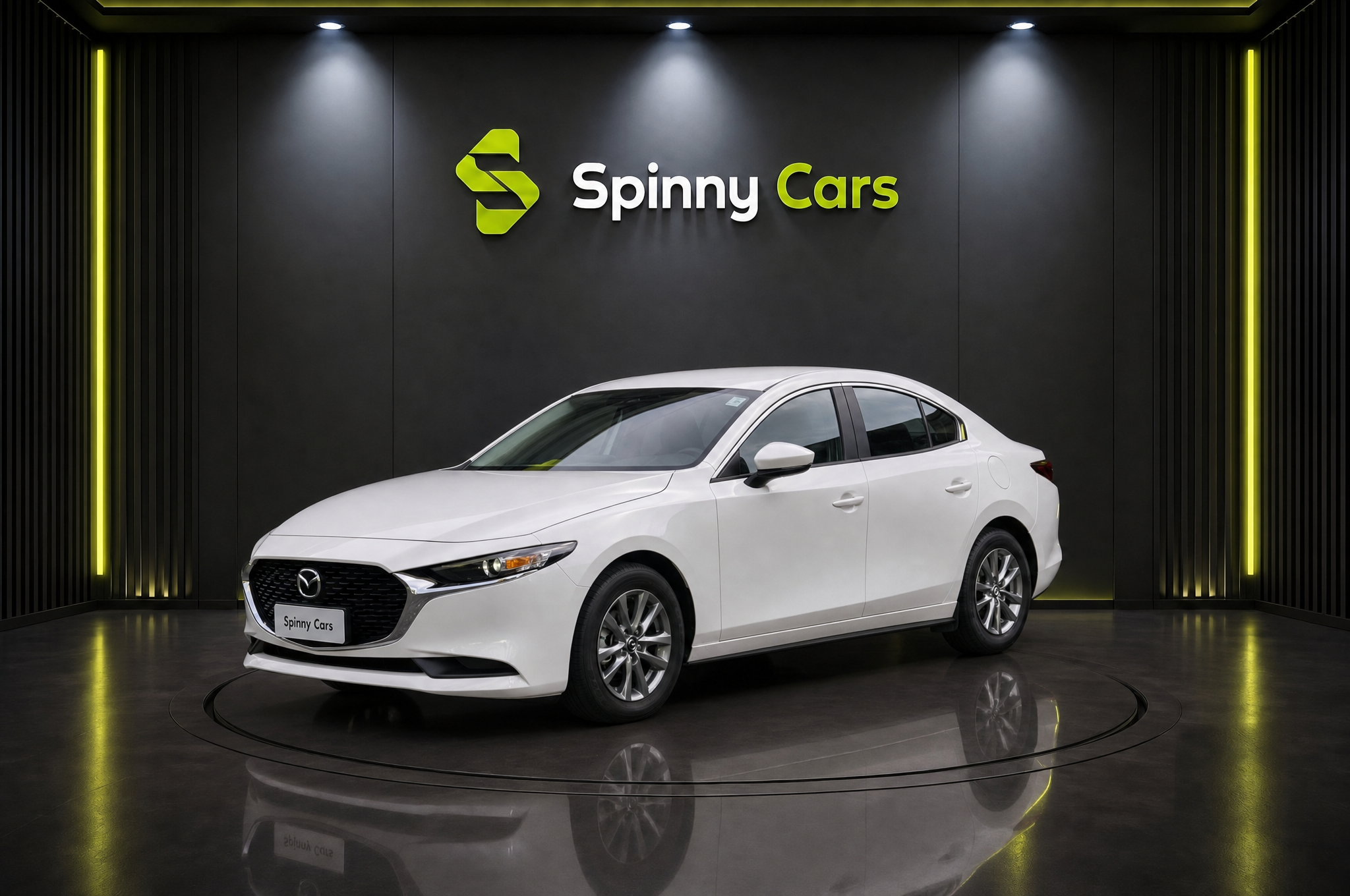 2025 Mazda Mazda3 GS | Brand New435 km • Gasoline$29,995
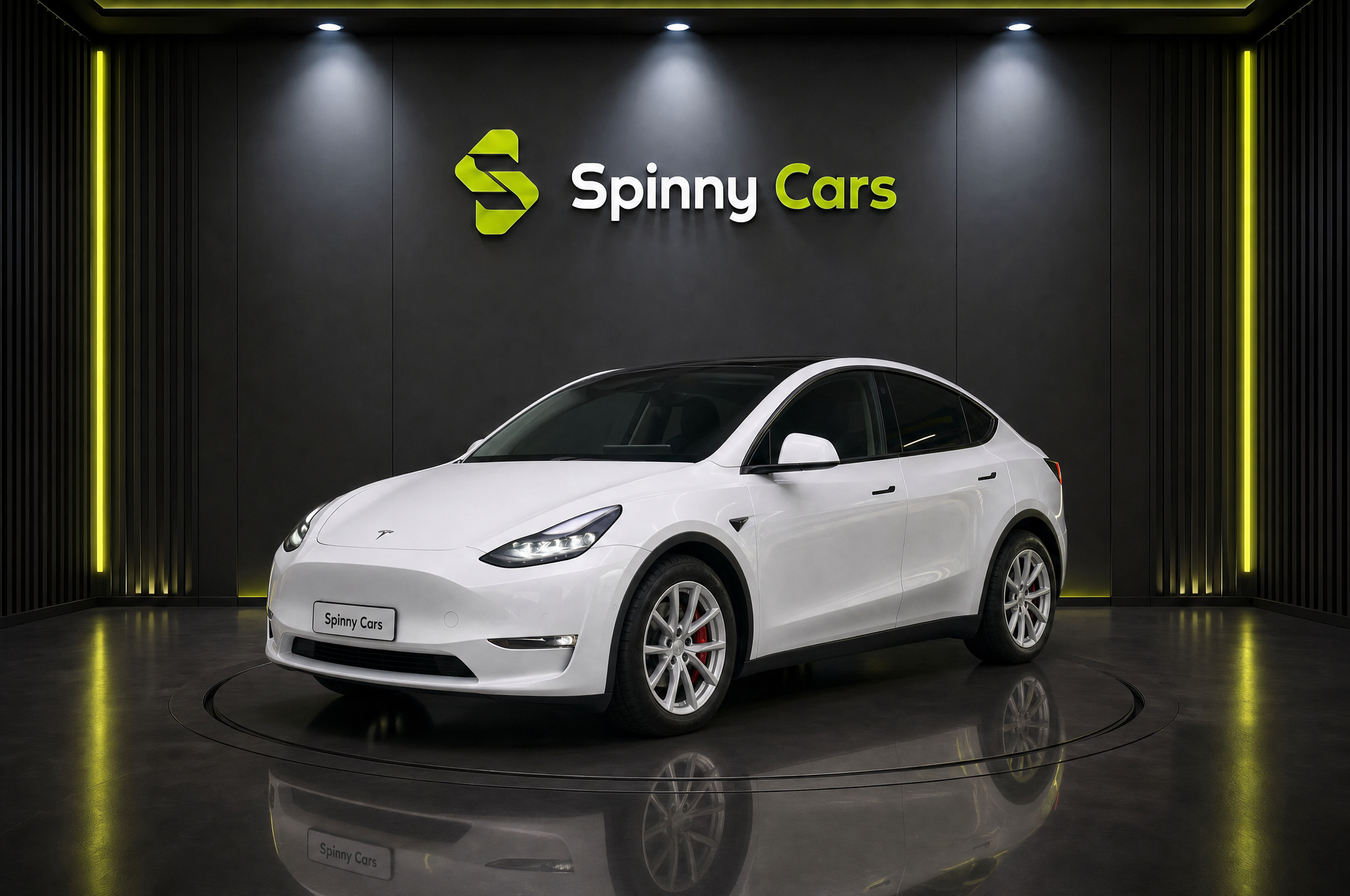 2021 Tesla Model Y Long Range AWD135,309 km • Electric$34,995
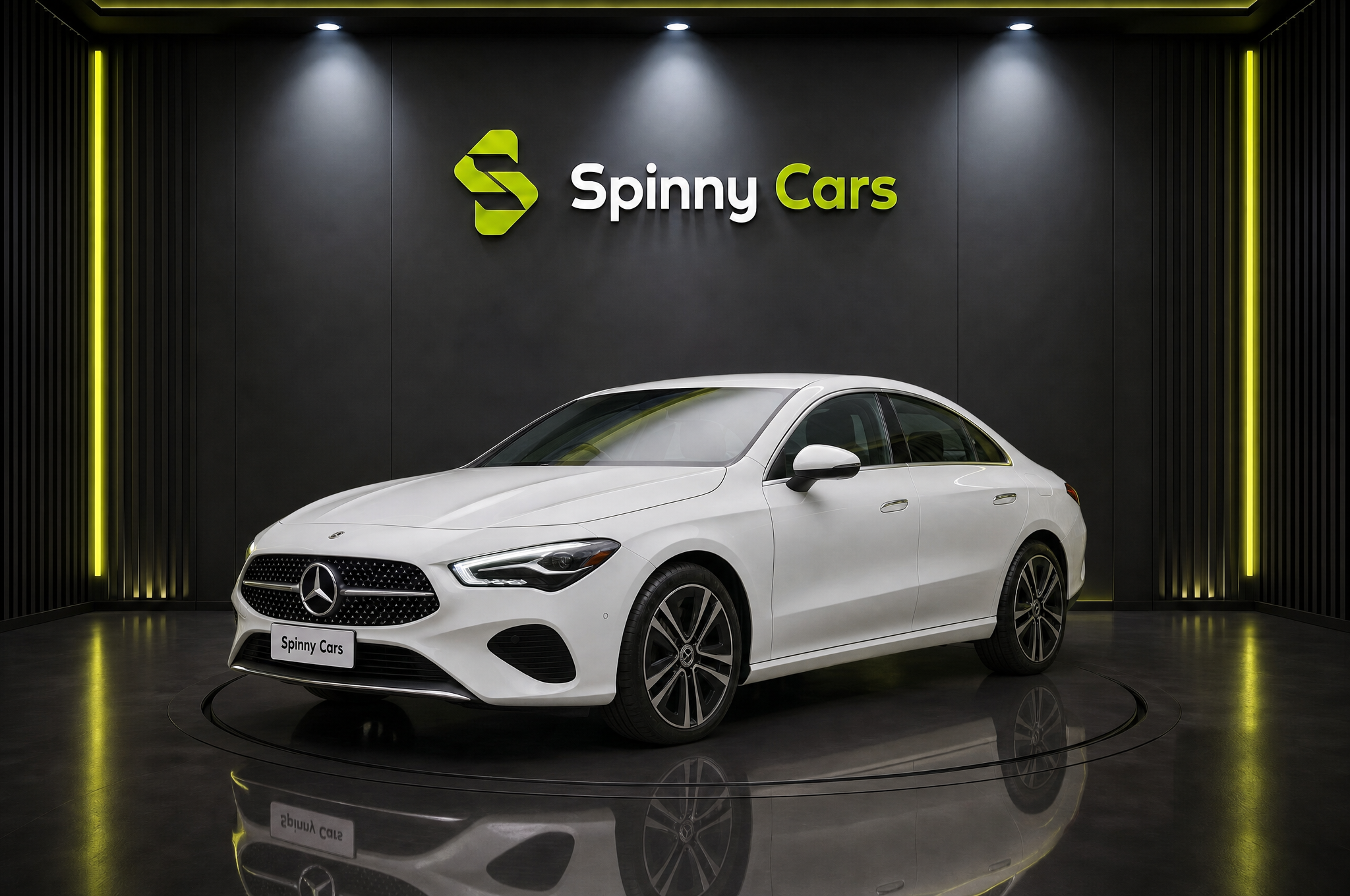 2026 Mercedes-Benz CLA 25030,910 km • Gasoline$36,995
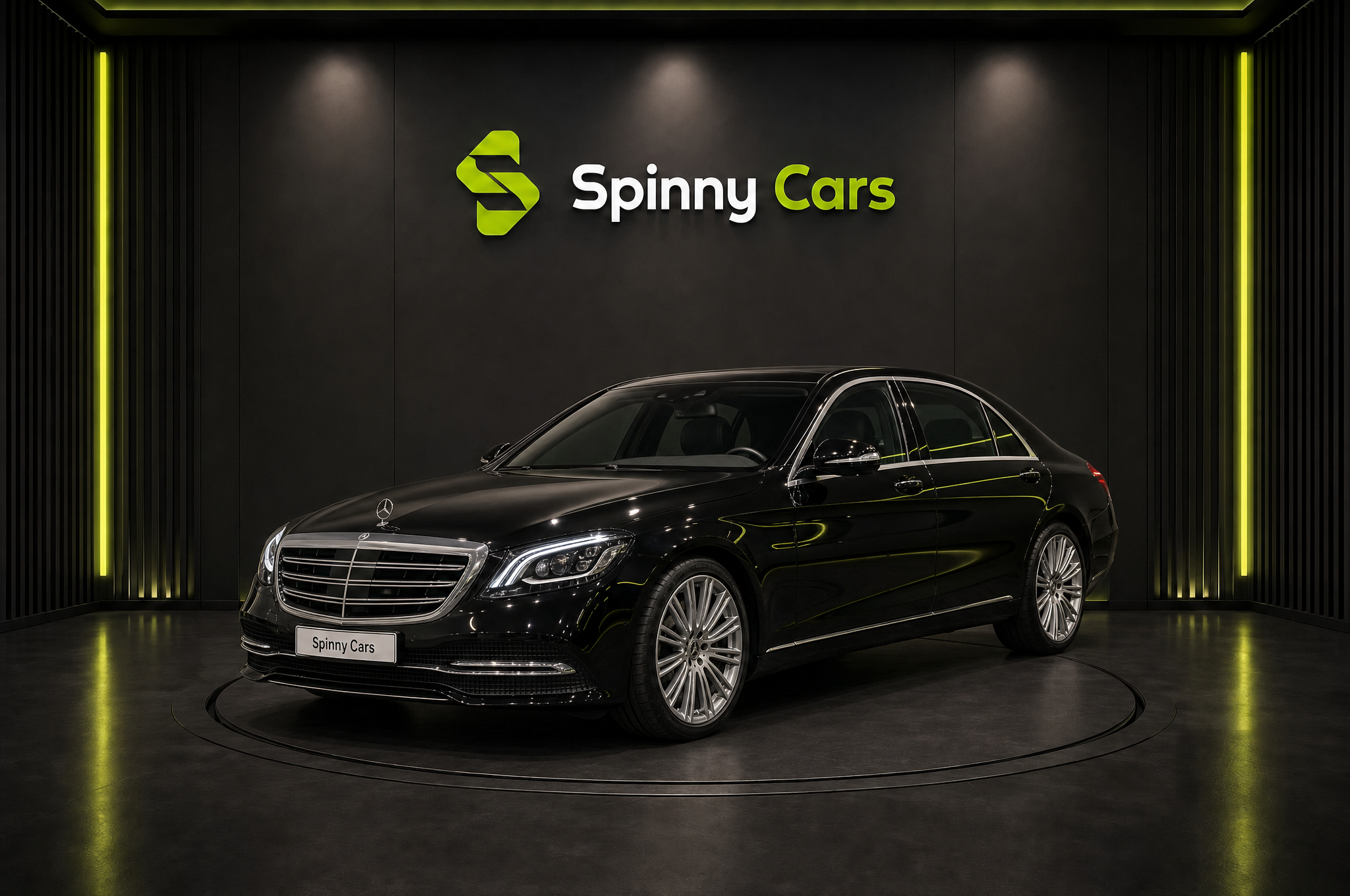 2019 Mercedes-Benz S-Class S560 LWB | 4 Seater, Designo Interior, Burmester High End41,567 km • Gasoline$78,999
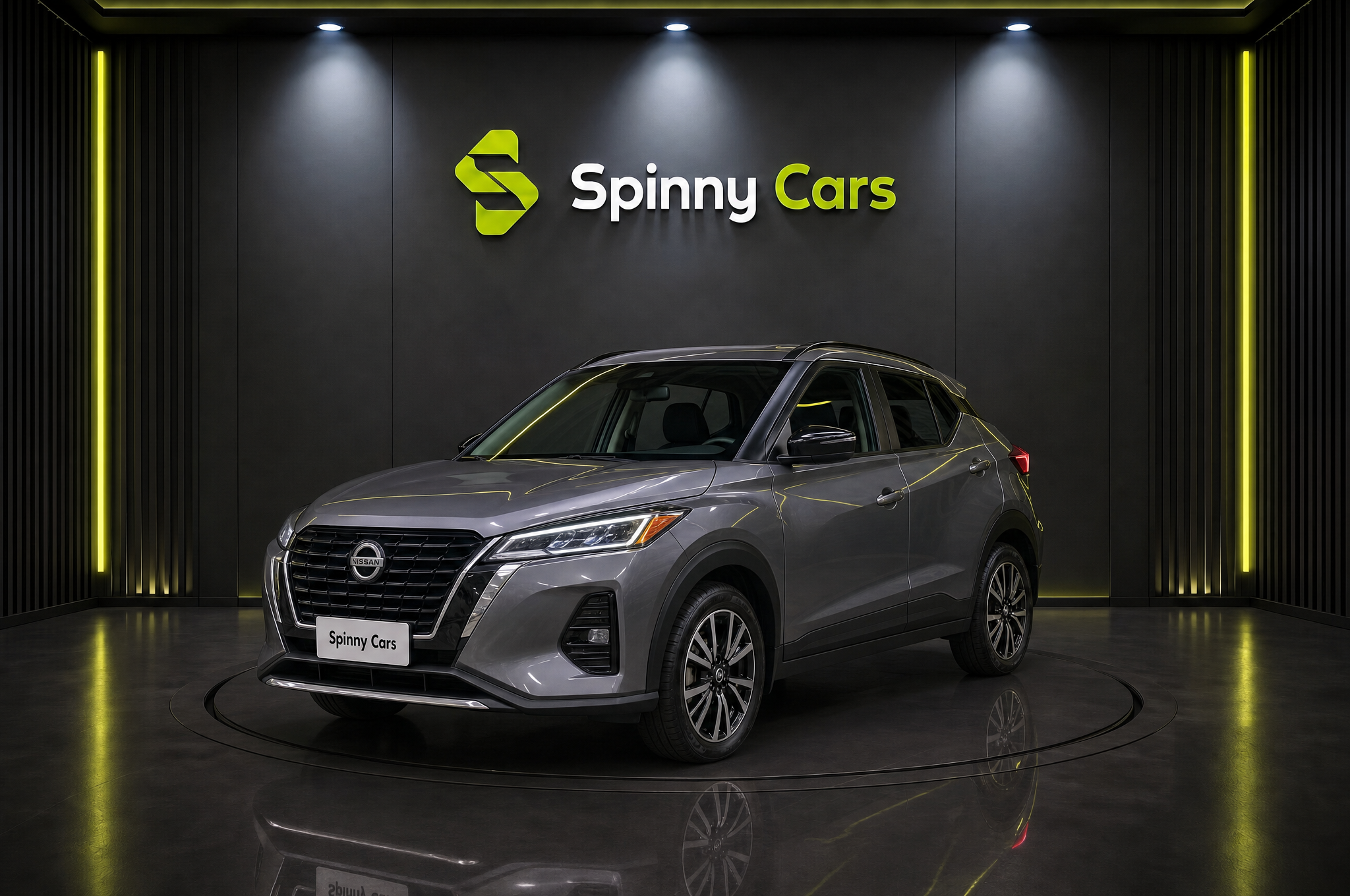 2024 Nissan Kicks SV78,708 km • Gasoline$19,995
 2018 BMW 330i M Sport105,124 km • Gasoline$19,995
Frequently asked questions
How do dealers calculate trade-in value in BC?
Dealers start with what similar cars are selling for locally, then subtract reconditioning (tires, brakes, detailing), inspection and safety work, expected warranty cost, the risk of time on the lot, and their margin. What remains is the offer. Kilometres, claims history, service records and condition all move either the retail estimate or the costs, so they change the final number.
How much tax do I save by trading in my car in BC?
If you trade in as an individual on a vehicle under $55,000, you save 12% of your trade-in value. In BC, PST applies only to the difference after your trade-in, per BC Bulletin PST 116. GST does too when the trade-in comes from an individual (not a GST-registered business), per the CRA's RC4022 guide. A $10,000 trade saves $1,200 and a $20,000 trade saves $2,400. The trade must be on the same sales agreement.
Does a trade-in lower the PST rate on a vehicle over $55,000?
No. BC sets the PST bracket using the price before the trade-in is deducted. PST 116 gives the example of a $60,000 vehicle with a $25,000 trade-in: it pays 10% PST on $35,000. The trade still saves tax, just at the higher rate, so each trade-in dollar is worth more.
Are used car values going down in Canada right now?
Yes, as of October 2026. Canadian Black Book reported wholesale values fell 0.35% in the week ending October 10, well above the 0.19% average for that week in 2017–2019. CarGurus reported the average listing at $33,232, down 1.68% year over year. Compact vans, minivans, prestige luxury and sporty cars fell fastest, while subcompact cars, the RAV4 and the F-150 held up.
Can I trade in a car I still owe money on?
Yes. The dealer pays out your loan as part of the deal, and the payout amount comes off your trade-in value. If the car is worth more than you owe, the difference goes toward your next car. If you owe more than it's worth, that shortfall has to be covered. Our trading in a car with a loan guide explains the options.
Do I keep my licence plates when I trade in my car in BC?
You take them off the car, but they stay ICBC property. ICBC says to remove them from the car you trade in. Put them on your next vehicle, or return them to an Autoplan broker if you no longer need them. You also need to transfer or cancel your insurance, giving the odometer readings of both vehicles so ICBC can determine your eligibility for a usage-based discount.
Is trading in or selling privately better in BC?
It depends on your time and risk. A private sale may bring a higher price, but a trade-in on the same agreement cuts PST and GST on your next car, which a private sale does not. On a vehicle under $55,000 that's 12% of the trade value. Our trade-in vs private sale guide compares both in detail.
Sources & official references
This guide reflects our day-to-day experience at our New Westminster showroom and is cross-checked against official sources. Rules, rates and warranty terms change; always confirm current details with:
- BC Bulletin PST 116: Motor Vehicle Dealers and Leasing Companies (revised April 2026)
- CRA RC4022: General Information for GST/HST Registrants
- ICBC: Selling a used vehicle
- Canadian Auto Dealer: Used vehicle prices fall sharply (CBB, Oct 16)
- Canadian Auto Dealer: Used vehicle prices fall but demand remains uneven (CarGurus, Oct 21)
- Canadian Auto Dealer: Chinese-made EVs are arriving
- BNN Bloomberg: First Chinese EVs arrive in Canada, but they come with a high price tag (July 2026)
- Bank of Canada: Upcoming events
Find out what your car is worth
Get a trade-in number from Spinny Cars and see how much it takes off the price and PST on your next car.